
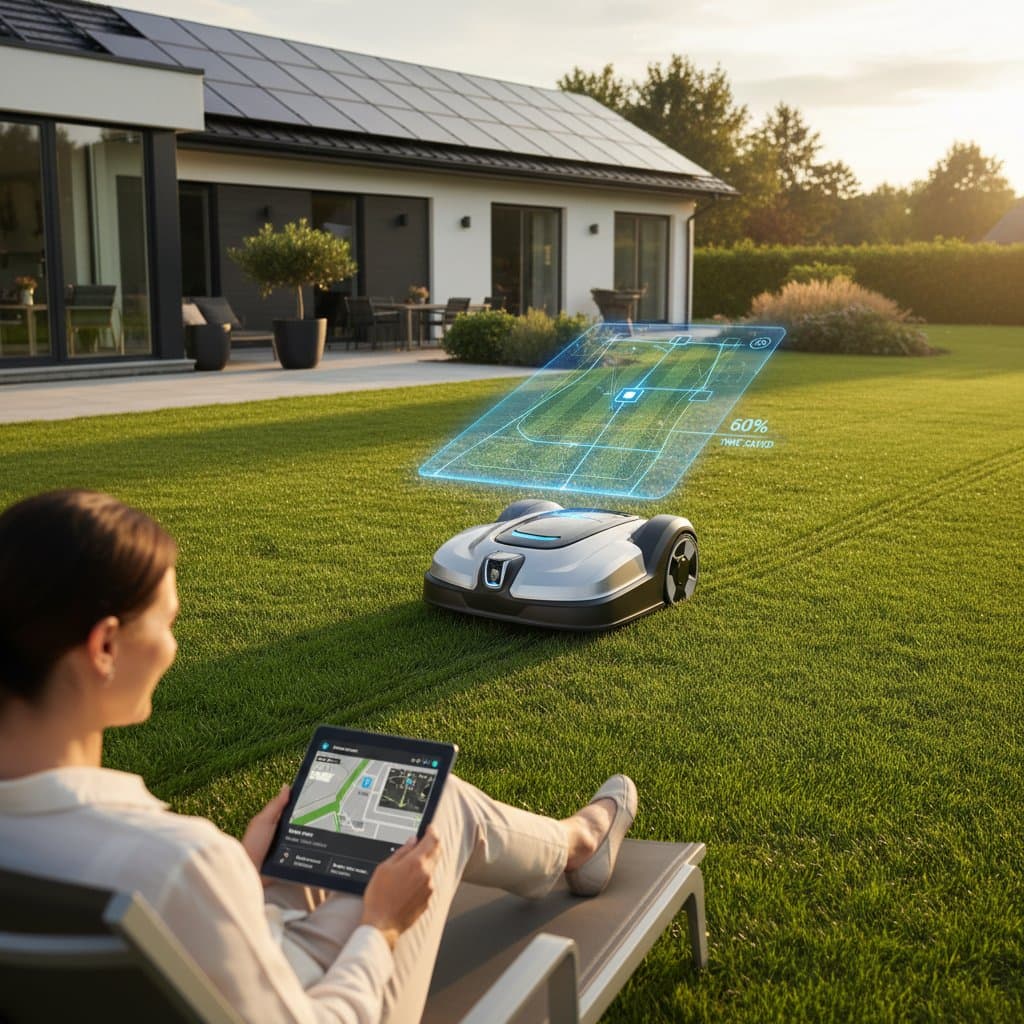
GPS Smart Mowers: Achieving 60 Percent Less Time on Lawn Maintenance
A well-maintained lawn boosts property value and curb appeal. However, traditional mowing demands significant time and effort from homeowners. GPS smart mowers solve this issue by leveraging advanced navigation and automation to reduce maintenance time by up to 60 percent. This efficiency results in a healthy yard while allowing more time for relaxation or other activities.
These mowers perform reliably on various terrains. Users frequently note improved lawn aesthetics without the need for regular manual intervention. Such convenience shifts attention toward enjoyable tasks like planting flowers or spending time outdoors with family.
Understanding GPS-Guided Mowing Technology
GPS smart mowers stand out from traditional robotic versions because they avoid the installation of buried boundary wires. They rely on satellite signals paired with onboard cameras and sensors to generate a precise digital map of the lawn. This process detects edges, obstacles like trees or garden beds, and terrain features such as slopes exceeding 15 degrees or bumpy patches.
Once mapped, the mower plots efficient paths to cover the entire area with minimal overlap. These routes prevent excessive wheel traffic, which can compact soil and harm grass roots. Consequently, the lawn benefits from reduced wear, fostering denser and more resilient turf growth.
Most models connect via mobile apps for user control. Owners can track mowing progress in real time, adjust cutting heights to match grass growth stages, or pause the device remotely. Compatibility with smart home ecosystems allows for automated responses, like postponing sessions during forecasted rain or syncing with daily calendars.
Essential Benefits for Everyday Use
1. Significant Time Reduction
Traditional manual mowing often consumes two to four hours each week, varying by lawn size. GPS smart mowers run autonomously, typically at night or while owners are away. Program a weekly schedule through the app, and the mower manages the job independently, keeping the lawn tidy without disrupting daily life.
2. Uniform and Professional Results
GPS precision ensures full coverage without missed spots or excessive trimming. The device holds steady blade heights, creating clean edges and optional patterns that enhance visual appeal. This consistency eliminates the uneven patches often seen with basic mowers.
3. Enhanced Energy and Eco-Friendliness
Battery-operated designs generate low noise levels and zero emissions, ideal for neighborhood settings. Integrated sensors measure grass density and modulate blade speed, optimizing power use and sparing the turf from overload. Long-term, this approach lowers energy demands and supports sustainable yard care.
4. Built-In Safety and Theft Protection
Sophisticated sensors halt blades upon detecting lifts or tilts, averting potential injuries. GPS tracking allows owners to locate the mower instantly via the app if it moves from the property. These features enable confident, unsupervised use.
Steps to Implement a GPS Mower Effectively
Evaluate your lawn before purchasing. Measure the total area in square feet, note obstacles like steep inclines or narrow paths, and test GPS reception by observing sky visibility. Areas shaded by thick trees may require mowers with additional boundary aids, such as camera-based or ultrasonic detection.
Prepare the site by removing debris like stones or branches to safeguard the mower's components. Smooth out small dips in the ground for better mobility. Define restricted areas, such as vegetable patches or driveways, by setting virtual fences in the app, which the mower navigates around.
For setup, guide the mower along the lawn edges to build the initial map, a task that lasts 30 to 60 minutes for standard yards. Larger or complex spaces benefit from professional assistance to calibrate paths and verify coverage. This step guarantees smooth operation right away.
Evaluating Costs and Sustained Benefits
Initial costs for GPS smart mowers span from $1,000 to $3,000, depending on capabilities like extended battery range or advanced sensors. Contrast this with savings: eliminate fuel costs, replace blades only every six months due to controlled usage, and skip routine mechanic visits beyond simple wiping.
Time freed up equates to over 100 hours per year for a typical user. Precise mowing promotes stronger roots, cutting needs for irrigation and fertilizers by up to 20 percent. Most owners recover the investment within two years through these practical gains.
Integrating Automated Mowing into Seasonal Care
Post-installation, observe initial runs to tweak parameters, such as mowing every other day in spring's fast growth phases. Review the app's usage logs to adapt for summer droughts or fall leaf fall. This flexibility keeps the lawn vibrant across seasons.
Pair the mower with supporting systems for full automation. Link it to weather-responsive sprinklers that activate only when needed, or add probes that monitor soil hydration to avoid waste. In fluctuating climates, this setup preserves green coverage with little oversight.
Users commonly report fewer weeds due to consistent cuts that weaken invasive growth. The silent operation lets families use the yard undisturbed. In essence, GPS smart mowers turn routine upkeep into a simple boost for outdoor enjoyment.