
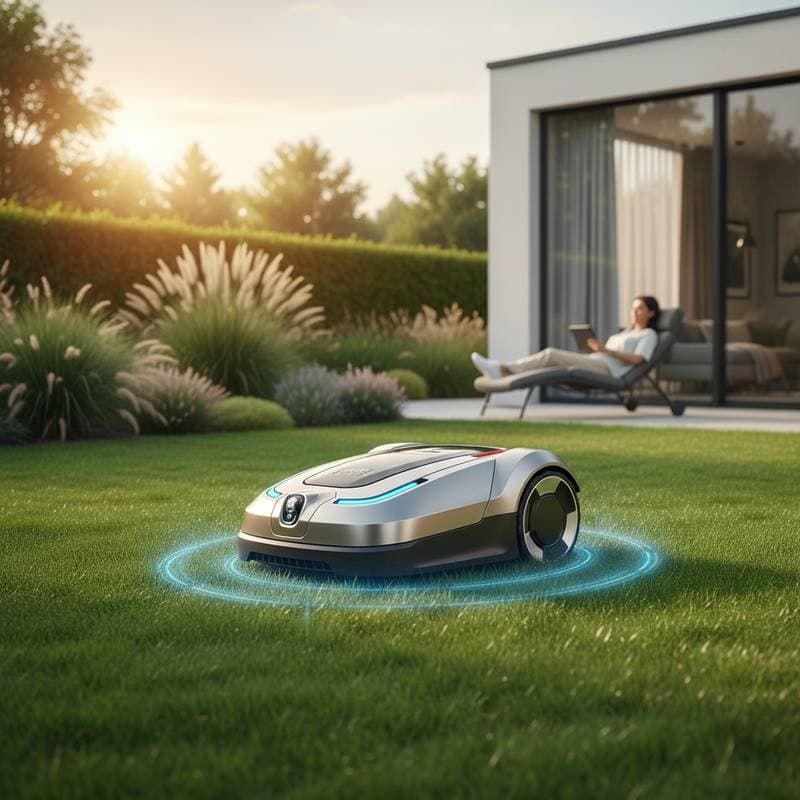
Precision Cutting Technology
AI mowers employ advanced sensors and algorithms to navigate complex yard terrains. They create detailed maps of boundaries, obstacles, and growth zones during initial runs. Over time, these machines refine their paths based on real-time data from LiDAR and GPS systems.
Key specifications include a cutting width of 10 to 12 inches, varying by model, which ensures efficient coverage. Blades feature floating micro-designs with self-sharpening edges that maintain sharpness without manual intervention. Power comes from lithium-ion battery packs that trigger automatic docking for recharging when levels drop.
This setup delivers uniform cuts and reduces stress on the grass. The mower removes only a few millimeters per pass, allowing clippings to decompose rapidly and return nutrients to the soil. Homeowners benefit from denser turf that requires less fertilizer over time.
"Fine clippings feed the grass," notes landscape designer Evan Ross of GreenEdge. "It functions as ongoing topdressing, enhancing soil structure gradually."
Durable Construction for Long-Term Performance
Manufacturers prioritize robust materials to withstand outdoor conditions. The IntelliCut model, for instance, uses a UV-resistant polycarbonate shell that prevents fading and structural damage from sun exposure. Wheels consist of high-traction rubber with deep treads, providing stability on wet or uneven surfaces.
The cutting deck incorporates stainless steel components resistant to corrosion from rain, dew, or fertilizer. Charging stations feature anodized aluminum frames and sealed electrical connectors that protect against moisture ingress. Rain sensors, housed in silicone-sealed casings, detect precipitation via conductivity changes, avoiding mechanical vulnerabilities.
These choices extend the mower's lifespan, keeping it operational and visually appealing for years. James, a homeowner, shares his perspective: "I sought a device that integrates seamlessly without becoming yard clutter. This one blends into the landscape effectively."
To maintain peak performance, position the docking station in a shaded, accessible spot. Regularly inspect wheels for debris buildup, though self-cleaning mechanisms handle most tasks. Such care ensures reliable service through seasons of varied weather.
Seamless User Control and Integration
Autonomy does not mean isolation from oversight. Homeowners access controls via dedicated mobile applications or compatible smart home platforms. Functions include scheduling quiet operation hours, monitoring operational metrics, and defining no-mow zones on interactive yard maps.
Integration with weather APIs allows preemptive adjustments, such as pausing during forecasted rain. Lila, another user, describes her routine: "I review the mowing logs and battery status through the app. Seeing the coverage map confirms thorough attention to every area."
Voice activation expands accessibility. Commands like "initiate mowing" or "dock the unit" work through assistants such as Alexa or Google Home. Initial setup involves walking the perimeter to set boundaries, after which the system operates independently, evolving with yard changes like new plantings or seasonal shifts.
For added convenience, pair the mower with irrigation systems. Sensors detect soil moisture and coordinate watering schedules, optimizing overall yard health without overlapping efforts.
Everyday Benefits and Professional Applications
After installation, the Harpers report a consistently manicured lawn that enhances family life. Weekends free from manual trimming allow more moments for relaxation or activities. The yard stays inviting for spontaneous barbecues or children's games.
Professionals find value in scalable management. Landscapers oversee fleets via centralized dashboards, tracking usage and receiving notifications for servicing or anomaly detection, such as uneven growth from pests. This shifts focus from routine cuts to creative elements like planting schemes and water management.
Energy efficiency stands out as a core advantage. Solar-assisted charging options reduce grid reliance, while path optimization minimizes battery drain. In urban settings, quieter operation complies with noise ordinances, fostering neighborly harmony.
Evolving Landscape Care
AI mowers bridge technology and horticulture effectively. They execute precise trims, promote sustainability, and respond dynamically to environmental cues. As updates roll out, expect enhancements like predictive maintenance alerts and compatibility with broader smart garden ecosystems.
The future holds yards that thrive with subtle guidance. These systems not only maintain aesthetics but also support biodiversity by avoiding over-cutting and integrating pest monitoring. Homeowners gain peace of mind, knowing their outdoor spaces flourish independently.