
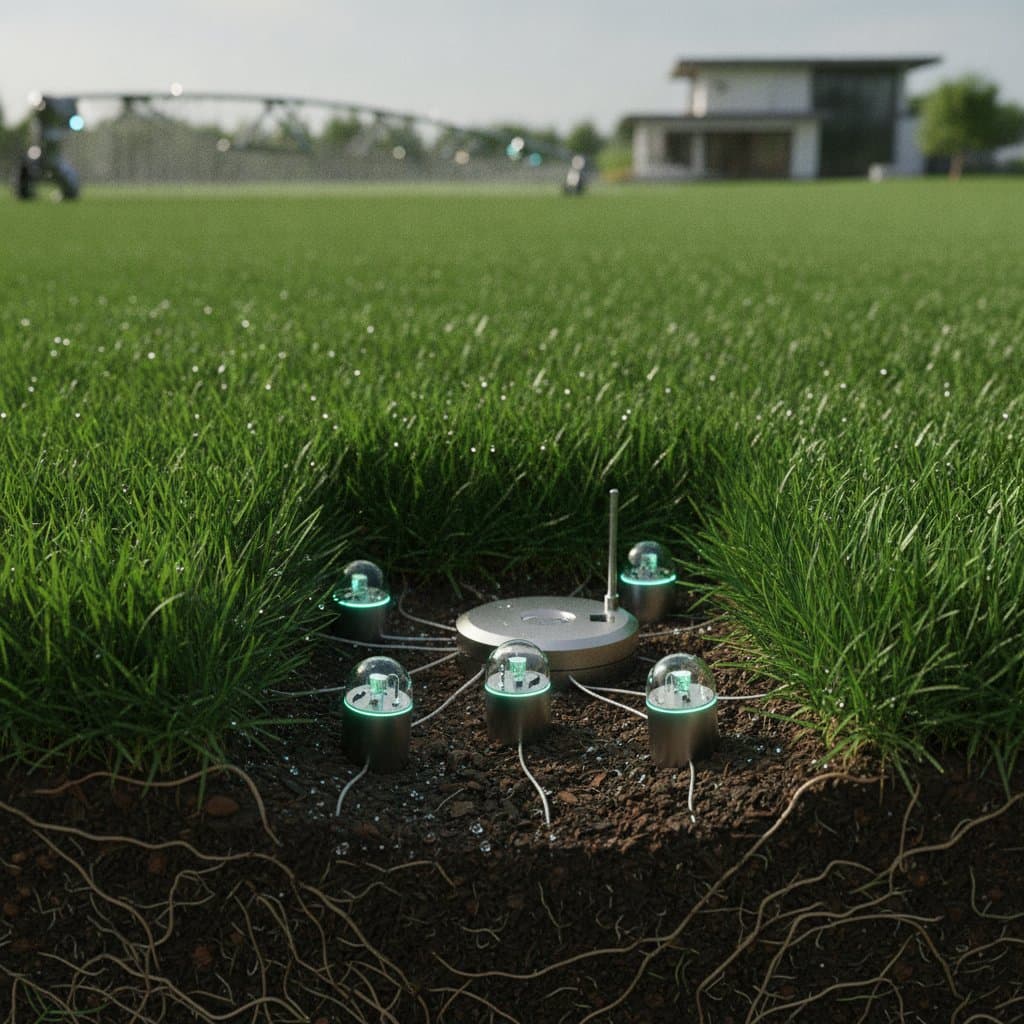
Turf Sensors Detect Disease Early to Protect Lawn Health
A healthy lawn depends on early awareness. Turf disease can move fast. By the time discoloration appears, root damage may already be underway. Turf sensors bring a new level of insight to lawn care.
These small, smart devices monitor soil and grass conditions. They spot the earliest signs of stress before problems become visible. The result is fewer chemical treatments, steadier growth, and a more resilient lawn through every season.
How Sensors Identify Stress Conditions
Disease often begins with stress. Drought, poor drainage, or compacted soil weakens turf and makes it an easy target for fungi and bacteria. Sensors track soil moisture and temperature to highlight stress conditions early. For example, if one area retains water longer than others, it may signal poor drainage or a clogged sprinkler head.
A turf manager might say, "We used to rely on color changes to tell us something was wrong. Now we know two or three days earlier."
This early insight makes treatment more precise. Aeration, irrigation adjustments, or nutrient balancing can correct the problem before pathogens spread. The lawn stays stronger, and the need for fungicides or reseeding drops significantly.
Combine sensors with a zoned irrigation system. The data helps fine tune watering schedules and keeps each section of the lawn evenly hydrated without waste.
Monitor Nutrient Levels for Balanced Soil
Advanced sensors measure nutrient levels such as nitrogen and potassium. Imbalances often weaken turf and open the door to disease. Caretakers can apply fertilizer more accurately by tracking these elements and can avoid both deficiency and excess.
A grounds specialist might say, "The sensors give us a map of soil performance. We can see which sections need feeding and which are already rich."
This approach reduces runoff and waste. It also keeps color consistent from edge to edge. No over fertilized streaks or pale corners appear. Professional landscapes such as golf greens or corporate lawns gain a polished, managed look all season.
Connect Sensors Across the Full Landscape
Turf sensors form one piece of a larger system that can include weather stations, soil probes for garden beds, and sensors for tree health. Integration allows the entire property to function as one coordinated ecosystem. The same network that monitors turf moisture can inform irrigation for ornamental trees or vegetable plots.
A horticultural designer might say, "This kind of integration removes guesswork. Every part of the landscape supports the others."
The benefit is consistent performance. The lawn stays resilient, and surrounding plantings benefit from shared insight. When sensors detect a shift in humidity or soil acidity, adjustments can be made quickly across the property.
A residential estate uses a unified sensor network. Turf sensors trigger irrigation changes that also improve soil conditions for nearby perennial beds. The result is visible vigor across all landscape zones.
Apply Seasonal Data for Smarter Planning
Turf conditions shift with temperature and rainfall. The data gathered by sensors builds a long term record that helps predict seasonal changes. Over time this record becomes a valuable reference for adjusting mowing height, aeration timing, and fertilization schedules.
A turf care manager might say, "After a full season the data tells a story. You can see patterns and plan ahead instead of reacting."
This approach prevents recurring problems. Areas that repeatedly show stress can be regraded or replanted with more suitable grass varieties. The result is a lawn that evolves intelligently and is guided by real evidence rather than trial and error.