
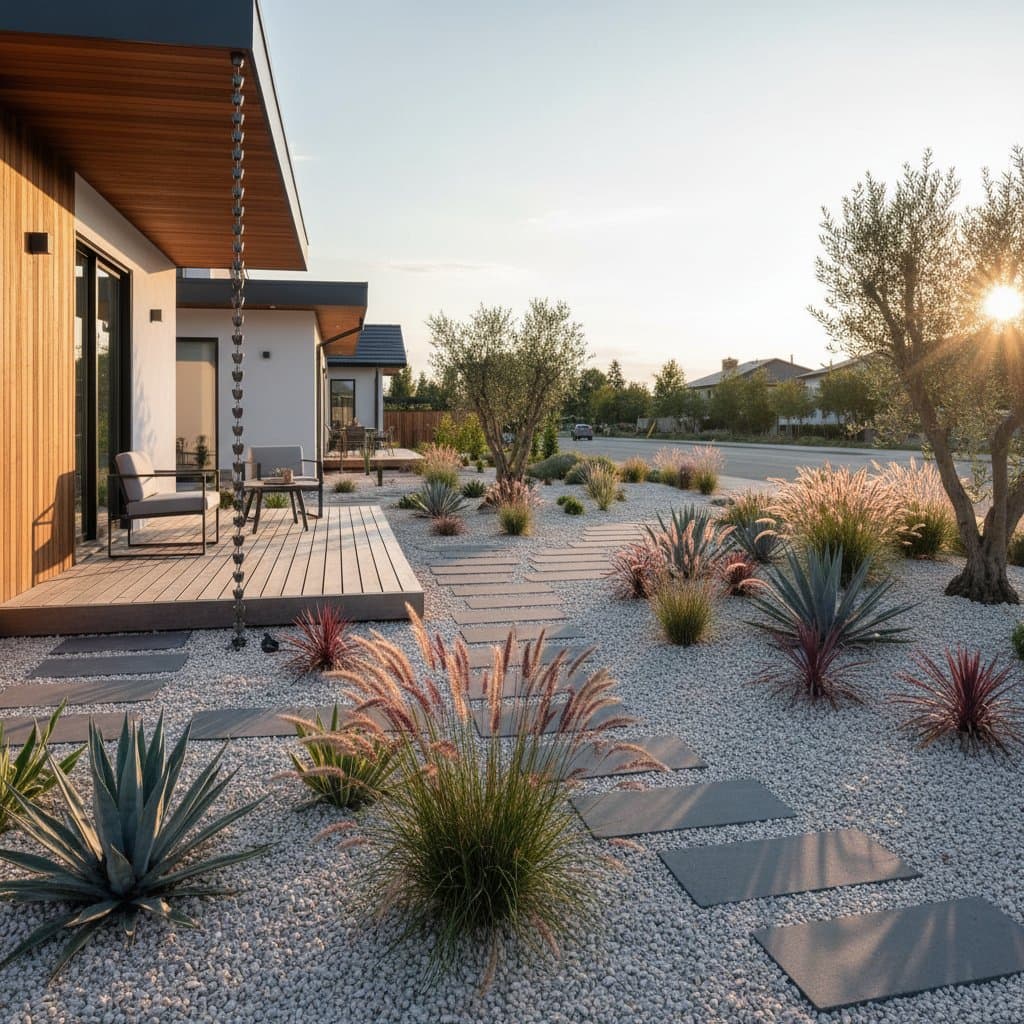
Why Gravel Gardens Outlast Lawns in 2026
A thriving garden delivers peace rather than an endless list of chores. Homeowners across California and beyond now replace thirsty lawns with gravel gardens that maintain appeal throughout the year, withstand drought effortlessly, and demand far less upkeep. These gardens prove practical, beautiful, sustainable, and versatile. When designed thoughtfully, they endure for decades longer than traditional lawns, while conserving water, time, and money.
1. A Smarter Response to Drought and Water Limits
Traditional lawns require substantial irrigation, particularly in arid areas. Gravel gardens incorporate plants adapted to sparse conditions. Pair porous gravel with drought-tolerant varieties like lavender, salvia, and California fuchsia to form an efficient water-management system. The gravel permits rainwater to infiltrate the soil instead of running off, retaining moisture for root access.
This strategy aligns with demands for sustainable practices. As water expenses increase, gravel gardens cut outdoor water consumption by up to 80 percent relative to turf. Such reductions recoup installation costs rapidly and alleviate strain on municipal supplies.
2. Built for Long-Term Durability
Lawns function as living carpets that demand ongoing attention. They suffer from foot traffic, develop bare spots, and foster weeds in disrupted soil. Gravel gardens evolve differently. The gravel shields soil from compaction and erosion, forming a resilient foundation that persists for years with little intervention.
Established drought-tolerant plants grow gradually and organically. Most need only seasonal pruning instead of weekly mowing or fertilization. The outcome is a landscape that develops gracefully rather than deteriorating from heavy use. Proper installation, combined with periodic gravel replenishment, sustains attractiveness for decades.
3. Low Maintenance, High Enjoyment
Homeowners often discover the minimal effort required for gravel gardens. Tasks exclude mowing, edging, fertilizing, and dethatching; focus shifts to occasional weeding, pruning, and watering during prolonged dry periods.
Key maintenance practices include:
- Weed control: Install premium landscape fabric beneath the gravel, then manually remove stray plants before establishment.
- Plant care: Trim perennials one or two times annually to preserve form and stimulate growth.
- Gravel refresh: Rake the surface every few years and apply a light layer of new gravel to maintain uniformity in texture and hue.
These activities resemble curating artwork more than performing drudgery. Time saved on labor allows greater appreciation of the outdoor environment.
4. Aesthetic Flexibility and Design Freedom
Gravel gardens adapt to diverse styles. Options range from modern and rustic to Mediterranean, influenced by gravel shade, plant choices, and arrangement. Pale gravel evokes a luminous coastal ambiance, whereas deeper shades convey modern solidity.
Plant varieties further define the atmosphere. Foliage like artemisia and lambs ear introduces subtle shimmer, while succulents and ornamental grasses provide form and motion. Designers frequently employ gravel to delineate living zones, including patios, fire features, and alfresco kitchens. The material unifies hardscapes and plantings seamlessly.
5. Better for Soil and the Environment
Turfgrass typically relies on chemical fertilizers and herbicides, which harm soil vitality. Gravel gardens nurture natural soil health. The gravel tempers soil temperature, averts crust formation, and promotes microbial activity underneath. Gradually, the soil builds a robust ecosystem that enhances drainage and root development.
Environmental benefits stand out clearly. Gravel gardens lower greenhouse gas outputs by removing the need for fuel-driven mowers and leaf blowers. They curb pollutant runoff, preserve water, and foster habitats for pollinators and insects. One cluster of native buckwheat or yarrow draws bees and butterflies, bolstering regional biodiversity.
6. Cost Efficiency Over Time
Initial gravel garden setup may exceed lawn reseeding expenses, yet returns prove consistent. Decreased water charges, fewer fertilizer needs, and reduced upkeep offset the outlay promptly. Those employing professional landscapers realize amplified savings.
These gardens elevate property worth through evident sustainability and intentional aesthetics. Buyers regard them as premium, low-effort features, particularly amid ongoing water regulations. Thoughtful planning not only trims costs but safeguards long-term asset value.
7. Practical Tips for Getting Started
Establishing a gravel garden demands preparation, though steps remain simple:
- Assess site conditions. Examine exposure to sunlight, soil composition, and drainage patterns. These gardens excel in sunny spots with permeable soil.
- Choose the right gravel. Opt for particles sized from three-eighths to three-quarters inch for optimal footing and water passage. Angular crushed stone outperforms smooth pea gravel in retention.
- Prepare the base. Eliminate current vegetation, grade the ground evenly, and lay landscape fabric to block weeds.
- Add plants thoughtfully. Position drought-tolerant selections according to projected growth, clustering those with matching hydration requirements.
- Finish with gravel. Distribute evenly around plantings, ensuring stems and crowns rise slightly above to avoid moisture-related decay.
This approach yields a polished, enduring result from the outset.
Sustaining Beauty Through the Seasons
Patience yields rewards in a gravel garden. Plants root deeply in the initial year, establishing stability. By year two, elements harmonize in color, texture, and form.
For those weary of perpetual mowing and irrigation, gravel gardens provide enduring ease. They endure intense heat, safeguard resources, and preserve elegance with scant intervention.