
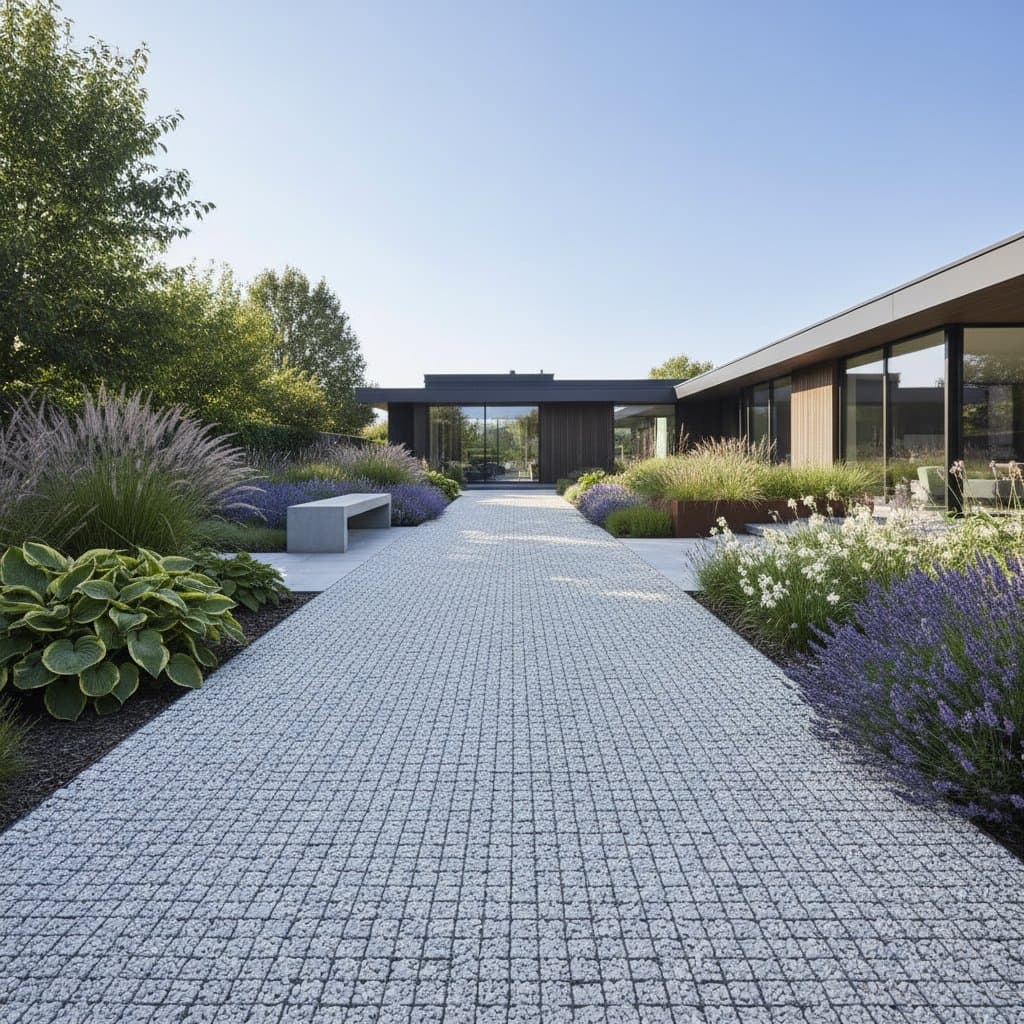
Why Gravel Grids Rule 2026's Effortless Walkways
Homeowners in California face unique challenges when maintaining gravel paths. Rainy seasons along the coast cause shifting and mud accumulation, while dry inland summers lead to dust and uneven surfaces. Gravel grid systems address these issues by providing a stable foundation that preserves the natural appeal of gravel. These systems deliver durable walkways that require minimal upkeep and enhance outdoor spaces.
Understanding Gravel Grids and Their Functionality
Gravel grids consist of interlocking panels crafted from recycled plastic or durable polymers. Each panel features cells that secure loose gravel, preventing displacement from foot traffic or weather events. This design ensures a solid yet permeable surface that allows water to drain efficiently and resists soil erosion.
Compared to rigid options like concrete slabs or individual pavers, gravel grids accommodate ground movement. They flex slightly with settling soils, which proves ideal for California's diverse landscapes, including sandy coastal areas and expansive clay soils. This adaptability extends the lifespan of the walkway while supporting natural water flow.
Essential Benefits for Practical Use
Gravel grid walkways offer reliable performance for busy homeowners. They balance aesthetic appeal with everyday utility, making them a smart choice for garden paths and access routes.
Key advantages include the following:
-
Effective Drainage: The open cell structure permits rapid water infiltration, eliminating standing water and reducing slip hazards. This feature protects adjacent plants from waterlogging and maintains usability after storms.
-
Minimal Upkeep: Secured gravel eliminates frequent raking or replenishing. A simple annual inspection and gravel refresh suffice to preserve a polished appearance.
-
Eco-Friendly Design: Panels often incorporate post-consumer recycled content, minimizing environmental impact. The permeable layout promotes aquifer replenishment by allowing rainwater to percolate into the soil instead of contributing to urban runoff.
-
Economic Value: Initial setup costs less than traditional hardscaping methods, with straightforward repairs that avoid full replacements. Long-term savings arise from reduced maintenance and the option to reuse grids in future redesigns.
-
Versatile Aesthetics: Grids conform to irregular shapes, gentle inclines, and hybrid surfaces. Pair them with drought-resistant natives, decomposed granite accents, or bordered stone for cohesive garden integration.
Steps to Construct a Durable Walkway
Approach walkway construction with careful planning to ensure stability. Start by surveying the intended path, noting elevation changes and natural water patterns. Clear vegetation and excavate to a depth of four to six inches, depending on soil type and expected traffic.
Prepare the base by adding and compacting a two-inch layer of crushed aggregate for support. Lay the grids in sections, securing them with stakes or edge restraints to prevent shifting. Select gravel suited to your needs: rounded pea gravel for a smooth, modern finish, or angular crushed rock for enhanced grip on slopes.
For extensive installations, such as pathways linking seating areas or utility zones, consult a certified landscape professional. Experts verify base compaction, recommend appropriate gravel sizes, and integrate features like subtle lighting or plant pockets. Proper execution guarantees a walkway that withstands heavy use and seasonal shifts.
Experiencing the Walkway in Daily Life
Once installed, a gravel grid path provides a stable feel with the authentic texture of gravel underfoot. It repels dirt more effectively than loose gravel alone and recovers quickly from wet conditions. The surface develops a subtle character over time, enhancing the garden's lived-in quality without structural compromise.
Homeowners often expand their use of these systems after initial success. Apply grids to driveway aprons for vehicle support, secondary trails for garden exploration, or entertainment zones that blend hardscape with greenery. This approach aligns with broader goals of water conservation and low-impact landscaping, from minimalist xeriscapes to vibrant coastal gardens.
Enhancing Garden Accessibility and Vitality
Gravel grids contribute beyond mere navigation. They safeguard underlying soil from compaction and erosion, fostering healthier root zones for surrounding vegetation. This setup simplifies access for all users, including those with mobility aids, throughout fluctuating weather.
Select grids that prioritize both strength and permeability to secure lasting results. Such walkways demand little intervention yet deliver consistent beauty and reliability. In contemporary outdoor design, gravel grids establish a benchmark for seamless, resilient pathways that enrich daily living.