
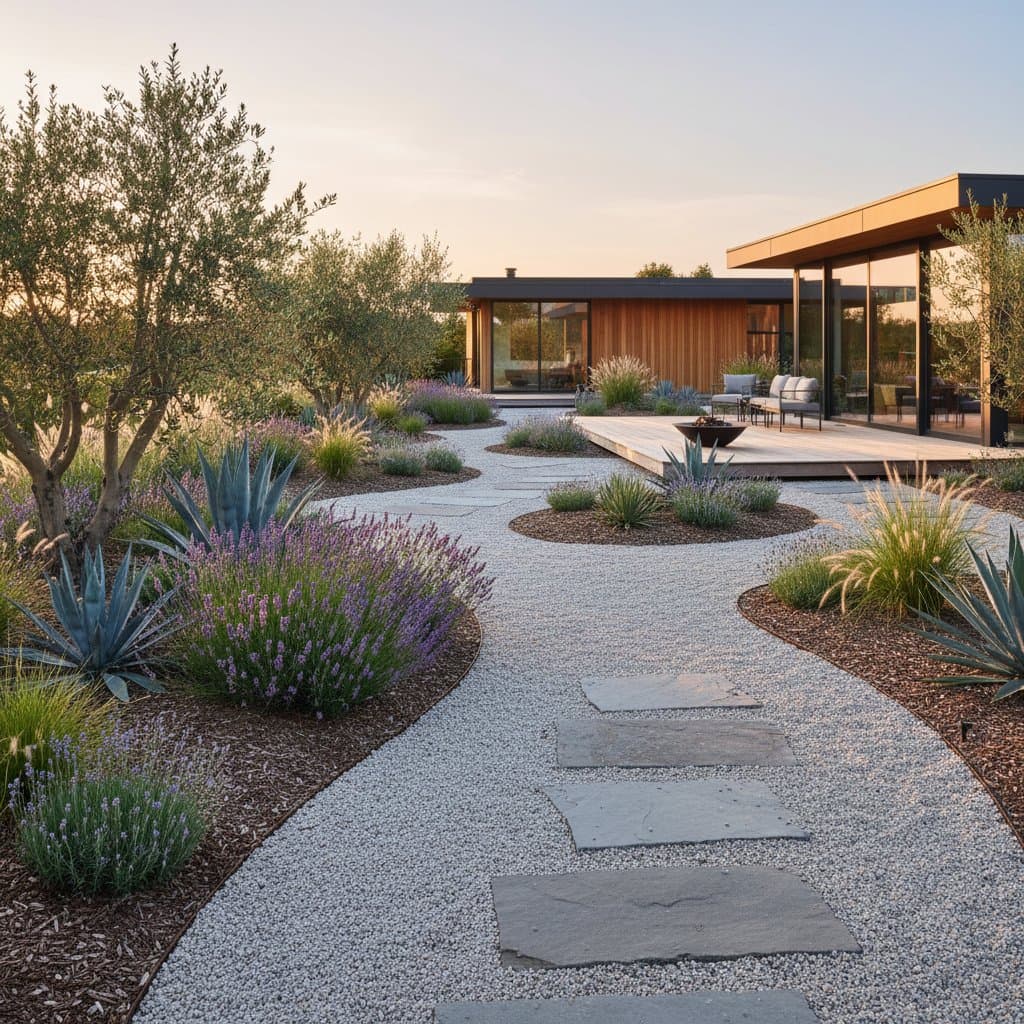
Why Gravel Gardens Surpass High-Maintenance Lawns
A thoughtfully designed garden delivers pleasure without perpetual labor. Gravel gardens reshape outdoor areas throughout California and similar regions, presenting a refined, drought-resistant, and low-effort option to water-intensive lawns. These designs maintain vitality during arid periods, ensure superior drainage, and accommodate diverse vegetation while significantly lowering expenses on water, mowing, and fertilizers. Homeowners seeking enduring aesthetics and environmental responsibility find in gravel gardens a serene, resilient allure that traditional lawns seldom achieve.
Challenges of Traditional Lawns
Lawns represent symbols of tidiness and relaxation, yet they exact ongoing demands. Frequent mowing, watering, fertilizing, and pest management consume time and funds. In areas with scarce rainfall, lawns depend on sprinkler systems or irrigation that deplete substantial water volumes, particularly in summer. This pattern creates a burdensome routine that conflicts with contemporary priorities for sustainability and fiscal prudence.
Despite careful tending, lawns face issues like uneven growth, soil compaction, and persistent weeds. They frequently necessitate chemical applications that harm soil vitality and nearby ecosystems. The lush green facade appears tranquil, but it incurs considerable ecological and monetary tolls. Gravel gardens interrupt this pattern, introducing resilience and flexibility instead.
Defining Features of Gravel Gardens
A gravel garden employs gravel as the main ground covering, typically paired with water-wise plants, indigenous varieties, and structural features such as boulders or stepping stones. The gravel serves as mulch and aesthetic component, inhibiting weeds, conserving moisture, and offering bold contrast against foliage.
The appeal of a gravel garden resides in its straightforwardness and longevity. When installed correctly, the gravel foundation permits rainwater infiltration while averting erosion. The area stays orderly and largely weed-free with little intervention. Gravel gardens align seamlessly with California's Mediterranean conditions, characterized by extended dry intervals and essential water preservation.
Advantages Extending Past Surface Level
Gravel gardens provide advantages that exceed basic upkeep reduction. They yield enduring gains across landscape oversight dimensions.
-
Water Preservation
Gravel gardens sharply curtail water consumption. Established plants in these settings flourish with natural rainfall or occasional supplementary hydration. Such adaptations suit locales with rigorous water limits or variable weather patterns. -
Minimized Upkeep
Absent the need to mow or fertilize turf, weekends gain freedom. Infrequent raking and targeted weeding supplant routine lawn tasks. The gravel layer also averts mud formation and standing water, preserving cleanliness on paths and patios. -
Ecological Balance and Soil Vitality
The gravel overlay shields underlying soil from temperature fluctuations and erosion. Decomposing leaves contribute organic material over time, nurturing helpful microbes. This method fosters sustained soil enrichment without reliance on artificial fertilizers or herbicides. -
Creative Flexibility
Gravel varieties span hues and grains, from gentle pea gravel to sharp crushed stone. Designers blend shades for dimension or to delineate areas for lounging, trails, or beds. The outcome forms a garden that balances formality with ease. -
Habitat for Wildlife
Drought-adapted plants draw pollinators including bees, butterflies, and hummingbirds. Gravel gardens evolve into vibrant niches that advance biological diversity in city or residential environments.
Steps to Create a Thriving Gravel Garden
Achievement starts with deliberate preparation. Though gravel gardens emphasize ease, strategic setup guarantees beauty and utility over years.
-
Evaluate the Location
Observe water flow on the site. Identify depressions that gather runoff or spots that desiccate rapidly. Gravel gardens excel in permeable soils; enhance dense clay with sand or compost as required. -
Select Appropriate Gravel
Choose gravel matching practical and visual needs. Pea gravel offers soft footing for walks or rest zones, whereas crushed rock ensures firmness on inclines or access routes. Opt for particles that hold position yet permit drainage. -
Establish a Firm Foundation
Eliminate current grass and weeds thoroughly. Position permeable landscape fabric to curb regrowth, then apply gravel to a minimum depth of two inches. Compact lightly for a uniform, stable plane. -
Pick Resilient Plants
Pair herbs like lavender, rosemary, and thyme with California natives such as salvia, yarrow, and manzanita. Incorporate succulents including sedum and agave for form, alongside grasses for motion. Prioritize species suited to sparse, draining environments. -
Incorporate Trails and Rest Areas
Gravel gardens prioritize usability alongside visuals. Outline routes with stones or broad gravel lanes to spur discovery. Introduce benches, pots, or walls as anchors promoting repose. -
Manage Irrigation Wisely
In initial phases, deliver thorough watering weekly or biweekly. After root development, align hydration with precipitation cycles. Concealed drip systems under gravel supply targeted moisture efficiently when called for.
Style Ideas Across Aesthetics
Gravel gardens conform to diverse motifs, from rustic Mediterranean to sleek contemporary. Balance emerges from harmonizing rigid and fluid elements.
- Modern Settings: Combine fine gray crushed gravel with corten steel containers and bold agaves for sharp, geometric impact.
- Rustic Havens: Blend warm gravel with lavender, sage, and echinacea to craft an inviting, aromatic retreat with classic charm.
- Arid Escapes: Employ decomposed granite beneath, accented by yucca, cacti, and desert marigold for striking durability.
- Seaside Designs: Layer light gravel with succulents and breezy grasses, forging a gentle link from dwelling to vista.
These approaches weave hardscape and greenery into unified, seasonally consistent scenes.
Pitfalls to Sidestep in Gravel Gardens
Straightforward designs still demand precision. Several frequent errors undermine gravel garden efficacy.
-
Opting for Plastic Barriers Over Fabric
Plastic impedes water and oxygen, potentially starving roots and disrupting flow. Select permeable fabric consistently. -
Blending Uneven Gravel Types
Combining small and large stones leads to instability and poor percolation. Maintain uniform sizing for reliability. -
Excessive Planting Density
Allow space for natural expansion to preserve appeal. Begin sparingly and expand based on growth patterns. -
Overlooking Boundaries
Undefined borders permit gravel migration into adjacent areas. Install metal, rock, or wood edging for sharp delineation. -
Delayed Weed Management
Initial weeds may surface despite barriers. Remove them swiftly to prevent rooting.
Maintaining Your Gravel Garden
Established gravel gardens rank among the simplest to sustain. They typically need periodic reviews. Prune spent growth and clear debris in spring. Monitor gravel settling or fabric exposure in summer, replenishing as necessary. Appreciate the garden's form during winter dormancy.
For those inclined to refine, gravel gardens invite minor tweaks. Introduce fresh plants, update lounging spots, or vary path gravel shades. The forgiving base accommodates alterations seamlessly. Gradually, the space acquires an authentic, individualized patina.
Enduring Worth and Ecological Impact
A gravel garden invests in form and function alike. It trims water costs, lessens maintenance visits, and safeguards nearby features through better runoff control. Gravel's light reflection and thermal moderation create a milder home surroundings compared to concrete.
Ecologically, these gardens bolster variety while curbing chemical use. Adapted plants lure essential pollinators with modest inputs. Gravel endures permanently, with options for relocation in future redesigns.
Embracing the Garden's Enduring Appeal
The delight of a gravel garden stems from its understated assurance. Each element forges a durable tableau. Shifting lights play across tones, while sun-warmed herbs release aromas.
Gravel gardens demonstrate that ecological mindfulness and visual grace coexist. They model resilient landscapes honoring nature's rhythms within daily existence.