
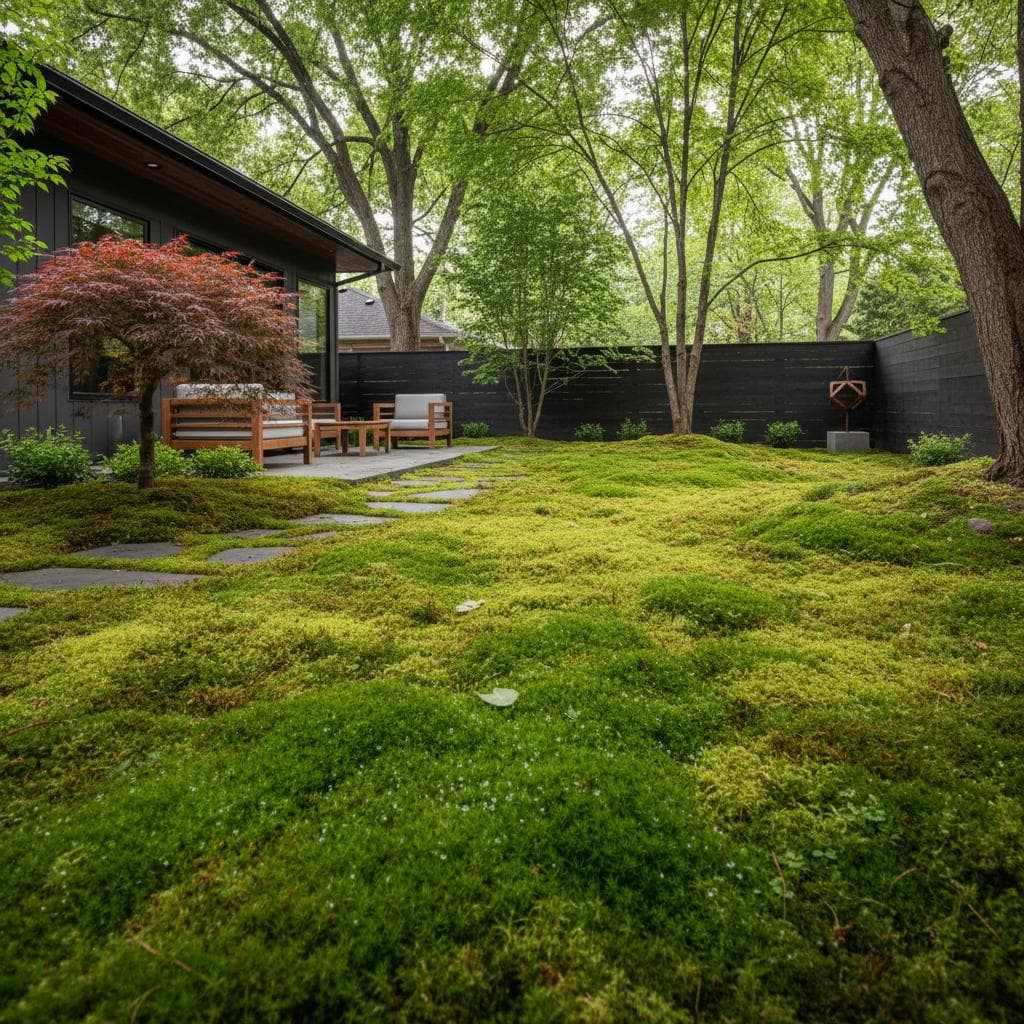
Shady Yards Are Choosing Moss Lawns Over Turf Grass
A shady yard can be a gardener puzzle. The turf looks thin. The soil stays damp. The maintenance feels endless. Across California and beyond, more homeowners are skipping the struggle of coaxing grass to grow in low light. Instead, they are discovering the quiet beauty and resilience of moss lawns.
Moss offers a soft, evergreen carpet that thrives where traditional turf fails. It is a living ground cover that rewards patience, consistency, and respect for natural rhythm.
Why Moss Belongs in Shade
Moss is not a weed. Nor is it a sign of neglect. It is a non-vascular plant that draws moisture directly from the air and surface water. Where grass demands sun, fertilizer, and irrigation, moss simply asks for steady moisture, moderate shade, and low competition. In shaded yards, moss often appears on its own. Homeowners who recognize its potential can nurture it into a lush, consistent carpet that stays green year-round.
The appeal begins with low maintenance. Moss never needs mowing, edging, or chemical feeding. It can handle light foot traffic once established. It remains visually calm through seasonal shifts. In climates with mild winters and cool, damp summers, such as coastal California, moss becomes an elegant, sustainable solution for challenging garden spaces.
Comparing Moss and Turf for Shady Conditions
Grass is a sun lover. Even shade-tolerant blends require several hours of light each day to stay dense and healthy. In contrast, moss performs best where sunlight filters softly through trees or reflects off nearby surfaces. Here are a few key comparisons that help clarify the choice.
- Water Needs. Moss requires moisture but not deep irrigation. Light misting or natural humidity is enough once the colony is mature. Turf grass, even in shade, demands regular watering to maintain color and density.
- Soil Conditions. Moss prefers compact, slightly acidic soil. Turf needs aeration, nutrients, and drainage. Moss can even grow on compacted clay or rocky surfaces that grass roots cannot penetrate.
- Maintenance. Moss does not require mowing or fertilizing. Occasional debris removal and gentle weeding keep it neat. Turf maintenance, even in shade, involves mowing, feeding, and reseeding.
- Longevity. A moss lawn can last for decades with minimal disturbance. Grass often needs reseeding or replacement in shaded spots after a few seasons.
Choosing moss is not only a design decision but also a philosophical one. It represents a shift toward working with nature instead of against it.
Selecting the Right Moss Variety
Mosses vary widely in texture, color, and growth pattern. Understanding their natural preferences helps ensure success. For shaded lawns, three groups tend to perform best.
- Cushion Moss (Leucobryum). Forms dense, velvety mounds with a silvery-green hue. Excellent for areas that receive dappled light and light foot traffic.
- Sheet Moss (Hypnum or Hylocomium). Spreads quickly across soil and stones, creating a smooth, uniform surface. Ideal for larger areas and gentle slopes.
- Fern Moss (Thuidium). Resembles miniature ferns, adding texture and visual depth. Works well in woodland gardens or beneath mature trees.
A combination of species can create a layered, natural look. Many homeowners collect small patches from their own property and transplant them strategically, encouraging gradual spread over months.
Preparing the Ground for Moss
Moss thrives on preparation and patience. The process begins by clearing the area of weeds, grass, and debris. Bare soil should be compacted slightly, then moistened. If the pH is too high, a light dusting of sulfur or peat moss can help lower it toward the acidic range moss prefers.
Next comes the placement of moss fragments or sheets. These should be pressed gently into the soil for full contact. Water lightly to settle them. Then keep the surface damp until the moss begins to anchor. This stage may take several weeks. Consistency matters more than volume. Misting twice daily during dry periods works better than heavy soaking.
Avoid walking on new moss until it shows signs of growth. Once established, moss forms a dense mat that resists erosion and helps regulate soil moisture.
Integrating Moss into Landscape Design
A moss lawn does not need to cover an entire yard to make an impression. It can be used strategically to emphasize calm and continuity. Consider these uses.
- Pathway Edges. Moss softens the lines of stepping stones or gravel, making transitions feel natural.
- Beneath Trees. Where roots prevent turf from thriving, moss creates a serene, green carpet.
- Courtyard Corners. In small shaded patios, moss can replace grass entirely, providing a cool, tactile surface.
- Water Features. Around fountains or ponds, moss enhances the sense of moisture and harmony.
For designers, moss introduces a subtle luxury. Its color varies slightly with light and humidity, creating depth and movement without flowers or foliage. It also pairs beautifully with ferns, hostas, Japanese maples, and native woodland plants.
Common Challenges and Solutions
Even low-maintenance landscapes have learning curves. Moss lawns can face a few issues, but they are manageable with attention and care.
- Drying Out. If moss browns or curls, it is signaling dryness. Mist it regularly until color returns.
- Debris Accumulation. Fallen leaves or pine needles block light and airflow. Gently sweep or blow them away.
- Algae Growth. Excess moisture without circulation can invite algae. Improve air movement or reduce watering frequency.
- Animal Disturbance. Pets may dislodge sections of new moss. Protect young areas with temporary barriers until well-rooted.
Once the environment stabilizes, moss lawns tend to self-balance and require little intervention.
Watching Your Garden Thrive
Moss lawns invite a slower pace of gardening. They ask for observation more than control. Over time, the surface becomes richer, more even, and deeply green. Raindrops sparkle on it after showers. The scent of damp earth lingers longer than on any turf.
For homeowners seeking sustainable beauty without the constant cycle of mowing and watering, moss is a quiet triumph. It turns shaded ground into a living tapestry and rewards patience with lasting serenity. By choosing moss over turf, you are not only solving a shade problem but also embracing a more natural, enduring way to garden.