
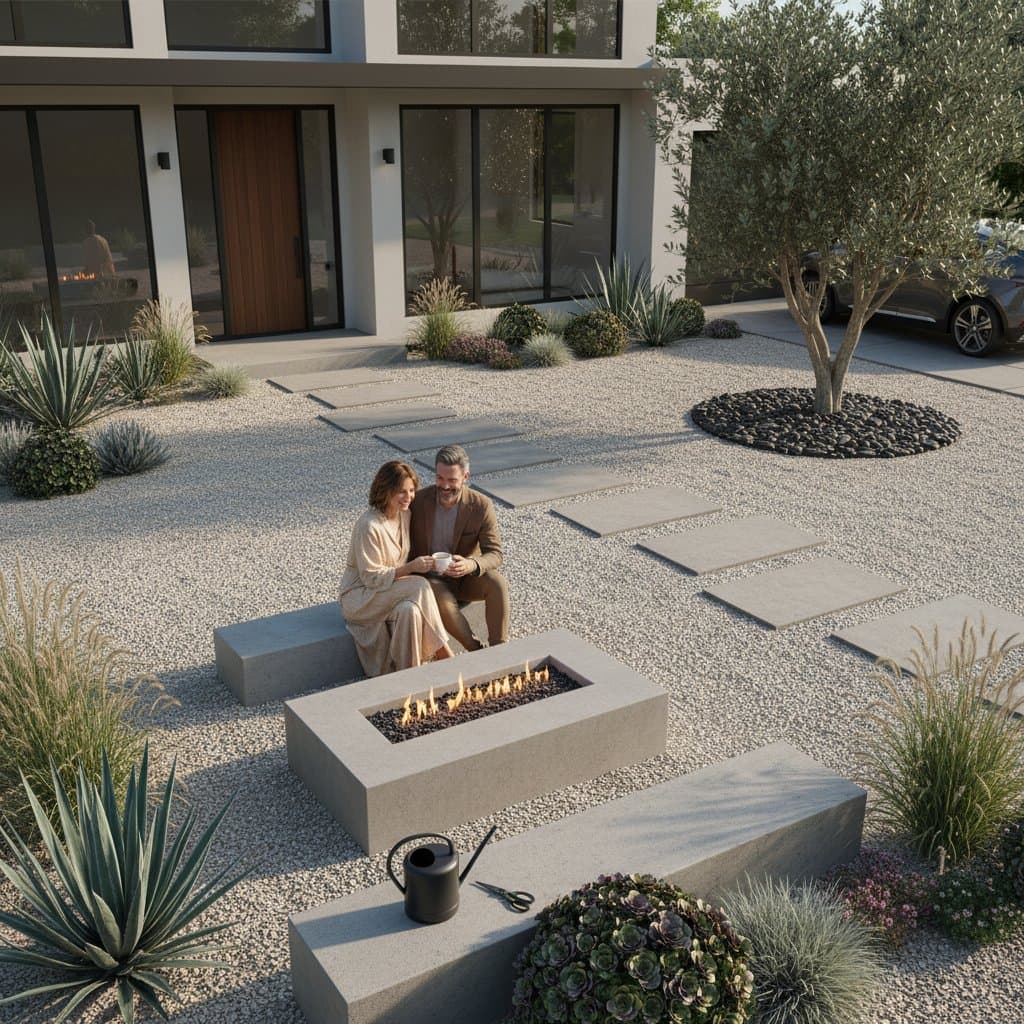
Replace Your Grass Lawn and Cut Maintenance by 60 Percent
When Emma and Luis bought their mid-century home, they loved its open layout and large backyard. They did not enjoy the endless mowing, watering, and weeding required by the grass lawn. After years of weekend chores, they sought a landscape that looked refined, matched their modern style, and needed far less upkeep. A gravel lawn that blends texture, native planting, and smart drainage provided the solution.
A New Kind of Lawn
The project started with removal of the traditional turf and reshaping of the yard into defined zones. The couple wanted a space that still felt like a garden rather than a hardscape courtyard. The designer proposed a gravel lawn consisting of compacted decomposed granite topped with small rounded gravel. This structure permits free water drainage while remaining firm underfoot.
The goal was to retain the open feel of a lawn without constant watering and mowing, according to the designer. Gravel delivers that soft visual quality yet performs better over time. Unlike synthetic turf, gravel feels natural and permits air and moisture to reach the soil. It also pairs with various plant palettes, from Mediterranean to minimalist. Emma and Luis selected a pale gray mix that reflects sunlight and stays cool on warm days.
Layout and Flow
The new layout divides the yard into three main areas. The gravel lawn lies closest to the house and is bordered by steel edging to maintain crisp lines. A planting band beyond it features native grasses, lavender, and sage. A small seating terrace made from concrete pavers set within gravel occupies the far end.
This arrangement keeps the space open for entertaining while reducing the irrigated area by more than half. The gravel surface improves accessibility for outdoor dining or exercise. The designer attended to grading with care. A subtle slope directs rainwater to planted zones for absorption instead of runoff. A compacted base of decomposed granite beneath the gravel ensures stability. This layered system requires only occasional raking for upkeep.
Choosing the Right Gravel
Not every gravel suits use as a lawn substitute. Size and shape matter most. Pea gravel between one-eighth and one-quarter inch creates a comfortable walking surface that does not shift excessively. Rounded edges avoid sharp points that could harm shoes or bare feet.
Neutral tones such as warm gray, buff, or soft beige blend readily with most architectural styles. Emma and Luis chose a limestone blend that complements their home stucco walls and black window frames. The mix connects the landscape to the house without drawing undue attention. Steel edging defines boundaries and prevents gravel migration into planting beds. It also produces a finished appearance, particularly from the patio. The edging distinguishes a tidy design from one that appears incomplete, as Luis noted.
Planting with Purpose
Drought-tolerant plants surround the gravel lawn and introduce life and movement. Blue fescue, feather grass, and creeping thyme soften the edges. Lavender and sage contribute scent and support pollinators. The palette remains low to preserve sightlines and sustain openness.
Each plant was selected for texture and durability. The designer grouped species with similar water needs and installed drip irrigation under a thin mulch layer. This approach delivers moisture efficiently and keeps foliage dry to limit maintenance and disease. The overall appearance shifts subtly across seasons. Grasses move in the wind, lavender blooms along the border, and gravel changes tone with the light. The result stays calm, natural, and organized.
Maintenance Made Easy
The couple observed an immediate reduction in upkeep after installation. Mowing, edging, and fertilizing are no longer needed. The gravel surface requires only a quick rake every few weeks to smooth footprints or redistribute stones. Weeds stay minimal due to the compacted base and weed barrier fabric underneath. Any that emerge are simple to remove because roots cannot anchor deeply. Drip irrigation operates on a timer for automatic and efficient watering.
Emma observed that they once spent half their weekends sustaining the grass. They now spend that time enjoying the yard. The change from grass to gravel reduced their maintenance time by roughly sixty percent, and their water bill declined substantially.
Daily Use After Installation
The new gravel lawn has become more than an alternative surface. It altered how the homeowners interact with their outdoor space. The firm yet forgiving ground supports yoga, small gatherings, or quiet moments with coffee. Muted tones complement the house in every season. A light patina forms over time as the gravel settles and acquires a natural appearance. Occasional top-dressing every few years maintains freshness. The couple intends to apply the same approach to their front yard by replacing the remaining grass with gravel and native shrubs.
Homeowners gain texture, color, and comfort by replacing grass with gravel while reducing routine care by more than half. The outcome is a yard that feels grounded, modern, and simple to maintain.