
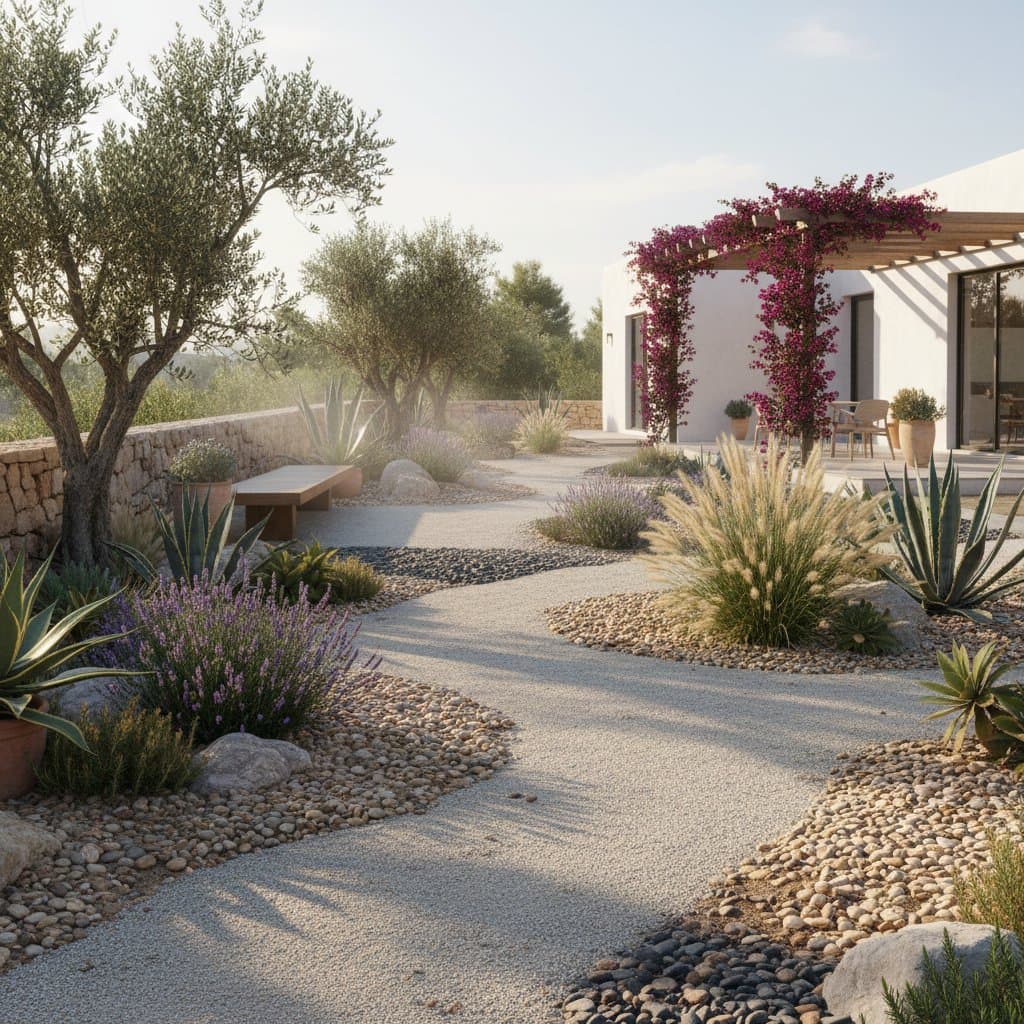
Why Gravel Gardens Excel in Challenging Climates
When Emma and Luis purchased their coastal home, they sought a landscape that aligned with their relaxed lifestyle. They envisioned a garden that appeared natural, demanded minimal water, and remained appealing during extended dry summers. The answer emerged as a gravel garden, drawing inspiration from the Mediterranean hillsides they admired during travels.
Project Overview
- Homeowners: Emma and Luis, avid outdoor enthusiasts
- Location: Coastal hillside property
- Area: About 600 square meters of outdoor space
- Designer: Intepra Gardens Design Studio
- Contractor: Greenstone Landscape Works
- Style: Mediterranean gravel garden featuring native and drought-tolerant plants
- Highlights: Permeable gravel foundation, layered plantings, and integrated seating areas
Designing for Heat and Balance
Gravel gardens align seamlessly with Mediterranean principles, incorporating natural textures, earthy colors, and simple upkeep. For Emma and Luis, this design delivered aesthetics alongside functionality. Rather than resisting the arid environment, their garden now complements it.
"Gravel gardens thrive where traditional lawns struggle," explains landscape designer Maria Ortega from Intepra Gardens. "The foundation must drain effectively and sustain hardy plants."
The team started by excavating compacted soil and adding a thick drainage layer. They then applied angular gravel that interlocks to resist erosion. This base not only provides a polished appearance but also maintains cool root zones and consistent soil moisture.
Entryway: Inviting Arrival
The front path winds softly from the gate to the entrance, bordered by elevated plant beds. These beds host silvery leaves and fragrant herbs that release aromas when touched.
Selected Plants:
- Lavender Hidcote
- Santolina chamaecyparissus
- Rosemary officinalis prostratus
- Olive trees in oversized terracotta pots
Pale limestone gravel covers the path, reflecting sunlight to brighten the space. Corten steel edging along the borders contains the gravel and adds a modern edge without sharpness.
"The entry establishes the garden's character," notes Ortega. "It conveys purpose, even as the plants appear casual."
Courtyard: Textural Depth
The courtyard offers a more intimate, sensory encounter. Gravel covers the primary surface, interspersed with stone pavers that create stable zones near the dining table.
A darker gravel variety here contrasts the front's lighter tone, delineating areas while preserving unity. Creeping thyme fills gaps between pavers, releasing fragrance underfoot and softening edges.
Reclaimed brick raised beds introduce elevation and warmth. They hold drought-resistant varieties like agave, euphorbia, and sedum, whose bold shapes capture sunlight and produce shifting shadows throughout the day.
Terrace: Practical Comfort
The rear terrace integrates fluidly with the gravel expanse. Designers chose compacted gravel bound with resin for a solid yet water-permeable surface suitable for furnishings.
A built-in bench lines one wall, cushioned in durable fabrics of stone and sage hues. Tall ornamental grasses behind it offer screening while allowing views.
Materials Overview:
- Ground Cover: Natural gravel stabilized by resin
- Furniture: Aluminum frames with powder coating and teak accents
- Fabrics: Sunbrella in subdued colors
- Illumination: Bronze-finished low-voltage LED path lights
"Comfort arises without extravagance," states Ortega. "Each element functions, from gravel handling drainage to seating promoting al fresco activities."
Planting Approach: Refined Drought Resistance
Mediterranean gardens emphasize moderation. Plantings here follow patterns of repetition and openness, prioritizing texture, hue, and durability over perpetual flowers.
Core Plants:
- Salvia nemorosa for upright color highlights
- Phlomis fruticosa for architectural form and golden shades
- Helictotrichon sempervirens for delicate silver grasses
- Cistus x pulverulentus for ground-hugging coverage
Gravel serves as mulch, reducing moisture loss and weed growth. As it ages, the gravel integrates with the earth, yielding a landscape that matures gracefully from installation.
Managing Water and Upkeep
Gravel gardens excel in resource efficiency. A properly built subbase allows swift rainwater infiltration, preventing pooling or excess flow. Established plants need little supplemental watering, drawing primarily from precipitation.
Upkeep remains simple. Rake away debris periodically, and pull occasional weeds from the loose surface. Replenish gravel annually to refresh the appearance and maintain neatness.
Ortega recommends, "Emphasize the garden's framework over frequent plant adjustments. Gravel ensures stability, allowing plants to stand out."
Adapting Mediterranean Design to Contemporary Needs
Mediterranean landscapes adapt readily to diverse settings, from compact city patios to expansive country grounds, through emphasis on balance, surface, and palette rather than size. Gravel gardens harmonize with modern buildings, linking organic and constructed features smoothly.
These designs foster extended outdoor use, cut water consumption, and nurture local ecosystems. Pollinators flourish amid nectar sources, and permeable surfaces bolster subsurface biology.
Homeowners pursuing eco-friendly elegance find this method ideal. It honors regional constraints and converts challenges into creative strengths.
Experiencing the Finished Landscape
Several months post-installation, Emma and Luis regard their garden as the home's most soothing feature. They enjoy morning coffee on the bench, appreciating the gravel's subtle sound underfoot. The area conveys stability, resilience, and harmony with its surroundings.
Beyond aesthetics, the Mediterranean style simplifies routines and instills tranquility derived from enduring design. Gravel gardens demonstrate how climate-aware planning yields lasting allure.