
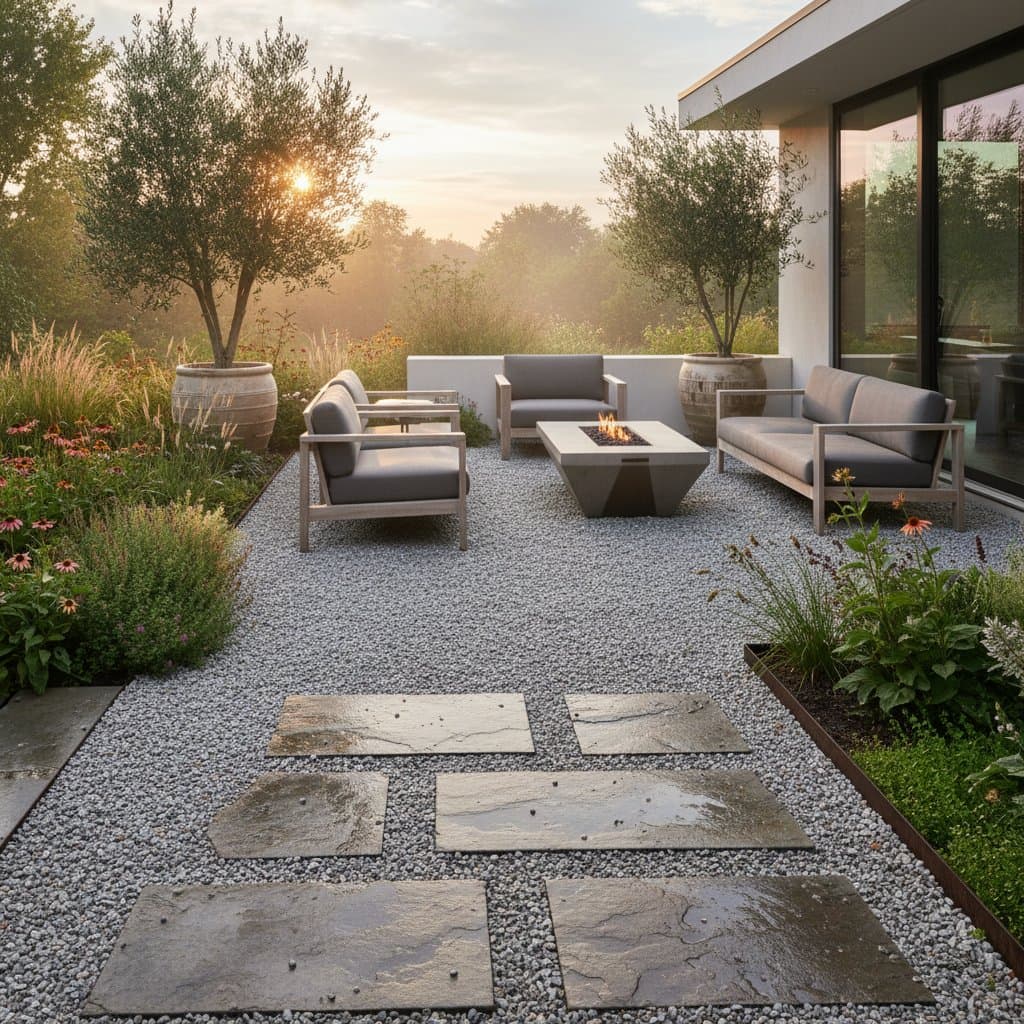
Why Gravel Patios Surpass Concrete for Drainage and Design
Gravel patios offer a grounded, natural feel that welcomes outdoor gatherings. These surfaces drain rapidly after rainfall, remain cooler underfoot during warm days, and integrate seamlessly with surrounding plantings. Homeowners and landscape designers increasingly select gravel over poured concrete slabs due to its superior water management and versatile styling options. A thoughtfully constructed gravel patio appears polished, demands little maintenance, and maintains a drier yard across all seasons.
Key Advantages at a Glance
- Ideal Locations: Courtyards, side yards, and outdoor living zones.
- Material Profile: Loose or compacted gravel layers.
- Suitable Climates: Most regions, provided the base receives adequate preparation.
- Primary Objectives: Enhance drainage, boost comfort, and create a well-defined, permeable outdoor area.
Establishing a Permeable Foundation for Durability
The foundation underpins the longevity of any gravel patio. Proper preparation ensures the surface remains level and resists erosion from water flow. Begin by excavating the site to approximately six inches deep. Install a compacted layer of coarse base rock, followed by geotextile fabric to isolate the soil from the gravel above. This setup permits water infiltration while preventing the gravel from migrating into the subsoil.
Each component serves a distinct role in achieving stability and moisture regulation. The base layer provides structural support, and the fabric acts as a barrier against sediment mixing. For optimal performance, crown the surface slightly to direct runoff toward adjacent planting beds.
Core Benefits: This method avoids uneven settling and minimizes ongoing maintenance needs.
Practical Tip: Apply three inches of crushed stone as the base, then add two inches of decorative gravel for high-traffic areas.
Visual Suggestion: Layered bases with fabric maintain a smooth, water-permeable surface.
Enhancing Evening Appeal with Strategic Lighting
Strategic lighting elevates a gravel patio into a versatile evening haven. The reflective quality of gravel diffuses light gently, allowing low-voltage options to highlight pathways and seating without overwhelming brightness. Incorporate path lights, overhead string fixtures, and uplights directed at trees or focal features. Such arrangements prolong the patio's usability into the night.
Select warm-toned bulbs at around 2700 Kelvin to accentuate the gravel's hues and complement nearby foliage. Position low-profile fixtures to avoid stark shadows on the textured ground.
Core Benefits: Increases safety and extends outdoor time after dusk.
Practical Tip: Embed path lights amid ornamental grasses to cast soft glows across the space.
Visual Suggestion: Gentle illumination accentuates the gravel's texture and contours.
Blending Plantings for Seamless Integration
Incorporating plants alongside gravel softens the environment both visually and thermally. Opt for drought-resistant varieties like lavender, yarrow, or ornamental grasses along the borders to capture excess water. Ground covers such as creeping thyme or woolly yarrow can weave between larger stones, fostering a cohesive, verdant appearance.
This pairing promotes healthy soil conditions by facilitating water passage. Native or regionally suited plants require less intervention and support local ecosystems, including pollinators.
Core Benefits: Regulates local temperature and bolsters biodiversity.
Practical Tip: Combine prairie dropseed with low sedum varieties to edge the patio and manage rainfall effectively.
Visual Suggestion: Grasses undulate over the gravel, connecting the patio to broader garden elements.
Streamlining Maintenance for Lasting Appeal
Gravel patios demand far less attention than concrete, but periodic care preserves their condition. Use a rake to level the surface and reposition shifted stones after use. Install weed barrier fabric beneath to curb underground growth, and address surface weeds manually or with vinegar-based treatments. Replenish the gravel depth every few years to sustain even coverage.
Consistency in light tasks outweighs intensive efforts. Select gravel in sizes from one-quarter to three-eighths inch for optimal stability and ease of redistribution.
Core Benefits: Preserves aesthetics and counters gradual compaction.
Practical Tip: Perform a monthly raking session to keep the area tidy with minimal effort.
Visual Suggestion: A metal rake quickly restores the gravel's uniform texture.
Ensuring Resilience Across Seasons
Gravel patios adapt fluidly to environmental changes. Rainfall revives their tones, and sunlight reveals underlying mineral variations. Unlike rigid concrete, gravel accommodates expansion and contraction, avoiding cracks from temperature fluctuations or soil movement. This resilience suits freeze-thaw regions and arid conditions alike.
Sourcing local aggregates ensures harmony with the site's geology. Angular-edged crushed stone performs well in colder areas by resisting shifts during frost.
Core Benefits: Endures weather variations without frequent repairs.
Practical Tip: In temperate zones, angular gravel maintains position through winter cycles.
Visual Suggestion: Changing light throughout seasons unveils evolving gravel patterns.
Maximizing Everyday Enjoyment
A completed gravel patio reshapes interactions among water, vegetation, and users in the landscape. It dries swiftly post-storm, cools during heat, and draws people nearer to garden features. The subtle crunch underfoot or the quiet absorption of rain enriches sensory experiences outdoors.
Annual spring checks of edging and base integrity, along with targeted gravel additions and plant trimming, sustain performance. Homeowners gain relief from standing water and slab fractures, embracing a durable, enduring texture. As sustainable practices gain traction, gravel patios emerge as efficient choices that align form with ecological function, fostering vibrant outdoor life regardless of weather.