
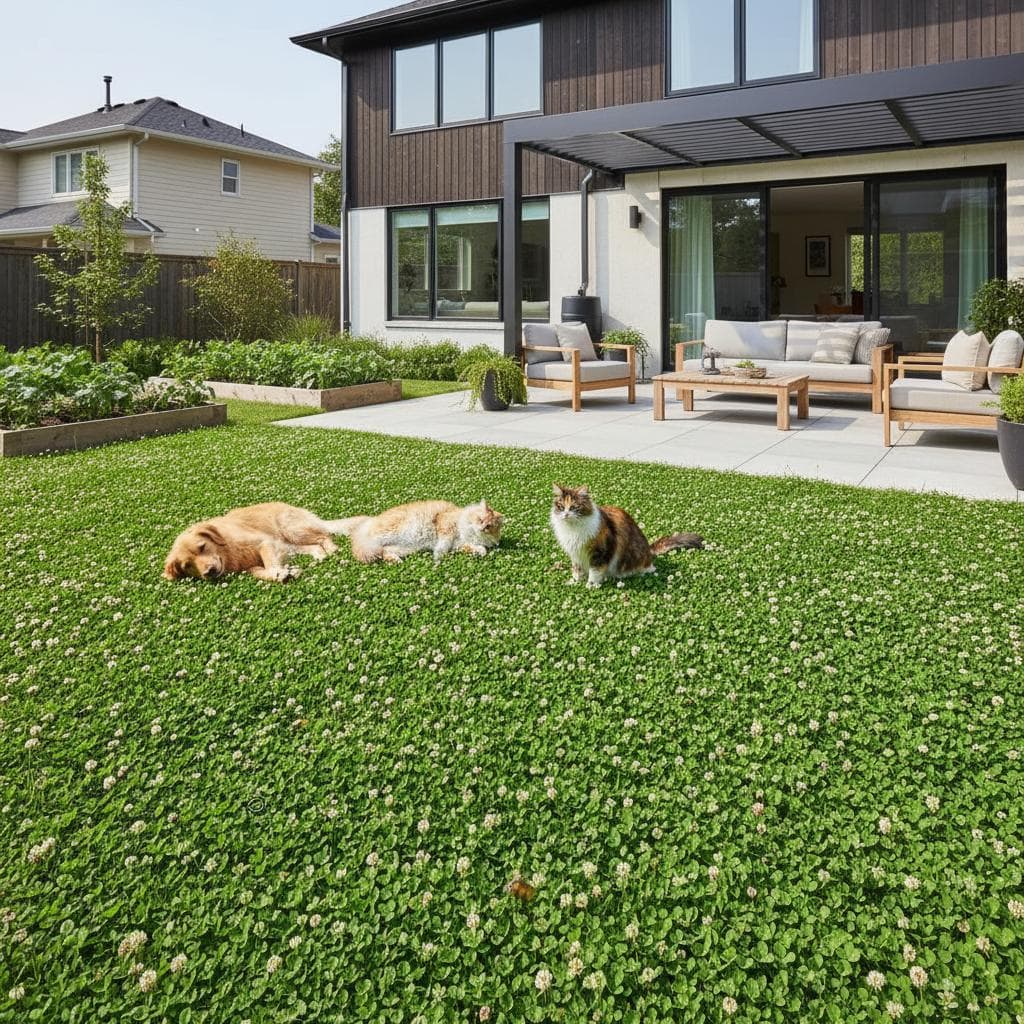
Why Homeowners Switch to Clover Lawns
When Alex and Jordan purchased their suburban home, the front yard featured patchy turf that demanded constant upkeep. They sought a landscape that remained lush throughout the year with reduced watering, mowing, and fertilizing needs. Their objective was straightforward: a resilient green space suitable for children, pets, and intense summer conditions. After exploring alternatives, they opted to install a dense clover carpet, which revitalized the appearance and simplified maintenance of their property.
Rethinking Traditional Lawns
Traditional lawns represent ideals of tidiness and prestige, but they demand ongoing effort. Weekly mowing, frequent irrigation, and chemical applications drain time and finances. Clover lawns provide a gentler texture, richer green hue, and smaller environmental impact.
"The transition began as a trial," explained landscape designer Maria Lopez of Green Path Studio. "Clients who observe clover's resilience during droughts seldom revert to grass."
Clover flourishes in conditions where turf grasses falter. It adapts to nutrient-poor soil, requires minimal fertilizer, and enhances the earth via nitrogen fixation. These qualities attract homeowners desiring vivid greenery without relentless maintenance.
Transition Process Step by Step
Homeowners can convert grass to clover gradually or comprehensively. For Alex and Jordan, the project commenced with turf removal. The contractor employed a sod cutter to strip the old grass, followed by light tilling and incorporation of compost into the soil.
Maria suggested a pure White Dutch clover seed mix at one pound per thousand square feet. The team broadcast the seeds uniformly, then used a roller to press them into the ground before daily misting until sprouts emerged. In about two weeks, small trifoliate leaves covered the exposed soil.
By the close of the first month, the clover established a thick green foundation. "The coverage surprised us with its speed," Alex noted. "We anticipated extended bare periods, yet it filled rapidly."
Integrating Clover into Landscape Design
Alex and Jordan's front yard illustrates clover's compatibility with formal elements. Designers framed the clover area with natural stone borders to establish structure and delineate pathways. A flagstone path meanders through the space to the porch, positioned slightly elevated to prevent moisture buildup at the edges.
Adjacent to the driveway, a compact bed contains lavender and ornamental grasses. The clover lawn flows into this zone as a supple underlayer. "Clover often evokes untamed or casual impressions," Maria observed. "Paired with deliberate borders and routes, however, it appears thoughtfully designed."
Strategic lighting enhances the setup. Low-voltage LED lights along the path illuminate the clover expanse warmly after dark. The illumination highlights the foliage's fine texture, lending a plush quality to the lawn in the evening.
Maintenance Strategies for Clover Lawns
Clover lawns demand less care than turf, though they require some attention. To maintain a neat appearance, mow every two to three weeks at a height of three inches. This practice clears faded blooms and promotes new foliage.
Once roots develop fully, water sparingly with a thorough application every two weeks, adjusted for local weather. Excess moisture weakens roots, so moderation is essential.
Fertilizer applications prove unnecessary in most instances. For any discolored spots, apply a thin layer of compost to replenish nutrients organically. Clover's soil-enriching properties also support surrounding plants.
During the initial year, remove weeds by hand to preserve density. Once established, competitive growth discourages intruders. Overseed periodically in trafficked areas to sustain thickness.
- Mow at three inches every two to three weeks.
- Water deeply but infrequently after establishment.
- Topdress with compost for nutrient boosts.
- Pull weeds manually in year one.
- Overseed high-use zones as needed.
Environmental and Cost Advantages
Switching from grass to clover yields financial and ecological gains. Reduced irrigation lowers utility expenses. Foregoing synthetic fertilizers and pesticides decreases ongoing outlays and chemical exposure.
Clover fosters ecological diversity by drawing bees, butterflies, and pollinators that bolster regional habitats. Its nitrogen contributions elevate soil quality, aiding adjacent gardens.
Environmentally, fewer mowing sessions cut carbon outputs. Each avoided cut saves fuel and diminishes neighborhood noise.
"Homeowners often discover the extra leisure time rewarding," Maria added. "Weekends free from mower operation or sprinkler adjustments become the norm."
Addressing Frequent Concerns
Homeowners frequently question if clover invades neighboring beds or proliferates uncontrollably. Typically, it remains contained. Its compact stature and shallow roots allow simple management through edging or clipping.
Bee presence raises another issue. Clover blossoms lure pollinators, but regular mowing before peak flowering minimizes activity in frequented spots. For those who value the blooms, designate unmowed patches to offer shelter without overwhelming the yard.
Durability concerns also arise. Clover endures typical foot traffic effectively. In demanding areas, blend with microclover for a denser, more robust mat suited to recreation and events.
Experiencing the Clover Lawn Daily
Months post-installation, Alex and Jordan's clover lawn integrates seamlessly as a seasoned feature. Its hue remains steady across seasons. Children romp barefoot free from chemical residues, and the pet avoids discoloring the surface.
The pair invests far less effort in yard care. Irrigation occurs only as required, and mowing shifts from routine to occasional. "This change brings liberation," Jordan shared.
Their story reflects a broader trend toward natural, practical, and sustainable outdoor areas. Clover lawns achieve these aims with understated reliability, reshaping contemporary yards to harmonize human needs with environmental stewardship.