
Why Moss Lawns Are Replacing Grass in Shaded Yards
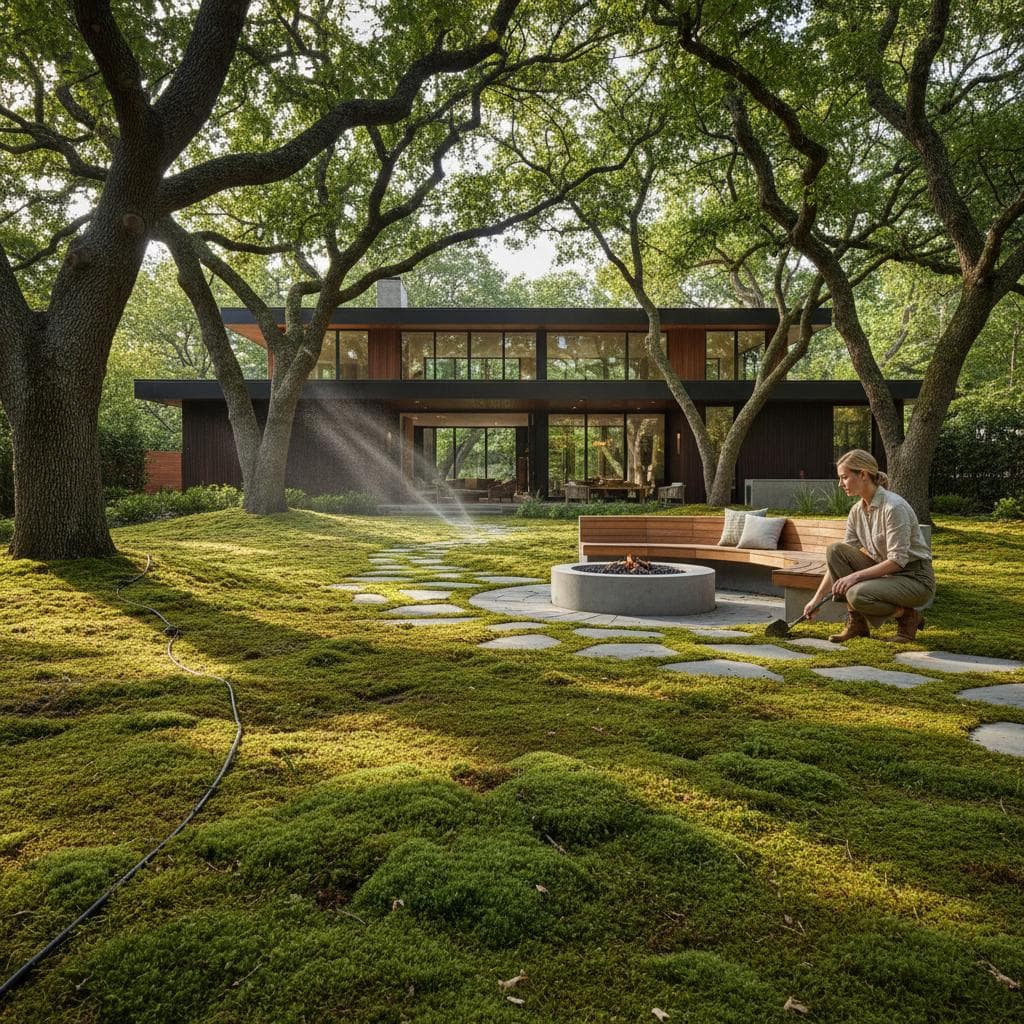
When landscape designer Julia Mercer and her partner, Liam, purchased their small hillside home, they sought a garden that appeared lush and vibrant without the ongoing demands of mowing, watering, and fertilizing associated with grass. The solution emerged in the form of a soft, green carpet that flourished where grass could not. Moss, with its velvety texture and resilient nature, has become the standout feature of their property. This project exemplifies a broader trend among homeowners who opt for moss lawns over traditional turf to achieve beauty, sustainability, and low maintenance.
Project Overview
- Homeowners: Julia Mercer and Liam Ford
- Location: Shaded hillside in the Pacific Northwest
- Lot Size: 2,800 square feet, including 600 square feet of moss coverage
- Designer: Julia Mercer
- Contractor: Evergreen Outdoor Works
- Materials: Native sheet moss, compacted soil base, fine gravel borders
- Highlights: Minimal upkeep, no mowing required, water-efficient, persistent green throughout the year
The Growing Appeal of Moss Lawns
Moss lawns gain traction across diverse climates as homeowners abandon conventional turf. Practical benefits combine with aesthetic qualities to drive this shift. Moss remains green during dry periods, tolerates shade, and demands little fertilizer or pesticide application. Its calm, natural texture evokes a woodland floor more than a manicured suburban yard.
Julia aimed to craft a landscape that harmonized with the site rather than resisted it. "Our yard lies beneath tall cedar trees, so grass never had a chance," she explained. "Once we ceased forcing turf, the space flourished on its own terms."
This method aligns with a wider push for resource-conserving landscapes that deliver the pleasure of a soft, green expanse.
Understanding Moss Biology
Moss differs from standard plants, lacking roots or seeds. It propagates via spores and draws water through its leaves. Such traits enable survival in shallow soils and low-light conditions. Without roots, moss avoids nutrient competition with neighboring plants, fostering a stable micro-ecosystem.
Growth relies on humidity and substrate texture. Moss favors compacted soil, decomposed granite, or rock surfaces. It secures itself to these and expands slowly. In Julia's garden, installers prepared a blend of compacted soil and fine gravel, then applied layers of regionally sourced moss. Attachment occurred naturally within weeks.
Site Preparation Essentials
The team began by clearing existing sod and weeds to reveal bare earth. They leveled the ground, compacted it thoroughly, and applied a light mist of water. Julia noted, "Moss dislikes loose or aerated soil. It requires a solid, moist foundation. Preparation establishes the foundation for success."
In shaded or irregular areas, moss supplants uneven turf to form a seamless, cushioned surface. For brighter spots, incorporate light-tolerant species like Bryum caespiticium to preserve uniform coloration. The moss used here originated from a local nursery specializing in cultivated natives, promoting sustainability and avoiding wild harvesting.
Installation Process
Moss sheets, each approximately two feet square, arrived flat. Crew members positioned them like interlocking tiles, pressing firmly into the soil. Gentle misting aided settling, and gaps between sheets merged as the moss interconnected over time. A slim gravel edging outlined the borders and stabilized the soil against erosion.
The lawn looked integrated after just one week. Julia observed, "It appeared finished right away, a rarity in landscaping. The change felt subtle yet profound."
Watering and Upkeep Strategies
Moss lawns excel in low water consumption. During initial establishment, provide steady moisture. Established moss relies on ambient humidity and rain. In arid regions, apply a light spray every few days to sustain vitality. Excess water invites algae, so moderation proves essential.
Care focuses on straightforward tasks over intensive labor. Skip mowing, edging, and feeding. Gently rake fallen leaves to expose the surface to light. Julia employs a soft broom for weekly debris removal. "It feels less like work and more like a mindful practice," she said. "You observe how light alters the texture and spot nuances overlooked in grass."
Visual Qualities and Seasonal Shifts
Moss introduces a distinct aesthetic cadence compared to turf. Moisture influences its appearance, yielding vibrant green post-rain and muted olive in dryness. The cushion-like feel underfoot resembles velvet, and it maintains coolness in heat. Uniformity defines the surface, while faint color and height variations add dimension without uniformity.
Julia's installation features Hypnum and Dicranum species for layered appeal. Hypnum's delicate, feathery form softens path edges, whereas Dicranum forms compact cushions that capture light. This blend enhances interest while preserving serenity.
Design Integration
The moss lawn adjoins a stone patio, surrounded by ferns and hostas. The color scheme of greens, grays, and browns mirrors the woodland context. A modest water feature echoes the overhead canopy, enhancing tranquility. Subtle tones and textures dominate, free from floral accents or vivid hues.
Julia's design principle emphasizes simplicity. "The challenge lies in exercising restraint," she stated. "Moss achieves completeness with minimal additions. Trust its inherent elegance."
This approach yields cohesive visuals. The moss unites the home's contemporary lines with the natural surroundings. It also acts as an absorbent layer, capturing hillside runoff.
Ecological Advantages
Moss lawns deliver tangible environmental gains beyond looks. They eliminate needs for fertilizers or pesticides, curbing chemical pollution in waterways. Moss sequesters carbon dioxide, traps airborne particles, and moderates soil temperatures. One square foot holds multiple times its weight in water, mitigating erosion and nurturing beneficial soil organisms.
Standard grass lawns necessitate regular irrigation, reseeding, and powered mowing, which deplete resources and energy. Substituting moss in shaded sections slashes water demands, particularly where turf falters.
Cost Analysis and Durability
Initial moss setup costs exceed sod slightly, primarily from cultivated sheets. Long-term reductions in water, amendments, and equipment offset this within seasons.
Expect $10 to $15 per square foot for installation, varying by type and prep. Established moss endures indefinitely. Unlike grass, it resists thinning and rarely requires renewal. Damaged areas recover via natural regeneration with returning moisture.
Contractor Erin Lewis of Evergreen Outdoor Works commented, "Moss projects strengthen progressively. Avoid over-management. Allow adaptation, and it handles the rest."
Selecting Appropriate Moss Varieties
Site-specific factors like climate, illumination, and soil dictate moss selection.
Recommended options:
- Hypnum cupressiforme for shaded inclines and wooded sites
- Dicranum scoparium on firm soil or in partial light
- Bryum caespiticium in elevated light conditions
- Leucobryum glaucum for decorative clusters or focal points
Varieties differ in form and shade. Combining them facilitates smooth zone transitions. Julia placed robust types along trails and gentler ones in expanses.
Combining Moss with Landscape Features
Moss pairs seamlessly with stone, timber, and aquatic elements. It trails between flagstones, cloaks walls, or rims pools. Maintain moisture and shade for optimal spread. Moisture-retaining hardscapes, like permeable rock, naturally promote growth.
Here, basalt slabs traverse the moss, their borders blurred by adjacent growth. Stones sit elevated to minimize tread damage. Roof runoff via a discreet drip line ensures hydration without saturation.
Strategic lighting enhances evening appeal. Ground-level, warm-toned lights accentuate texture, casting a gentle glow for extended enjoyment.
Homeowner Implementation Guide
To adopt moss successfully, follow these steps:
- Assess Conditions: Target partial to full shade with reliable dampness. Steer clear of high-traffic or pooled-water zones.
- Prime the Base: Firm up soil and clear refuse. Moss bonds best to stable, debris-free surfaces.
- Time Installation Wisely: Choose damp weather for swift adhesion. Mist daily initially.
- Maintain Delicately: Employ soft brushes for leaf clearance. Shun metal tools.
- Manage Pathways: Install stones to direct traffic and safeguard coverage.
- Allow Time: Expect gradual expansion. Minimal input follows rooting.
These practices support organic integration over imposed development.
Experiencing the Moss Landscape
Several months post-installation, Julia's moss draws frequent admiration from visitors. Neighbors inquire about its enduring green without supplemental watering. Success stems from synergy with the site, not exertion.
Daily interactions prove serene. Silence replaces mower noise, routines simplify, and bare spots vanish. The area pulses with life amid composure. Rain deepens hues; aridity unveils subtle sheens.
Julia reflected, "It transformed our outdoor habits. We once viewed the yard as a task to conquer."
This rise in moss adoption reflects aspirations for balanced, enduring habitats. Landscapes evolve from groomed plots to vibrant systems. Moss embodies a thoughtful pivot, honoring nuance and converting routine terrain into serene distinction.