
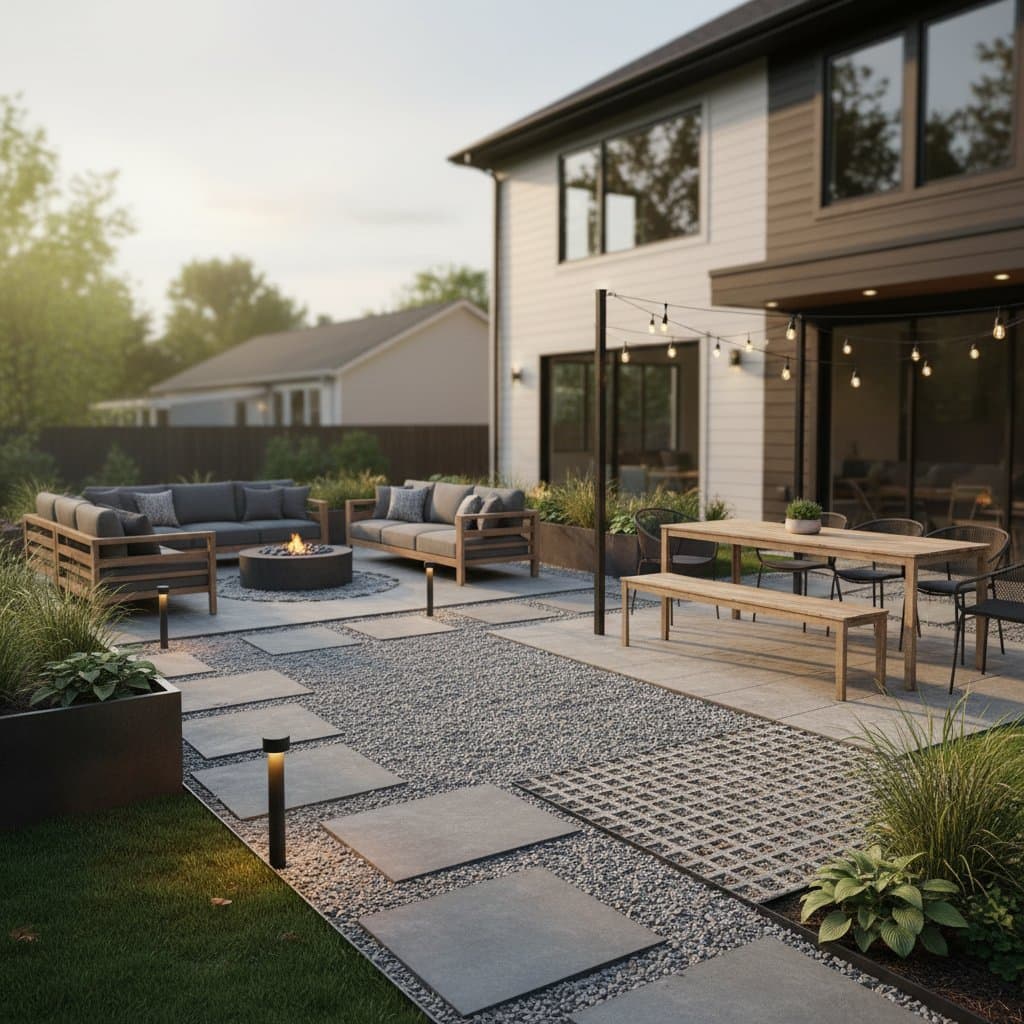
Why Choose Gravel Over Concrete
Gravel patios present a versatile and economical option to traditional poured concrete surfaces. These installations provide a gentler feel underfoot, superior natural drainage, and significantly lower installation expenses. Professionals and homeowners alike favor gravel for its ability to complement both rustic settings and sleek modern designs.
Gravel excels in adaptability, serving as a foundation for dining areas, garden borders, or serene retreats. As material and labor costs rise, gravel emerges as a practical solution for achieving an attractive outdoor space without excessive expenditure. This choice supports long-term satisfaction through its blend of functionality and visual interest.
Key Features at a Glance
- Suitable Locations: Adapts to various climates and terrains
- Material Options: Crushed stone, decomposed granite, or pea gravel
- Cost Advantage: Up to 60% savings compared to concrete
- Primary Benefits: Durability, flexibility, and minimal upkeep for outdoor living
Plan the Foundation for Stability
Start with a solid base to ensure the gravel patio remains level and secure over time. Excavate the area to a depth of four to six inches, then add a layer of compacted gravel or crushed stone as the sub-base. This preparation prevents shifting and supports even weight distribution.
Select gravel size based on intended use: finer pea gravel suits walking paths, while larger crushed stone handles heavier furniture. Compact each layer thoroughly to create a stable surface that resists erosion. Proper planning at this stage minimizes future adjustments and extends the patio's lifespan.
Install Edging for Definition and Control
Edging materials contain the gravel and enhance the overall design. Opt for steel strips for a precise, contemporary edge that integrates with modern architecture. Alternatively, natural stone or brick provides a warmer boundary that harmonizes with traditional landscapes.
Secure the edging by driving stakes into the ground at intervals, ensuring it sits flush with the surface. This setup not only prevents gravel from scattering into adjacent lawns or beds but also outlines the patio's shape clearly. As one contractor notes, solid edging elevates a simple gravel area into a polished, intentional feature.
Visual Callout: Sleek steel edging delineates a gravel path amid flowing ornamental grasses such as prairie dropseed.
Layer Lighting for Evening Ambiance
Incorporate lighting to extend the usability of your gravel patio into the night. Install low-voltage path lights along the edges or stake-mounted fixtures among the gravel for subtle illumination. Solar-powered options offer convenience without wiring complications.
Position lights to highlight key areas, such as seating zones or pathways, creating a welcoming glow. Layer different intensities, from soft uplights on plants to focused spots on furniture, to add depth and safety. This approach transforms the space into a functional retreat after dark, enhancing both aesthetics and practicality.
Visual Callout: Soft LED lights cast a warm glow over a gravel terrace, accentuating nearby lavender borders.
Integrate Plantings for Depth and Vitality
Surround the gravel with plants to soften edges and infuse the area with natural movement. Ornamental grasses, including little bluestem or fountain grass, introduce swaying textures that contrast the static gravel. Ground covers like creeping thyme or sedum occupy small spaces, adding scent and color with minimal effort.
Choose plants that benefit from gravel's drainage properties, such as drought-resistant natives or Mediterranean herbs like rosemary. Position taller specimens at the perimeter to frame the space, while low-growers fill in closer to the center. A horticulturist observes that gravel and vegetation collaborate seamlessly, with one offering stability and the other injecting vitality.
Visual Callout: Clusters of blue fescue grasses edge a gravel dining area, providing gentle motion and cool tones.
Maintain with Routine Care
Gravel patios require straightforward upkeep to preserve their appearance and performance. Rake the surface periodically to level depressions from foot traffic and redistribute stones evenly. Replenish gravel in worn areas annually to sustain depth and uniformity.
Install a landscape fabric beneath the gravel to suppress weeds, combined with a two-inch base layer for added protection. Regular tasks involve clearing debris with a leaf blower and inspecting edging for stability. One maintenance expert emphasizes that brief, consistent attention, such as a seasonal rake and top-up, keeps the surface pristine with little physical demand.
Visual Callout: A homeowner rakes smooth gravel paths, preparing the area for outdoor gatherings.
Evolving Your Outdoor Space
Gravel patios accommodate changes effortlessly, allowing updates to furniture arrangements, plant selections, or added features like pergolas. The permeable surface settles naturally into the surrounding landscape, fostering a cohesive garden environment. This adaptability proves valuable for expanding families or shifting preferences.
Initial savings of up to 60% on installation, coupled with reduced long-term commitments compared to concrete, make gravel a forward-thinking investment. Through deliberate design and ongoing care, the patio becomes an integral part of daily life, inviting relaxation and connection with nature year after year.