
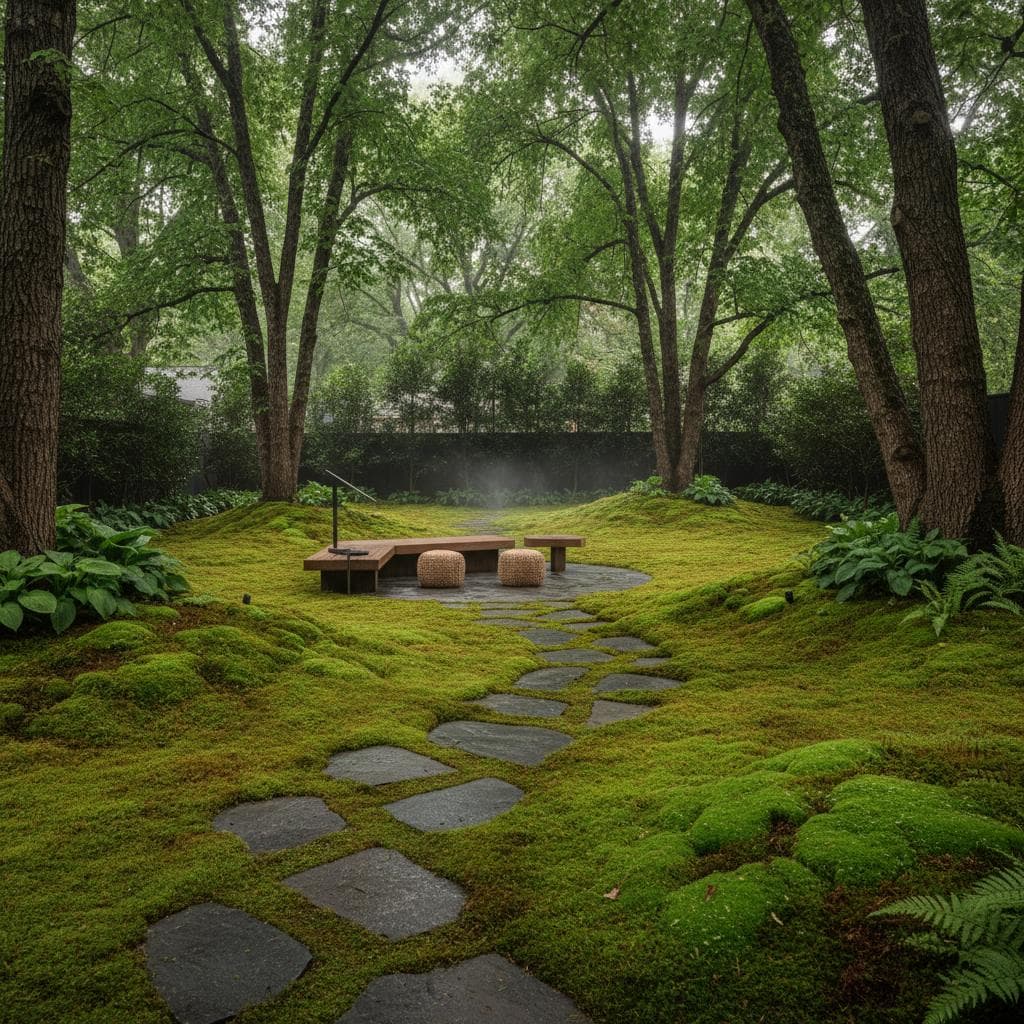
Why Moss Lawns Outperform Traditional Grass in Shaded Areas
Moss lawns represent a shift toward sustainable landscaping practices. These verdant ground covers offer lush greenery without the demands of mowing, fertilizing, or frequent watering. Homeowners discover a serene alternative that enhances natural beauty while reducing environmental impact.
In regions with limited sunlight or high moisture, moss excels where grass often withers. This guide explores the advantages of moss lawns, selection criteria, preparation methods, installation techniques, maintenance routines, and design integrations. Readers gain practical knowledge to transform challenging yard spaces into thriving, low-effort landscapes.
Key Benefits at a Glance
- Shade Tolerance: Moss flourishes in partial to full shade, ideal for areas under trees or near buildings.
- Scalability: Suitable for compact patios or expansive woodland gardens.
- Climate Suitability: Best in temperate zones with consistent humidity.
- Sustainability Goal: Replaces high-maintenance turf with a resilient, eco-conscious cover.
- Maintenance Level: Requires minimal intervention once established.
1. Select the Ideal Moss Variety for Your Site
Choosing the correct moss species ensures long-term success. Different types adapt to specific conditions, such as soil pH, moisture levels, and light exposure. Consider factors like foot traffic and aesthetic preferences during selection.
Practical Advantage: Matching moss to site conditions minimizes failure risks and promotes dense growth. Acid-loving varieties, for instance, pair well with woodland settings.
Installation Tip: Opt for native species to support local ecosystems. Common choices include Sphagnum moss for wet areas or Leucobryum for drier shades. Collect samples from nearby healthy patches or purchase from reputable nurseries.
Real-World Application: A gardener in a forested suburb selects Hypnum moss for its carpet-like spread on a north-facing slope, achieving coverage within one season.
A botanist observes, "The right moss integrates seamlessly, turning obstacles into opportunities for natural elegance."
Suggested Visual: A close-up of vibrant Hypnum moss spreading across a shaded rock outcrop.
2. Prepare the Ground with Precision
Moss requires a stable foundation to establish roots. Begin by clearing the area of existing vegetation, rocks, and debris. Test soil acidity and adjust if necessary to reach a pH of 5.0 to 6.0.
Practical Advantage: A clean, compacted base prevents weed intrusion and supports even moss adhesion. This step fosters a uniform surface that withstands light foot traffic.
Preparation Steps:
- Remove grass and weeds manually or with a sod cutter.
- Rake the soil lightly to level it, then tamp down firmly.
- Apply a thin layer of acidic amendment, such as peat moss, if pH levels demand it.
- Water the area to settle the soil and create a moist environment.
Real-World Application: On a steep embankment, a landscape enthusiast mixes moss fragments with yogurt to encourage spore germination on firm clay.
A soil specialist notes, "Firm, acidic ground invites moss to colonize naturally, building resilience over time."
Suggested Visual: Prepared soil surface misted with water, awaiting moss application.
3. Install Moss for Lasting Coverage
Transplanting moss involves direct contact with the prepared surface. Use fragments or sheets to initiate growth, ensuring thorough pressing for adhesion.
Practical Advantage: Proper installation accelerates establishment, leading to a cohesive lawn within months. This method leverages moss's vegetative reproduction for quick spread.
Installation Process:
- Gather or acquire moss in fragments about the size of a quarter.
- Blend fragments with a slurry of water and buttermilk to aid sticking.
- Press the mixture evenly onto the soil, covering at least 70 percent of the area.
- Mist daily for the first two weeks to maintain humidity.
Real-World Application: In a courtyard shaded by evergreens, fragments applied along pathways create a seamless green border that expands naturally.
A landscaper comments, "Patience during installation yields a moss lawn that self-sustains, blending function with subtle artistry."
Suggested Visual: Hands pressing moss slurry onto a prepared garden bed.
4. Maintain with Minimal Intervention
Established moss demands little upkeep, focusing on moisture retention and debris removal. Avoid tools that disrupt its delicate structure.
Practical Advantage: Skipping fertilizers and pesticides preserves soil health and reduces pollution. Moss draws nutrients from the air, thriving on natural cycles.
Maintenance Routine:
- Remove fallen leaves gently with a soft broom in autumn.
- Water only during prolonged dry spells, preferring morning applications.
- Control weeds by hand-pulling before they seed, avoiding chemicals.
- Aerate lightly every few years if compaction occurs from traffic.
Real-World Application: A family under dense tree canopy enjoys a mower-free yard that remains vibrant through summer with occasional misting.
A maintenance expert advises, "Moss rewards restraint; its endurance comes from harmony with the environment."
Suggested Visual: A pristine moss lawn bordered by stone paths, free of mowing equipment.
5. Integrate Design Elements for Harmony
Moss lawns enhance outdoor aesthetics when combined with complementary features. Incorporate paths, borders, and plants to define spaces and add interest.
Practical Advantage: Strategic design prevents overuse and highlights moss's textural qualities. It creates functional zones for relaxation or play.
Design Strategies:
- Install stepping stones to direct foot traffic and protect moss.
- Pair with shade-tolerant perennials like ferns or astilbe for color contrast.
- Use edging materials such as wood or metal to contain spread.
- Vary heights with boulders or low shrubs for depth.
Real-World Application: A designer frames a moss terrace with hostas, resulting in a tranquil seating area that evolves with seasonal light.
An architect remarks, "Moss grounds the design, offering a canvas for layers of natural texture and form."
Suggested Visual: Moss integrated with ferns and stone accents in a shaded retreat.
6. Adapt to Seasonal Variations
Moss responds to environmental shifts, displaying varied hues from emerald to silvery green. These changes add dynamic appeal throughout the year.
Practical Advantage: Its adaptability stabilizes soil and manages water flow, mitigating erosion on slopes. Moss acts as a natural sponge during rains.
Seasonal Care:
- In spring, encourage growth with gentle watering amid increased humidity.
- During summer, monitor for drying and provide shade if needed.
- In fall, clear debris to prevent smothering.
- Winter protection involves minimal effort, as moss withstands light frost.
Real-World Application: Beneath maples, moss brightens with spring dew and mellows to olive in autumn, mirroring forest rhythms.
A seasonal gardener shares, "Moss mirrors nature's palette, inviting observation of subtle, ever-changing beauty."
Suggested Visual: Moss under morning light, showcasing dew-kissed vibrancy.
Sustaining the Serenity of Moss Landscapes
Moss lawns deliver enduring tranquility with reduced resource use. They foster biodiversity, conserve water, and lower maintenance costs. Homeowners experience spaces that evolve gracefully, connecting daily life to the natural world. This approach not only beautifies properties but also contributes to broader ecological health.