
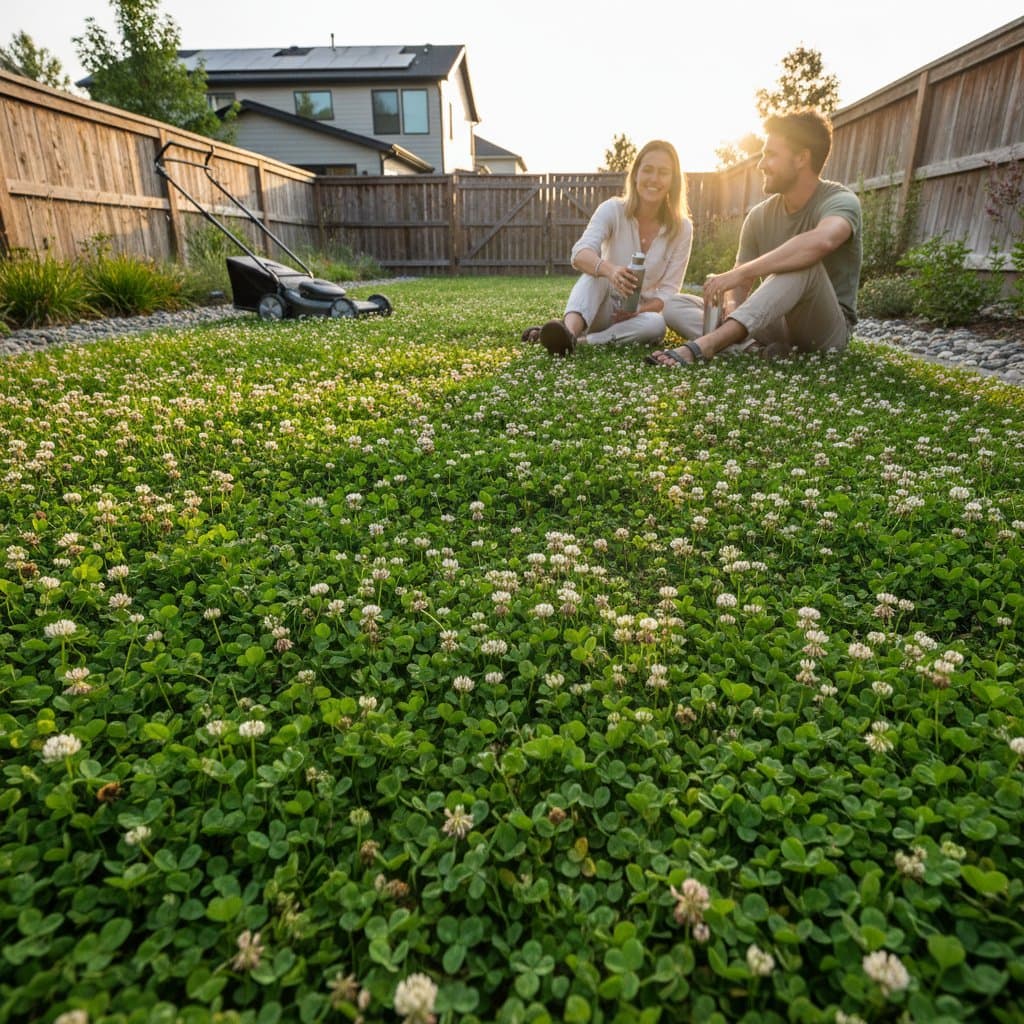
Why Homeowners Replace Grass with Clover Lawns
A vibrant green yard remains a goal for many homeowners, yet the conventional grass lawn faces declining popularity. In communities nationwide, individuals opt to substitute turfgrass with clover for its gentle texture, reduced upkeep, and environmental advantages. Clover lawns deliver a serene, organic appearance that conserves water and simplifies care.
At a Glance
Location: Suitable for most temperate areas
Size: Versatile for small patios or expansive suburban lots
Climate Zone: Effective in moderate to warm conditions
Project Goal: Minimize upkeep, save water, and develop pollinator habitats
1. Lower Maintenance Requirements
Clover lawns demand significantly less effort than standard grass varieties. They maintain their color during periods of low rainfall and require infrequent cutting. Landscape designers note that clover alters the pace of lawn maintenance, freeing weekends from mower duties.
Functional Benefit: Reduced watering and mowing schedules lower both expenses and time commitments. Property owners who previously dedicated weekly hours to turf care now perform only sporadic edging with a string trimmer.
Design Insight: The robust root structure of clover stabilizes soil and suppresses weeds, decreasing reliance on chemical interventions. Clover draws nitrogen from the atmosphere to enrich the ground, removing the necessity for artificial fertilizers.
Specific Example: In a front yard featuring microclover, the plants form a low-growing, fine mat that appears neat without the stark uniformity of grass. This creates a plush walking surface and integrates seamlessly with flower borders or stone walkways.
Visual Callout: Microclover establishes a thick, padded layer that retains green hues in arid weather.
2. Environmental Advantages
Clover lawns enhance the surrounding ecosystem directly from the yard. Their blooms draw bees and butterflies, while the underlying soil improves over time. Horticulturists observe that each clover area serves as a compact habitat teeming with pollinators and helpful insects.
Functional Benefit: Deep roots in clover capture and purify rainwater, reducing surface runoff. This practice curbs soil erosion and retains essential nutrients on site.
Design Insight: Blended with native options such as buffalo grass or fescue, clover produces a diverse ground cover that appears unified yet textured. Such combinations suit edges or adjacent garden areas naturally.
Specific Example: A rear yard combines white clover with creeping thyme for understated color shifts across seasons. The white flowers invite pollinators, and the thyme releases a mild scent underfoot.
Visual Callout: White clover blooms attract bees to a tranquil backyard expanse.
3. Comfortable Texture and Year-Round Interest
Clover lawns provide a delightful barefoot experience. Fine foliage yields a cushioned feel that remains cool during warm weather. Designers describe clover as vibrant and tactile, distinct from stiff or artificial surfaces.
Functional Benefit: The inherent durability of clover suits zones for recreation or moderate use. It rebounds swiftly from pressure and avoids the bare spots common in grass.
Design Insight: Subtle differences in foliage tone and bloom elevation introduce depth. A full clover installation evokes a petite meadow, whereas targeted patches temper the lines of decks or trails.
Specific Example: Dutch white clover in a side yard links a structured terrace to a produce plot smoothly. This arrangement unifies the areas with an informal, welcoming vibe.
Visual Callout: Clover eases transitions from stone terraces, uniting decorative and practical elements.
4. Substantial Water Conservation
Standard lawns necessitate consistent irrigation, particularly under intense sun. Established clover flourishes with sparse watering. Consultants in sustainability highlight that each square foot of clover contributes to broader water-saving efforts.
Functional Benefit: Users achieve major reductions in water consumption, often exceeding fifty percent based on ground composition and precipitation. Lower irrigation demands also decrease energy use for systems like pumps.
Design Insight: Extensive roots enable clover to preserve vitality when grass fades. It shades the earth and holds moisture effectively. Integrated with mulched zones or gravel routes, clover supports an overall drought-resistant scheme.
Specific Example: One suburban property converted half its turf to a clover blend, adjusting watering to biweekly intervals. The yard stayed lush in dry periods, accompanied by evident savings on utility statements.
Visual Callout: Clover sections remain verdant as adjacent grass fades in drought.
5. Reduced Reliance on Chemicals
Grass maintenance typically involves synthetic nutrients and herbicides, but clover bypasses these. Its capacity for self-fertilization and weed control promotes health for households and animals. Contractors emphasize that clover yields safe, pleasant outdoor spaces for children and pets.
Functional Benefit: Diminished chemical applications safeguard nearby water sources from excess nutrients. These lawns offer secure venues for bare play and social events.
Design Insight: This approach aligns with trends in organic and restorative landscaping. A self-sustaining yard achieves aesthetic and ethical excellence.
Specific Example: Households with pets favor clover for its tolerance to urine spots, preventing the yellowing seen on grass. The uniform green persists without irregular marks.
Visual Callout: Pet-compatible clover maintains even color and tenderness absent harmful applications.
6. Seamless Incorporation into Current Landscapes
Adopting clover avoids complete yard overhauls. Overseeding into present turf addresses thin areas and boosts variety. Turf experts point out that clover represents the simplest renovation method: distribute seeds, apply light moisture, and allow establishment.
Functional Benefit: This technique prevents soil loss and enhances nitrogen levels for surviving grass, promoting sustained greenness. The yard remains accessible throughout the gradual shift.
Design Insight: Pairing clover with types like tall fescue or perennial rye yields equilibrated textures and hues. The outcome appears deliberate and multifaceted.
Specific Example: Microclover seeded into a dim front yard revived struggling grass within months, yielding a plush, dense covering with scant trimming needs.
Visual Callout: Overseeded clover revitalizes sparse areas into a unified, sturdy surface.
7. Versatile Aesthetic Applications
Clover lawns complement diverse styles, from sleek modern to rustic cottage designs. Their understated foliage and blooms act as versatile bases for gardens or structures. Designers appreciate how clover enhances rather than overshadows companion elements.
Functional Benefit: Compact form fits broad properties or compact city plots. It flows around features like pavers, benches, or elevated planters.
Design Insight: Juxtaposing clover's delicate leaves against rougher elements such as stone or aggregate introduces contrast and pattern. Apply it to outline routes or buffer terrace boundaries.
Specific Example: In a contemporary setting with concrete blocks, clover occupies the spaces between, forming a lively grid that accentuates the design's form.
Visual Callout: Clover occupies joints in contemporary pavers, fusing form with gentleness.
Sustaining and Appreciating Clover Lawns
After rooting, clover lawns prove resilient and flexible, requiring little intervention. Trim periodically to shape, and reseed seasonally to preserve fullness. Eliminating intensive irrigation, feeding, or treatments reorients yard management toward simplicity and ecological harmony.
These lawns enrich outdoor interactions through blooming scents, insect activity, and tactile softness, deepening bonds with nature. Selecting clover achieves equilibrium among visual appeal, utility, and planetary stewardship in a straightforward manner.