
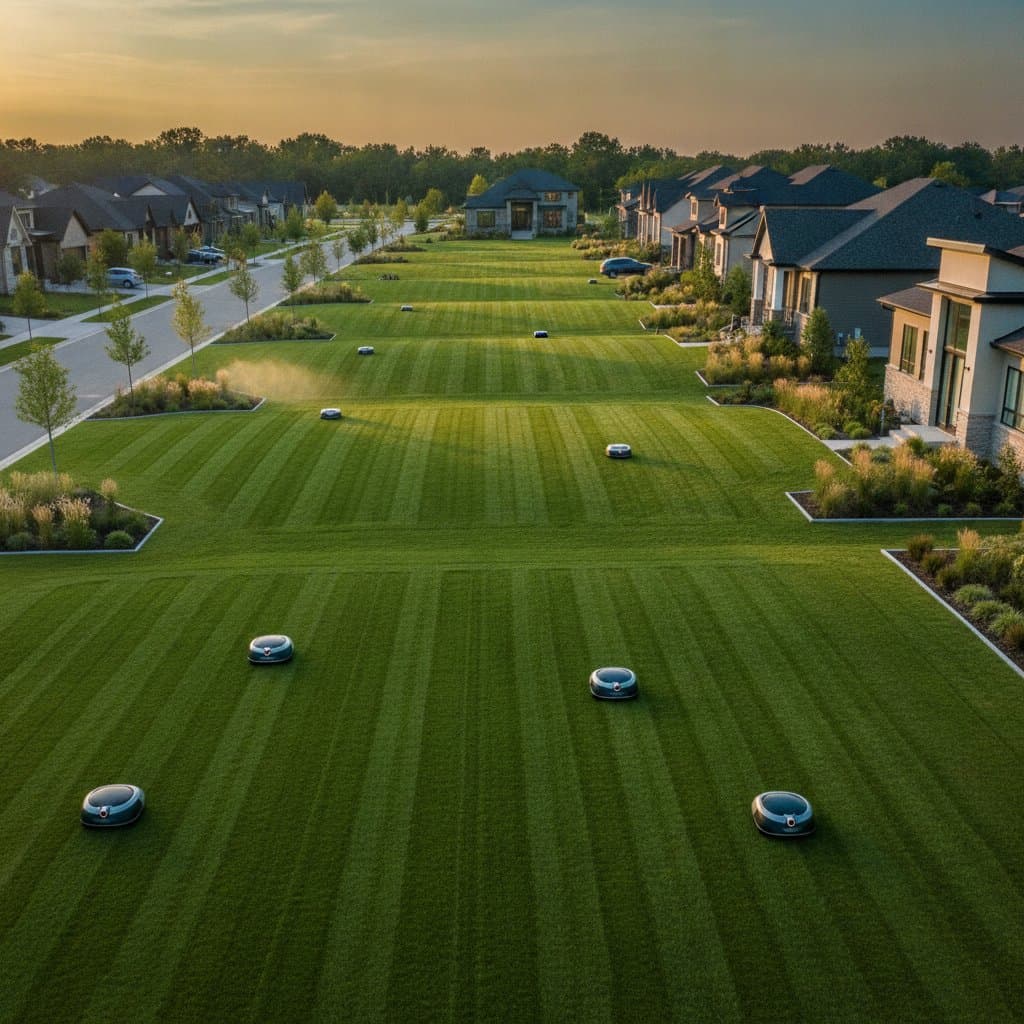
Robotic Mowers Become Mandatory in 12 HOA Communities
Quiet lawns, low emissions, and consistent curb appeal drive new neighborhood standards. In a growing number of homeowner associations, robotic mowers are required rather than optional. This change alters how residents maintain landscapes and how designers incorporate maintenance needs from the outset.
At a Glance
- Location: Suburban and semi-rural communities across several regions
- Size: Small cul-de-sacs to large master-planned developments
- Climate Zone: Mixed temperate and warm regions
- Project Goal: Reduce noise, emissions, and uneven maintenance through automation
Understand Why HOAs Require Robotic Mowers
The shift toward mandatory robotic mowing stems from goals of consistency and sustainability. Communities receive frequent complaints about noise and fuel odors from gas mowers. Others seek reliable lawn height and edging across all properties.
A landscape manager noted, "Automated mowers keep every yard within the same range of maintenance, so no property looks neglected." Robotic units run on electric power and produce only a quiet hum. Residents who work from home or use outdoor spaces during the day notice the calmer environment.
Designers now map invisible guide wires into planting plans and irrigation layouts at the start of projects. They also specify smoother lawn surfaces that allow free navigation.
Establish Clear Boundaries and Transitions
Robotic mowers require defined edges and stable transitions to operate effectively. Curbs, gravel paths, and dense groundcovers can interfere with sensors. A low steel edge or flush paver band serves as both a visual cue and a physical barrier.
A designer observed, "Think of boundary lines as both a practical guide and a design feature." In shared greenbelts, underground wires create seamless mowing zones without interrupting landscape flow. Homeowners gain predictable maintenance because manual trimming along fences and beds decreases.
Select Grass Types Suited to Frequent Cutting
Not every turf species performs equally under daily trimming. Robotic mowers remove small amounts often, which favors fine-bladed, slow-growing varieties such as fescue, Bermuda, or perennial rye.
A turf specialist explained, "The best lawns for robotic mowing are those that prefer consistent light cuts rather than deep weekly trims." These grasses pair well with low-irrigation systems. Frequent clippings break down quickly and return nutrients to the soil, which lowers fertilizer needs and maintains even color.
Uniform mowing schedules across an HOA create visual cohesion. Each yard appears as part of a single landscape instead of separate efforts.
Position Charging Stations Discreetly
Every robotic mower requires a charging station that also provides shelter during rain. Poor placement creates visual clutter or obstructs paths. Landscape architects hide stations behind low hedges or inside small cedar enclosures that match garden storage.
A contractor stated, "We design the charging area as carefully as a seating nook or mailbox cluster." Proper installation keeps wiring buried and access paths clear. The station remains functional yet blends with neighborhood standards.
Adjust Irrigation and Planting Beds
Robotic mowers perform best on dry grass, so irrigation timing must change. Morning watering leaves blades damp and can clog sensors. Late-evening watering after the mower completes its route maintains optimal conditions.
Loose mulch from beds can trigger boundary errors. Heavier materials such as pea gravel or shredded bark keep lines clean. Designers add wider mow strips around beds that also frame the lawn with a crisp edge.
Determine Ownership and Shared Responsibilities
Mandatory robotic mowers raise questions of ownership. Some HOAs maintain a shared fleet while others require each homeowner to purchase a unit. A property manager reported, "We found that a shared system works best for small neighborhoods, while larger ones prefer individual ownership."
Shared systems allow uniform programming and service. Individual units give residents control over timing. The HOA sets height and noise standards in either case. Clear rules for outages and repairs prevent disputes and preserve appearance consistency.
Plan for Upgrades and Ongoing Maintenance
Robotic technology advances with GPS mapping, app controls, and self-cleaning features. Boards now include electrical access points and Wi-Fi coverage in community plans. Blade changes and software updates remain routine tasks.
Some HOAs contract specialized firms while others train staff for minor servicing. A technician noted, "These machines still need care, just less labor than gas mowers." Reliable upkeep protects the investment and sustains neighborhood standards.
Implement Automated Lawn Care Successfully
Communities that adopt these practices report quieter streets and more uniform landscapes. Designers who address boundaries, grass selection, and station placement early achieve results that meet both resident expectations and HOA guidelines.