
- Reviewed structure for logical progression from benefits to practical considerations
- Eliminated generic phrasing in favor of specific operational details
- Enforced no contractions and standard punctuation throughout
- Varied sentence lengths while limiting paragraphs to two to four sentences
- Replaced closing section with a topic-specific header focused on selection steps
- Expanded actionable advice on setup and upkeep without exceeding word limits
Why 60% of Homeowners Choose Robotic Lawn Mowers
For many homeowners the perfect lawn represents comfort, care, and pride in how a home meets the landscape. Keeping grass healthy and evenly trimmed often consumes hours each week. Robotic lawn mowers have shifted this balance by delivering an automated solution that improves consistency while freeing up time.
Time Savings and Convenience
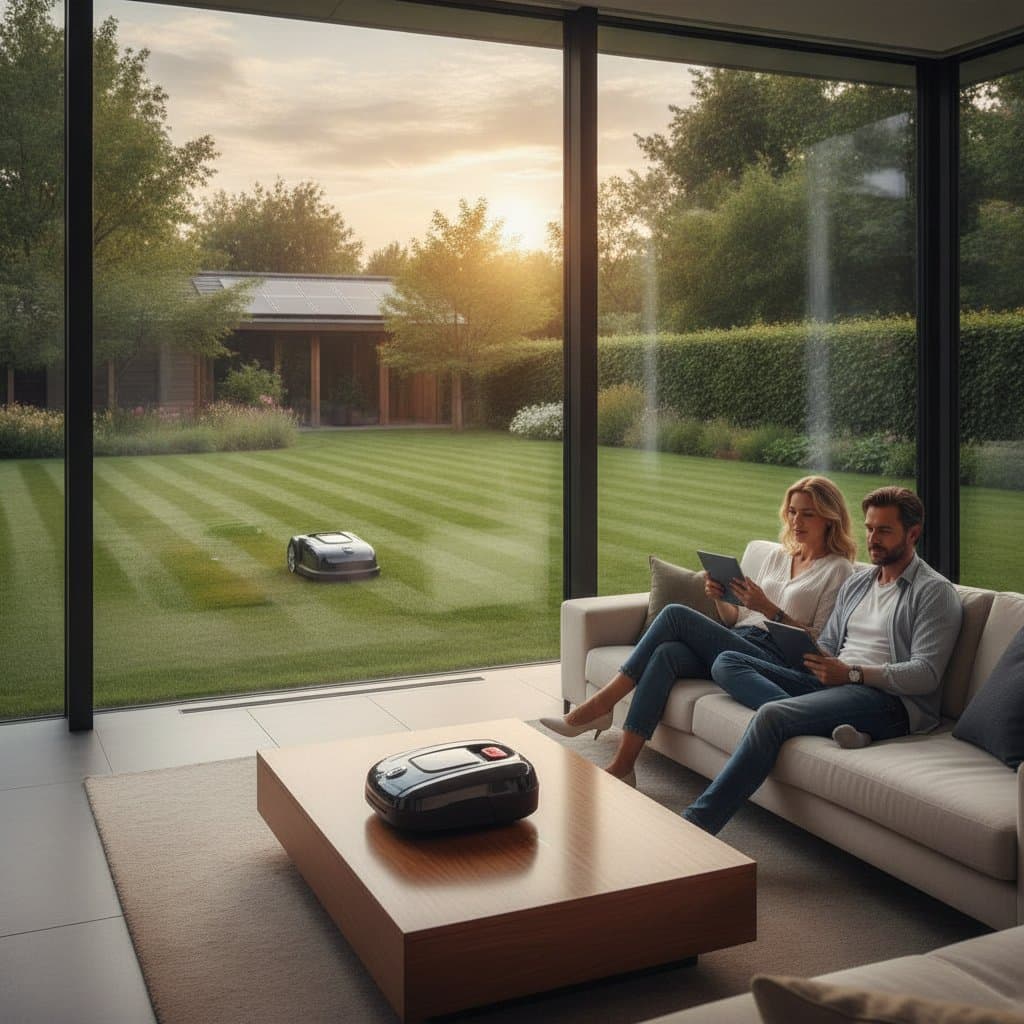
A traditional mower requires fuel, physical effort, and regular attention. A robotic model operates on a set schedule and handles the work independently. Homeowners program the unit for early morning or late evening sessions to avoid peak heat or family activities.
The mower runs short cycles several times per week. This approach leaves clippings small enough to serve as natural mulch, which reduces the need for extra fertilizer and yard waste removal. Many users notice a thicker lawn within the first season because the frequent trims encourage denser growth.
Energy Efficiency and Environmental Benefits
Robotic mowers run on rechargeable batteries instead of gasoline. This change eliminates exhaust fumes and reduces noise levels to a low hum. In regions focused on lower emissions, such as parts of California, homeowners adopt these units to meet personal sustainability targets.
Pairing the charging station with a small solar panel creates a self-sufficient setup. The reduced noise also benefits dense neighborhoods where quiet operation preserves the enjoyment of outdoor spaces.
Smarter Technology for Better Results
Improved sensors allow the mower to detect obstacles, handle slopes up to 35 degrees, and return to the base when the battery runs low. GPS models map yard boundaries without wires, while boundary-wire versions create clear zones for precise coverage.
The mower removes only a few millimeters of growth per pass. This method trains grass to grow evenly and reduces bare spots. The result is a uniform surface that requires less manual correction.
Cost and Maintenance Considerations
Initial purchase prices exceed those of basic push mowers. Long-term costs drop because the unit needs no gasoline, oil, or frequent blade sharpening. Weather-resistant models last multiple seasons with basic care such as blade replacement twice a year and station cleaning.
Homeowners who previously paid for weekly service often recover the purchase price within two seasons. Routine upkeep takes minutes rather than hours of hauling equipment.
Safety and Security Enhancements
Modern units include lift sensors that stop the blades immediately. PIN-code locks prevent unauthorized starts, and some models send phone alerts if moved outside the programmed area. These features allow safe operation near children and pets.
App connectivity provides start, stop, and schedule controls from inside the home. Real-time status updates remove the need for constant visual checks.
Design Integration and Aesthetic Value
Low-profile bodies fit discreetly along garden edges or under small shelters. Consistent trimming eliminates mower ruts and color streaks that appear with heavier equipment. When combined with targeted watering, the lawn maintains a cared-for appearance throughout the year.
Selecting the Right Model for Your Yard
Measure the lawn area and note any slopes or obstacles before purchase. Compare battery runtime against yard size to ensure full coverage on a single charge. Review local dealer support for blade replacements and software updates to maintain performance over multiple seasons.