
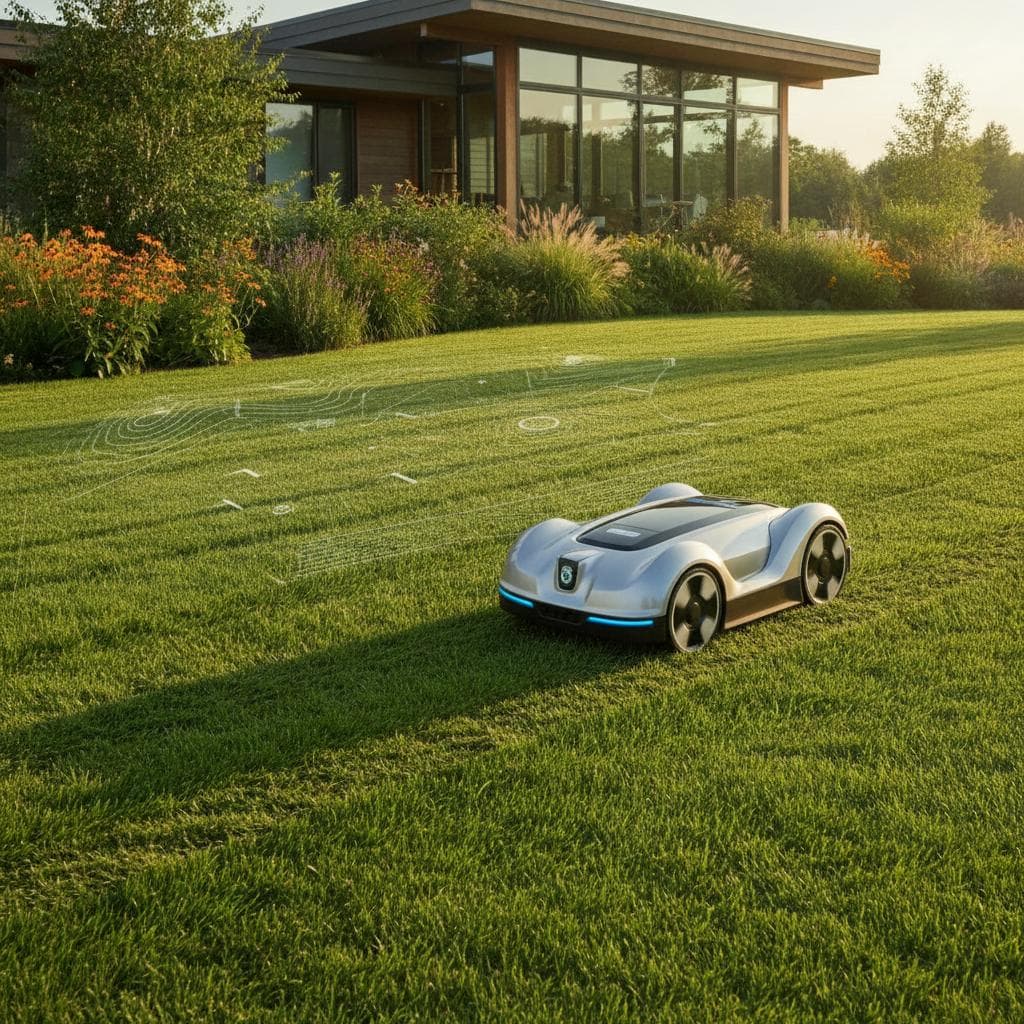
AI Mowers Learn Your Yard Like a Seasoned Gardener
Homeowners and landscape professionals are rethinking what lawn care means. The next wave of outdoor maintenance is quiet, efficient, and autonomous. AI-powered mowers are taking over not just as a novelty, but as a daily tool that keeps lawns neat without constant supervision.
The appeal lies in precision and time savings. These machines learn patterns, adapt to weather, and maintain perfect cutting schedules while the owner enjoys a consistently tidy yard.
At a Glance
- Location: Residential and commercial landscapes
- Project Goal: Reduce manual lawn care and improve turf health
- Technology Focus: AI-guided navigation, adaptive sensors, smart scheduling
Smarter Navigation Redefines Efficiency
AI mowers move with a level of intelligence traditional robotic units never achieved. Instead of relying on perimeter wires, they map the terrain using cameras, ultrasonic sensors, and GPS. Each pass becomes more accurate as the mower learns the layout.
A landscape designer might say, "These machines work like a seasoned gardener who remembers every corner of the yard." That memory allows them to avoid flower beds, trees, and furniture without manual boundaries. The result is less setup time and cleaner edges.
Precise navigation saves hours that would otherwise go to trimming missed patches or correcting uneven cuts. Choose models with adjustable mapping so they can adapt if you add new pathways or garden beds. A homeowner with a curved gravel patio can program the mower to skirt its edge perfectly, maintaining the crisp line between turf and stone.
Adaptive Cutting Improves Lawn Health
AI-powered blades adjust speed and height based on grass density, growth rate, and moisture content. Instead of cutting on a fixed schedule, the mower decides when and how to trim. This reduces stress on turf and promotes deeper root growth.
A horticulturist said, "Consistent micro-cuts keep the grass healthier than a heavy weekly mow." These small adjustments mimic professional groundskeeping, keeping the lawn even and lush.
This approach reduces the need for fertilizer and water by encouraging natural resilience. Match the mower settings to grass type, such as fescue or zoysia, for optimal blade behavior. In shaded areas, the mower slows its pace to avoid chewing damp grass, preventing ruts and disease.
Integrated Data Makes Maintenance Predictive
The latest AI mowers connect with weather data, soil sensors, and irrigation systems. They make decisions based on conditions rather than fixed routines. When rain is forecasted, mowing pauses automatically. When soil compaction rises, the mower changes its route to avoid repetitive wheel tracks.
A landscape technician said, "Predictive mowing stops problems before they start." This data-driven approach replaces guesswork with responsive care.
The system prevents overcutting or scalping while conserving energy. Use the mower app to track performance and identify patterns in growth or stress. If a section of turf grows faster due to shade loss, the mower adjusts its schedule for that zone without human input.
Quiet Operation Expands Usable Hours
AI mowers rely on electric motors that are nearly silent. This allows maintenance during early mornings or evenings without disturbing neighbors. The soft hum blends into background noise, giving freedom to run the mower whenever needed.
A property manager said, "The quiet operation changes how we schedule maintenance for shared spaces." Apartment courtyards or community parks can stay tidy without interrupting daily use.
Quiet operation extends mowing hours and reduces neighborhood disturbance. Pair the unit with low-voltage landscape lighting to create safe paths for nighttime operation. A small park can schedule mowing just after dusk while residents relax nearby.
Sustainable Power Lowers Environmental Impact
Electric charging and smart energy use make these machines more sustainable than gas models. Many connect to solar panels or shared charging stations, reducing reliance on fossil fuels. Their AI systems optimize route efficiency, cutting power use by learning the shortest paths.
A sustainability expert said, "Every efficient lap adds up to measurable energy savings." The technology matches the broader shift toward eco-responsible landscapes.
Sustainable power cuts emissions and noise while lowering long-term costs. Combine AI mowing with native planting to reduce total lawn area and energy use. A mixed landscape with prairie dropseed borders and a compact turf center benefits from both biodiversity and robotic precision.
Living with Autonomous Lawn Care
Once an AI mower is integrated into a property, routine maintenance changes dramatically. The mower becomes part of the landscape rhythm, operating quietly and consistently. Homeowners check progress through an app rather than walking the yard with a rake or trimmer.
The result is more time to enjoy the outdoors and less time spent managing it. Professionals benefit as well. Crews can focus on pruning, planting, and irrigation while the mower handles repetitive cutting. This balance leads to better overall care and higher-quality results.
AI-powered mowers represent a practical shift in lawn maintenance that values precision, sustainability, and smart use of time. Whether tending a small backyard or a large property, these machines deliver consistency that traditional methods rarely match.