
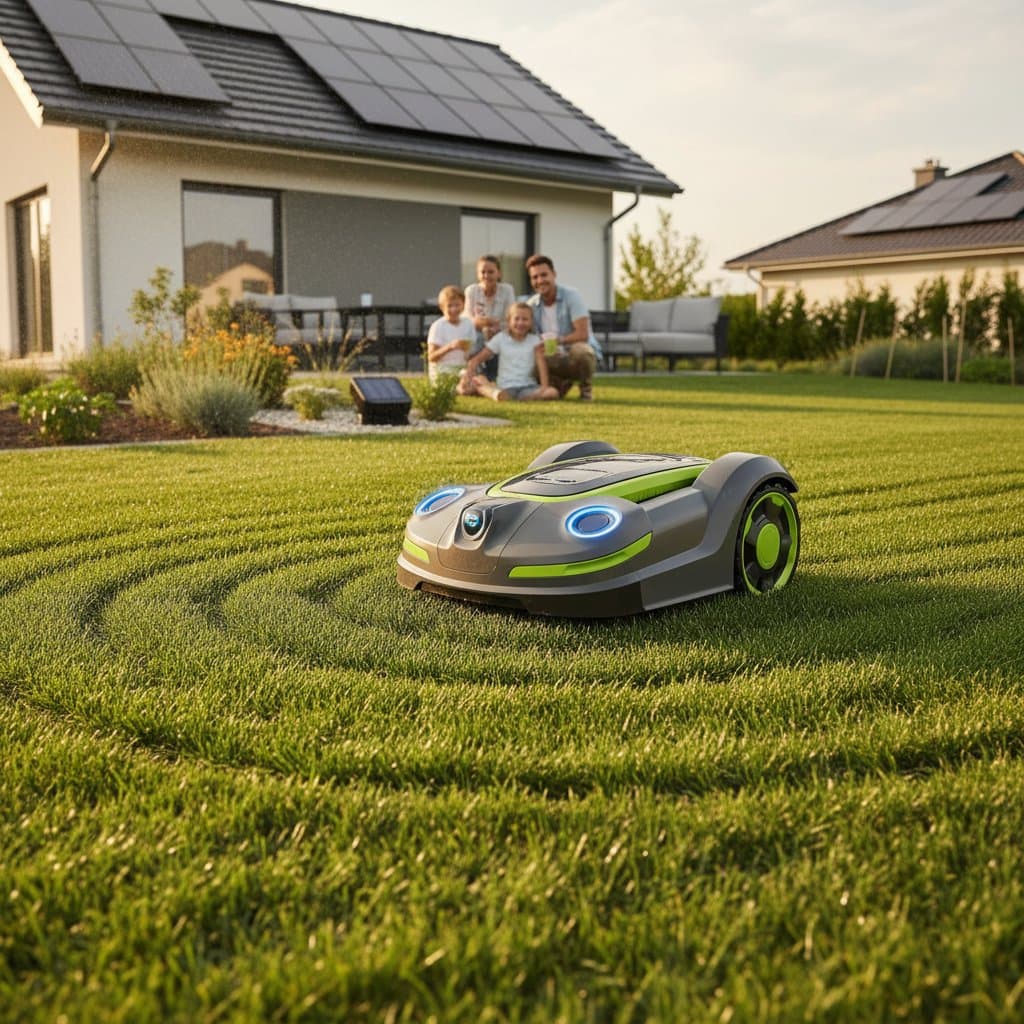
Introducing AI Robotic Lawn Mowers That Deliver 60 Percent Savings
Martin and Lila faced a common challenge upon moving into their suburban home: a spacious front yard that promised beauty but demanded relentless upkeep. Their demanding work schedules and variable weather often left mowing neglected. A landscape designer recommended an AI-equipped robotic mower with advanced sensors to manage the task autonomously. The outcome proved transformative, yielding a vibrant, evenly trimmed lawn alongside substantial reductions in ongoing expenses.
Enhancing Lawn Maintenance Through Intelligent Automation
At the core of this solution lies a compact robotic mower that runs on a programmable schedule with minimal noise. Rather than adhering to fixed paths, the device employs artificial intelligence to map the yard's contours. It identifies obstacles, varies blade height across grass types, and determines optimal mowing intervals based on growth patterns.
Martin shared, "We used to dedicate entire weekends to mowing, edging, and cleanup. Now the mower handles everything during our workday. The lawn remains uniform, and our involvement is minimal."
The unit integrates with a dedicated mobile application for oversight. Homeowners monitor battery status, review activity logs, and adjust operations remotely. Integration with weather services enables automatic pauses during precipitation, safeguarding the turf and equipment from moisture damage.
Integrating Technology Seamlessly into Landscape Design
This robotic mower transcends basic functionality to complement the overall yard aesthetic. The charging base nestles unobtrusively behind a modest hedge, serving as both shelter and power station. A built-in solar panel on the roof offsets energy needs, lessening dependence on grid electricity.
Lila highlighted the device's low noise profile. "It operates almost silently. We enjoy outdoor dinners without distraction," she noted. Operating below 60 decibels, the mower accommodates early morning runs without neighbor complaints.
GreenForm Outdoor Studio incorporated resilient pavers along the mower's routes between garden zones. These facilitate navigation over irregular surfaces and shield blades from debris accumulation. Adjacent plantings feature drought-tolerant native grasses and perennials, which demand infrequent cuts and lighten the mower's duties.
Key Design Considerations for Optimal Performance
- Select a docking station location with partial shade to balance solar exposure and cooling.
- Ensure strong wireless signal strength across the yard for reliable app connectivity.
- Incorporate boundary wires or virtual fencing to define operational limits precisely.
Achieving Financial Savings and Environmental Gains
Conventional lawn maintenance relies on gasoline, equipment servicing, and labor hours. An AI robotic mower removes fuel expenses and curbs water usage by maintaining ideal grass lengths. Uniform trimming fosters deeper roots, decreasing the need for supplemental feeding and watering.
EcoTech Garden Systems analyzed the household's pre- and post-installation consumption. Findings revealed a 60 percent decline in combined lawn care expenditures, encompassing electricity, water, and professional services. Efficient path planning and solar supplementation drove these efficiencies.
Environmentally, the all-electric design emits no exhaust, while AI algorithms avert excessive mowing to conserve resources. Finely chopped clippings remain on-site as mulch, enriching soil naturally and supporting biodiversity.
Sustaining Long-Term Lawn Care Success
Several months post-installation, Martin and Lila report a shift in their lifestyle. Freed from routine chores, weekends now center on leisure. The children enjoy uninterrupted play on the level surface, and social events occur effortlessly in the perpetually prepared space.
Homeowners eyeing this technology should prioritize initial configuration. Place the base in a shaded yet accessible spot, verify signal integrity, and perform sensor cleanings biannually. These practices ensure precision and prolong equipment durability.
- Calibrate boundary settings during dry conditions for accurate mapping.
- Update software firmware quarterly to access performance enhancements.
- Inspect wheels and blades monthly to prevent wear-related inefficiencies.
AI robotic mowers fuse innovation with landscape artistry, streamlining a longstanding domestic responsibility. Thoughtful implementation and routine care yield enduring economies, reliable upkeep, and an invitation to savor sustainable outdoor environments.