
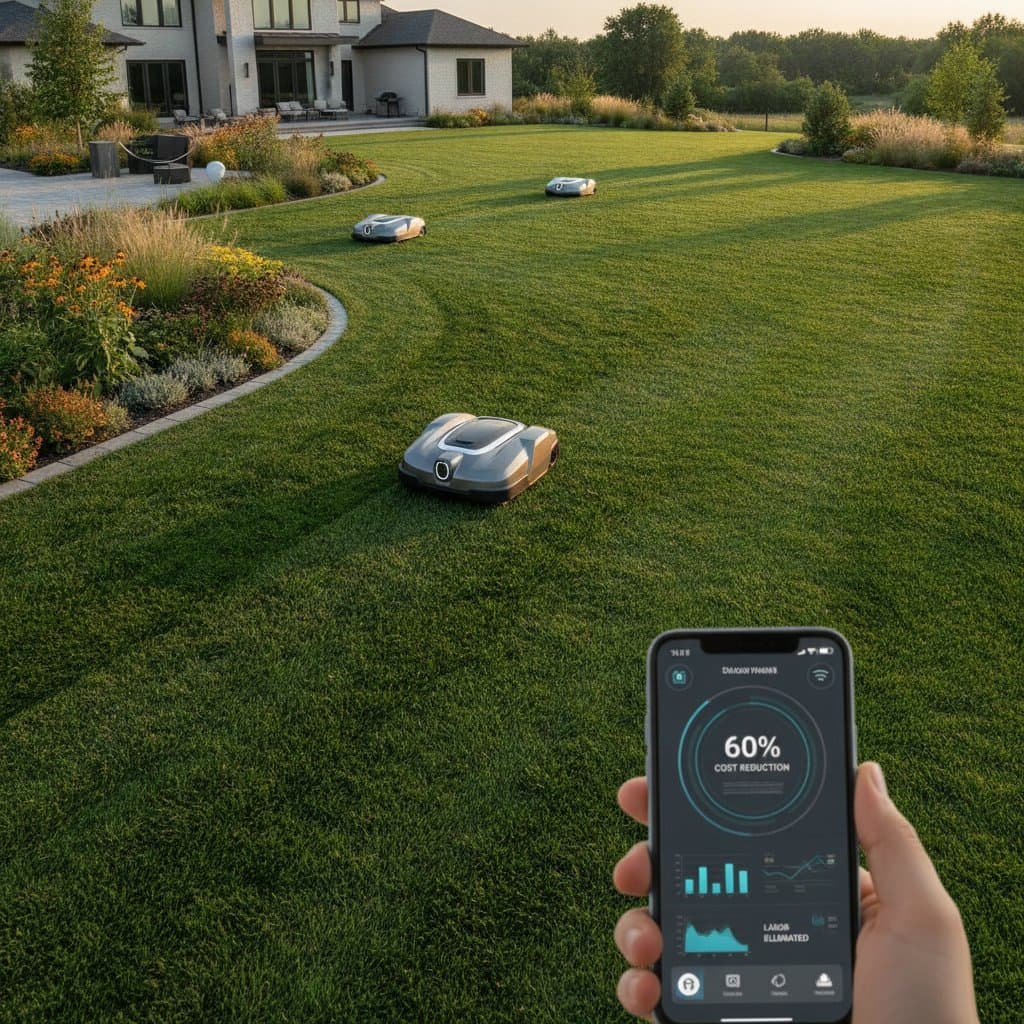
Robotic Mowers Reduce Lawn Care Costs by 60 Percent
A well-maintained lawn anchors outdoor spaces, yet weekly mowing demands fuel, labor, storage, and weekend hours. Robotic mowers eliminate these recurring tasks through autonomous operation. Many homeowners report savings up to 60 percent when comparing equipment, labor, and maintenance costs over several seasons.
Savings vary based on lawn size, terrain complexity, equipment price, and installation requirements. Smart lawn technology provides a practical solution for maintaining consistent grass height without manual weekly effort.
At a Glance
- Best for: Established lawns with defined edges and manageable slopes
- Main savings: Labor, fuel, mowing services, and routine engine maintenance
- Key features: Scheduling, boundary mapping, rain detection, app controls, and theft alerts
- Design benefit: Quieter operation with fewer storage demands and cleaner circulation routes
Replace Weekly Labor With Autonomous Mowing
Traditional mowing requires moving equipment, checking fuel levels, cutting grass, trimming edges, and cleaning the mower after each use. Hiring a lawn service adds recurring costs that increase with lot size and service frequency.
A robotic mower handles short mowing sessions independently. The unit returns to its charging station when needed, then resumes work without additional labor. Frequent light cuts leave fine clippings on the lawn, where they decompose and return nutrients to the soil.
The financial advantage increases when the mower replaces paid services. Households spending heavily on weekly mowing may recover equipment costs faster than those who already own functioning gas mowers.
Calculate Total Costs Before Purchase
Purchase price represents only part of the investment. Compare robotic mowers against fuel, oil, replacement belts, spark plugs, blades, repairs, storage, and professional mowing fees.
Create an annual cost estimate using these categories:
- Current mowing service or personal labor value
- Fuel and engine maintenance expenses
- Blade replacement and seasonal care costs
- Robotic mower purchase and installation fees
- Boundary wire or wireless mapping equipment
- Electricity for charging
- Battery replacement over the equipment's useful life
Basic models suit small, open lawns. Larger properties may require multiple zones, stronger drive motors, or professional setup. Sloped ground needs models with better traction.
The 60 percent savings figure serves as a planning benchmark rather than a guarantee. Measure current costs first, then compare against the mower's purchase price and expected operating needs.
Select the Right Lawn for Technology
Robotic mowers perform best on lawns with clear boundaries, moderate slopes, and limited clutter. They manage trees, planting beds, and paved paths when the layout is mapped correctly.
Complicated yards require more preparation. Separate lawn areas may need guide paths or manual transfers. Narrow passages limit movement. Loose gravel, deep mulch, exposed roots, and standing water interfere with operation.
Before selecting a mower, walk the property and mark:
- Lawn entrances and exits
- Steep slopes
- Low spots that hold water
- Pet areas and play zones
- Tree roots and ornamental stones
- Garden edges and retaining walls
- Gates or narrow passages
A smart mower does not correct poor site planning. Clear transitions help the unit work efficiently and reduce the risk of trapped wheels or damaged blades.
Design Clean Edges Into the Landscape
Robotic mowers cut open lawn areas well, but they may leave narrow strips beside walls, fences, raised beds, and curbs. This uncut edge requires occasional trimming unless the landscape includes mower-friendly borders.
Set paving or steel edging nearly level with the turf. A flush band of bluestone, concrete, or brick allows the mower to travel close to the edge. The border creates a crisp line between grass and planting beds.
For a softer appearance, use a narrow gravel strip beside fencing. Keep the gravel contained with aluminum edging, and maintain a clear transition between turf and stone.
This small design adjustment improves appearance while reducing the handwork that can weaken promised savings.
Use Mowing Patterns to Support Lawn Health
Robotic mowers move in planned or semi-random patterns. Frequent cutting keeps grass at steady height, yet the mower needs suitable settings for the turf species and season.
Never remove too much leaf surface in one pass. A high cutting height supports deeper roots and helps the lawn handle heat and foot traffic. Cool-season grasses may need different settings from warm-season varieties.
Keep blades sharp. Dull blades tear grass and create ragged tips that look brown. Inspect blades regularly, especially when the lawn contains twigs, small stones, or hidden debris.
Mulched clippings support soil fertility, but they do not replace all lawn nutrition. A soil test can guide compost use or a measured fertilizer program.
Reduce Fuel, Noise, and Storage Needs
Gas mowers require fuel storage, produce engine noise, create exhaust, and need routine servicing. Corded electric mowers limit movement. Battery push mowers still require a person to manage each cut.
Robotic models use small electric motors and charge at compact stations. The station can sit beside a garage, under a pergola, or near a service path. Select a location with drainage, shade, and reliable electrical connection.
Lower noise improves the experience of nearby patios and bedrooms. The mower can operate during suitable low-use periods without creating the sharp sound of a conventional engine.
This quieter operation supports layered outdoor living. A seating area can sit closer to the lawn without competing with a loud machine.
Connect Mowing With Smart Lawn Technology
Many autonomous lawn care systems connect to mobile apps. Controls may include mowing schedules, cutting height, zone selection, error alerts, and location tracking.
Smart features matter most when they solve real household problems. Remote controls help when weather changes or guests plan to use the yard. Rain sensors can pause operation on wet turf, which reduces ruts and soil compaction.
Some systems create virtual boundaries through satellite positioning. Others use boundary wire installed around planting beds and hardscape. Wireless mapping can simplify installation, but dense tree cover or complicated layouts may affect accuracy.
Choose the simplest system that fits the property. Extra features do not create value when the yard does not need them.
Protect the Mower and the Landscape
Autonomous equipment needs a safe operating environment. Remove toys, hoses, pet dishes, and fallen branches before operation. A mower can damage delicate objects, while small debris can damage blades.
Create a dedicated parking station with a simple roof or enclosure. The shelter protects the unit from direct sun and heavy rain while keeping the charging area orderly.
If pets use the yard, introduce the mower gradually. Supervise the first several sessions. Check how animals respond to the movement and sound.
Use app alerts and a visible storage location to reduce theft concerns. Some models include alarms or location tracking, which adds practical security for costly equipment.
Track Savings After Installation
The best way to test savings claims is to record actual performance. Note hours spent mowing, trimming, charging, cleaning, and maintaining equipment. Track professional service visits that the robotic mower replaces.
Review the lawn after each month of use. Look for missed strips, scalped areas, wheel marks, and worn paths.
A compact yard may save more through time than cash. A large property may show stronger financial savings when the mower replaces frequent paid service.
Living With Autonomous Lawn Care
Robotic mowers work best when the lawn, edges, storage area, and planting design support their movement. A clear site plan reduces interruptions. Flush borders reduce trimming.
Start with a realistic cost comparison and inspect the yard before choosing equipment. With the right model and thoughtful landscape adjustments, autonomous lawn care can lower expenses, reduce noise, and keep the lawn ready for everyday use.