
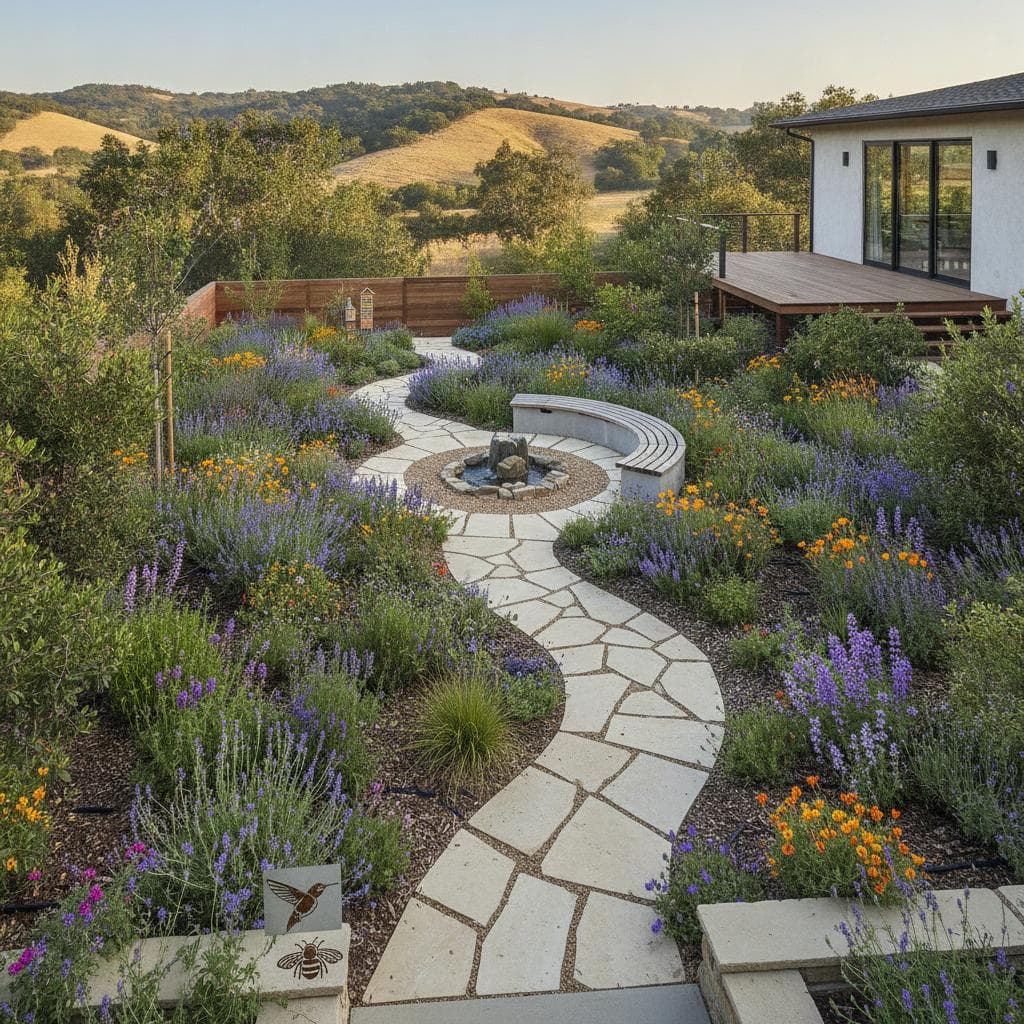
Rewilding Trend: Why Homeowners Are Ditching Lawns
A lawn can look tidy while consuming considerable water, fuel, chemicals, and weekend hours. Rewilding offers a practical alternative: replace demanding turf with a layered garden that supports birds, pollinators, soil life, and human enjoyment. Across California, homeowners are replacing lawns with landscapes that feel natural, use resources wisely, and remain beautiful through changing conditions.
A successful rewilded yard does not mean abandoning design. It means replacing uniform grass with intentional planting, useful paths, shaded seating, and habitats suited to the local climate.
Why Lawns Are Losing Ground
Traditional turf performs best with regular irrigation, mowing, edging, fertilizing, and pest management. In dry regions, that routine can conflict with responsible water use. Compacted soil beneath grass also offers limited shelter and food for wildlife.
A biodiversity garden works differently. Native and climate appropriate plants provide nectar, seeds, cover, and nesting material. Deep rooted species can improve soil structure and withstand dry periods once established. Shrubs and small trees add vertical layers, while fallen leaves and woody stems create habitat that a highly groomed lawn removes.
The result can support more life with fewer inputs. It also gives homeowners a richer outdoor experience, from seasonal flowers and birdsong to the quiet pleasure of watching a garden change through the year.
Plan Before Removing Turf
Start with observation rather than demolition. Track sun exposure, drainage, wind, existing trees, irrigation coverage, and views from inside the house. A small site plan will help separate areas for planting, circulation, gathering, and practical storage.
Next, decide how much lawn must remain. Children, dogs, play, and entertaining may justify a modest patch of durable turf. A narrow strip can also provide a visual pause between bolder planting areas. Removing every blade is not a requirement for joining the anti lawn movement.
For unwanted grass, sheet mulching can reduce digging and soil disturbance. Mow the lawn short, cover it with overlapping cardboard, and add a thick layer of compost or arborist wood chips. Keep mulch away from trunks and irrigation components. Some persistent grasses may require repeated treatment or professional removal.
Choose Plants for Layers and Place
Select plants according to mature size, water needs, soil, and exposure. Native species usually offer strong habitat value, but well behaved Mediterranean and drought tolerant plants can also fit a California garden when placed responsibly.
Build the planting in layers:
- Canopy plants: Small trees provide shade, nesting sites, and cooling.
- Shrubs: Evergreen and flowering shrubs create structure and shelter.
- Perennials and grasses: These supply color, seed, and movement near paths.
- Ground covers: Low plants protect soil and reduce evaporation.
- Seasonal habitat: Leave some stems, seed heads, and leaf litter through their useful cycle.
Avoid filling every inch with mulch. Bare soil patches can benefit ground nesting insects, while dense planting offers protection for small wildlife. Group plants with similar irrigation needs so one watering zone does not serve thirsty plants beside drought adapted ones.
Make Rewilding Look Designed
Order keeps a naturalistic garden from appearing accidental. Repeat a few plant forms, define paths with steel, stone, or timber, and place taller plants where they frame a view rather than block it. A simple patio, bench, or gravel sitting area can make the garden feel finished.
Lighting deserves restraint. Shielded, warm fixtures can improve evening use without washing the entire yard in glare. Avoid bright lighting near flowering plants and wildlife areas, since darkness supports nocturnal insects and other species.
Maintenance remains part of the plan. Rewilded gardens need seasonal pruning, weed control, irrigation checks, and occasional thinning. The work is usually less repetitive than mowing, though it requires closer observation. Think garden stewardship, not complete neglect.
Managing Budget, Timing, and Trades
A phased project protects both budget and plant health. Begin with drainage, soil preparation, irrigation conversion, and hardscape. Plant trees early so they can establish before smaller layers fill in. Save decorative details for the end, after paths and access routes are clear.
A landscape designer, arborist, irrigation specialist, or knowledgeable nursery can prevent expensive mistakes. Ask for mature plant sizes, maintenance expectations, and water requirements in writing. Good coordination matters, especially when electrical work, patios, fencing, and planting share the same space.
Watching Your Garden Thrive
Rewilding succeeds when ecological value and daily use support each other. Keep the spaces your household needs, replace unnecessary turf with diverse planting, and give the garden a clear framework. With thoughtful preparation, a biodiversity garden can reduce maintenance, conserve water, and make home life feel closer to California's living landscape. That is a durable reason to leave the lawn behind.