
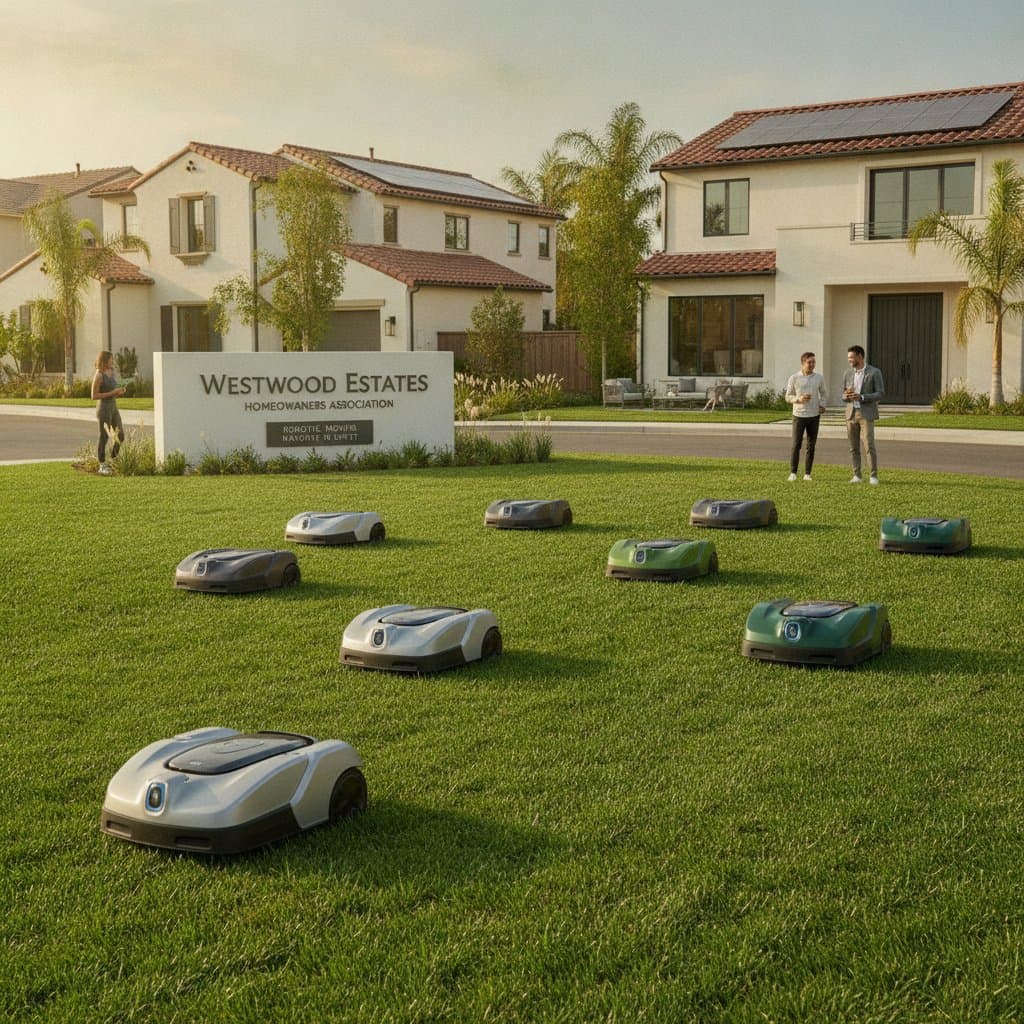
Robotic Mowers Become Mandatory Under New HOA Rules
Across many California neighborhoods, homeowners are discovering a surprising update in their local homeowner association regulations. New HOA rules now require the use of robotic lawn mowers for all front yard maintenance. This change carries environmental, aesthetic, and logistical motivations.
Residents who value both their weekends and their landscaping budgets benefit from understanding how to adapt. The transition becomes smoother with clear preparation steps.
Why HOAs Are Turning to Automation
Homeowner associations maintain consistent visual standards throughout a community. Traditionally this meant enforcing height restrictions for grass, approved plant palettes, and maintenance schedules. The shift toward robotic mowers fits that mission with a modern approach.
Several factors drive this rule change. Robotic mowers operate at lower noise levels than gas powered machines and reduce complaints in dense neighborhoods. Electric models run on rechargeable batteries, which lowers emissions and supports California environmental targets. Automated systems deliver uniform cuts that avoid the uneven results from delayed or rushed manual mowing. Landscaping services also face worker shortages, and automation provides reliable coverage without schedule conflicts.
HOAs view these devices as tools to preserve curb appeal while reducing disputes. The adjustment reflects broader technology adoption in property management.
Understanding What the Rule Requires
Each HOA interprets the new rules differently. Some mandate robotic mowing for common areas and private front yards. Others permit manual mowing only when it meets noise or emission limits. Homeowners should review the official policy before any purchase.
Key points to clarify include required brands or models, shared maintenance programs, property line and slope handling, and compliance deadlines. Many HOAs partner with vendors for approved packages and installation. This approach ensures compatibility with community layouts and safety standards.
Choosing the Right Robotic Mower
California yards range from compact lots to hillside properties, so model selection requires attention to terrain. Entry level units suit small, flat lawns. Larger or irregular spaces need GPS mapping and boundary wire systems.
Check battery life for full day coverage and automatic return to the charging station. Confirm flexible cutting height settings for seasonal growth or drought tolerant turf. Safety sensors that stop blades on lift or tilt protect children and pets. Smartphone app integration allows scheduling that meets required intervals.
A quality unit offsets its cost through lower fuel, labor, and service expenses over time.
Adapting Landscaping for Automation
Robotic mowers perform best when yards include clear paths and defined zones. Smooth continuous borders reduce missed patches. Remove debris, toys, and decor from mowing areas before setup.
Install buried guide wires or digital mapping to mark boundaries accurately. Position the docking station near an outdoor outlet in a shaded, dry spot. Some homeowners combine automated mowing with drought tolerant beds to lower overall upkeep.
Managing Costs and Maintenance
Initial purchase prices vary, yet operating costs remain lower than weekly lawn service fees. Routine tasks include cleaning the underside, periodic blade replacement, and software updates. Most models handle light rain and temperature changes, though storage during major storms extends lifespan.
HOAs sometimes negotiate group discounts or reimbursement programs. Residents should inquire with their boards before buying equipment independently.
Living with a Robotic Lawn
After installation the mower runs with minimal input. Lawns stay trimmed on schedule without manual coordination. Residents often note the quiet operation and consistent appearance as daily advantages.
Tall weeds and thick thatch still require occasional manual attention. For most households the reduction in weekly tasks outweighs these remaining needs.
Maintaining Compliance Year Round
Successful adoption involves regular checks on mower performance and boundary integrity. Homeowners who coordinate with their HOA from the start avoid inspection issues. This approach supports both neighborhood standards and personal time savings.