
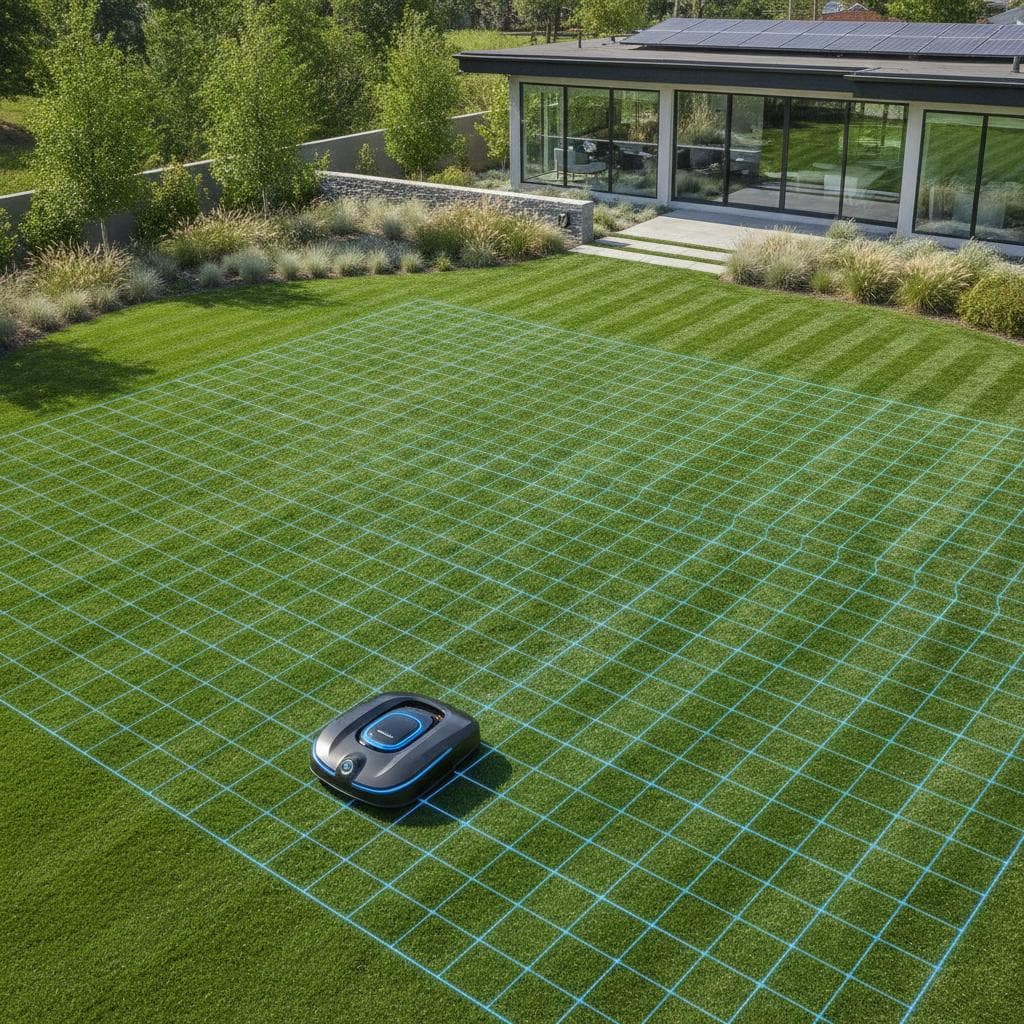
AI Mapping Lets Robotic Mowers Cut Lawns 50 Percent Faster
If you have ever spent a weekend afternoon pushing a mower across the lawn instead of relaxing, you understand the appeal of a machine that can do it for you. Robotic mowers have become one of the most practical examples of everyday automation. The latest generation, guided by artificial intelligence mapping, is making a genuine difference in speed and precision.
These new systems can finish the job up to 50 percent faster than earlier models while delivering a cleaner, more consistent cut. For homeowners who value a perfect lawn but also their free time, that is a welcome upgrade.
The Shift From Random to Intelligent Mowing
Traditional robotic mowers relied on boundary wires and random navigation patterns. They would bounce around the yard like a slow-moving pinball, gradually covering the area but wasting energy and time. The result was a tidy lawn, but the process was inefficient.
AI mapping has changed that. By using sensors, cameras, and onboard computing, these machines now learn the layout of your yard. They identify obstacles, measure distances, and record terrain changes. Once the mower understands the map, it follows a planned route that covers every section with minimal overlap.
This mapping technology mirrors what autonomous cars use on a smaller scale. The mower no longer needs to wander until it happens to find the right spot. Instead, it knows exactly where it has been and where it needs to go next. That means fewer passes over the same ground, smoother turns, and faster completion times.
How AI Mapping Works in Practice
Modern robotic mowers often combine several tools to build their maps. High-definition cameras capture the surroundings, ultrasonic sensors detect nearby objects, and GPS modules provide location data. The AI software merges all this information to create a live model of the yard. Over time, it refines that model, learning seasonal changes such as plant growth, new flowerbeds, or rearranged furniture.
The mower navigation system divides the lawn into zones, then determines the most efficient mowing path for each zone. It calculates the best direction to cut the grass based on slope, sunlight exposure, and previous mowing patterns. The result is not just faster mowing, but also healthier turf. Grass cut in alternating directions grows more evenly, and consistent timing helps prevent stress caused by irregular trimming.
Why Speed Matters
Cutting the mowing time in half is more than a convenience. It directly affects energy consumption, battery life, and long-term wear on the machine. When the mower spends less time running, it uses less power. That means fewer charging cycles and a longer lifespan for its battery pack.
For solar-powered charging stations, the reduced runtime can make the system nearly self-sustaining during most of the growing season. Speed also matters for homeowners who share outdoor spaces with pets or children. A mower that finishes quickly frees the yard for play or relaxation sooner.
Precision and Consistency
AI mapping does more than make the mower faster. It improves the quality of the cut. With a clear understanding of the lawn layout, the mower can maintain a consistent cutting height across uneven terrain. It can detect areas of thicker growth and slow slightly to ensure an even trim.
Some models even recognize wet patches and avoid them until conditions improve, protecting the grass from damage. For homeowners with complex landscapes, such as curved garden beds or integrated patios, this precision is especially valuable. The mower can navigate tight spaces without scraping edges or missing corners.
Installation and Setup
One of the early frustrations with robotic mowers was the installation of boundary wires. It took hours to bury or peg down the wires that defined the mowing area. AI mapping largely eliminates that task. Many models use virtual boundaries that can be set through a mobile app.
You simply walk the perimeter once with your smartphone or let the mower scan it on its own. The digital map becomes the mower guide, and you can adjust it anytime without digging up the yard. This setup flexibility also allows for multiple mowing zones. You can assign different cutting schedules to the front and back yards or exclude certain areas entirely.
Safety and Obstacle Avoidance
AI mapping contributes to safety as much as efficiency. The mower sensors continuously monitor its surroundings. If a pet or child enters the mowing area, the machine stops immediately. It can also identify permanent obstacles like tree trunks or garden benches and steer around them smoothly.
The mower learns these fixed features after a few runs, so it no longer bumps into them. Some systems even recognize temporary items, such as toys or garden tools left on the grass. They pause or reroute automatically, preventing damage to both the mower and the object.
Integration With Smart Home Systems
AI-driven mowers fit naturally into connected home ecosystems. Most can be controlled through mobile apps or voice commands. You can schedule mowing sessions, adjust cutting height, or pause operation from anywhere. Some apps provide visual maps that show mowing progress in real time, complete with coverage data and battery status.
Integration with weather services adds another layer of intelligence. The mower can delay mowing during rain or extreme heat, preserving both the machine and the lawn. Over time, it learns patterns from these adjustments and refines its schedule for optimal performance.
Environmental Benefits
Faster mowing through efficient mapping directly supports sustainability goals. Reduced runtime lowers electricity use, and the precision of AI-guided mowing helps maintain healthier grass that requires less water and fertilizer. Some models use lightweight designs that minimize soil compaction, improving root health and reducing runoff.
For those living in regions with water restrictions or drought-prone conditions, maintaining grass vitality while conserving resources is a serious concern. AI mapping allows the mower to adapt its mowing frequency based on growth rate and weather conditions.
Cost and Value Over Time
While AI-mapped robotic mowers carry a higher initial price than basic models, the long-term value is substantial. Faster operation reduces energy costs, while precision mowing can cut down on lawn care supplies like fertilizer or repair seed. The decreased wear on the machine extends its service life, delaying replacement or major maintenance.
For homeowners who hire landscape crews, even partial automation can reduce recurring costs. A robotic mower handles the routine trimming, allowing professional gardeners to focus on design, pruning, and plant health.
Choosing the Right Model
When comparing AI-driven robotic mowers, consider several key factors:
- Yard size and complexity. Look for models rated for the total area of your lawn. Complex layouts with multiple zones require stronger mapping features.
- Battery capacity and charging time. Larger lawns benefit from long battery life and fast recharge cycles.
- Cutting system. Multi-blade rotors provide a finer cut and handle uneven ground better.
- Connectivity. App integration, Wi-Fi range, and update capability determine how easily you can manage the mower.
- Durability. Choose materials that resist weather and UV exposure for consistent performance across seasons.
A professional installer or garden designer can help assess your site and recommend the most efficient setup. They can also ensure your irrigation and planting zones coordinate smoothly with the mower boundaries.
Maintaining Your Outdoor Space
A well-tuned robotic mower is more than a gadget. It is a partner in creating a sustainable, attractive outdoor environment. By using AI mapping, these machines combine precision, speed, and intelligence in a way that respects both your time and the natural harmony of your garden.