
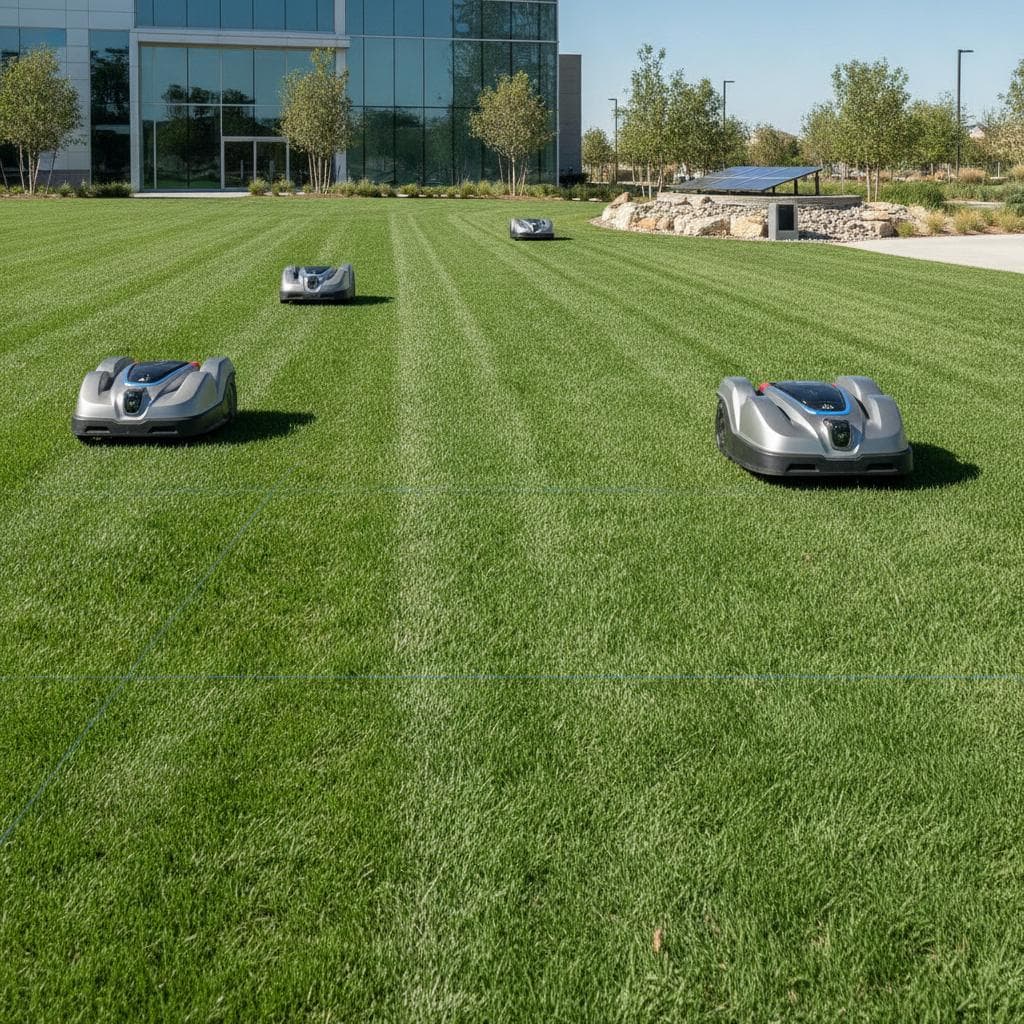
- Navigation: High accuracy GPS modules work with onboard sensors to avoid obstacles and maintain straight lines.
- Power Source: Rechargeable lithium ion batteries provide several hours of operation. Smart charging docks schedule recharges during off peak energy periods.
- Controls: Cloud based apps allow full monitoring from smartphones or tablets. Users can start, stop, or schedule mowing remotely.
- Weather Response: Built in sensors detect rain or wet grass, pausing operation to protect turf integrity.
Each feature contributes to a system that balances practicality and technology. The goal is not just automation but measurable efficiency.
Real World Results on Different Properties
The savings extend beyond private lawns. Commercial complexes, schools, and parks are integrating GPS mowers into their maintenance programs. For large campuses, property managers can deploy several units simultaneously, each responsible for a mapped zone. The mowers communicate through a shared network, ensuring complete coverage without duplication.
Landscaping teams report that the technology also simplifies scheduling. Instead of reacting to growth rates or weather changes, they can plan consistent, predictable cycles. The result is steady turf quality and reduced seasonal labor fluctuations.
A facilities supervisor said, "We used to rely on a crew of four for constant mowing. Now two of us manage the entire property with automated mowers. The time we save goes into planting and irrigation upgrades."
Environmental and Community Benefits
Beyond cost, GPS mowers create a quieter, cleaner environment. Electric power means no fumes or exhaust. Noise levels are low enough that mowing can occur early morning or late evening without disturbance. For neighborhoods and shared green spaces, that difference improves overall comfort.
Cuttings remain fine and evenly distributed, acting as natural mulch. This micro mulching returns nutrients to the soil, reducing waste and supporting healthy root systems. The process eliminates the need for bagging or hauling clippings, another hidden cost of traditional mowing.
The combination of energy efficiency, reduced emissions, and healthier turf creates a sustainable lawn care cycle. Every pass contributes to long term soil health while keeping operational costs under control.
Living with Automated Lawn Care
For those new to robotic mowing, a short adjustment period helps build confidence. Initial mapping requires attention, but once complete, updates are simple. Most users schedule mowing during off peak hours. The mower quietly maintains an even height, preventing the overgrowth that often leads to stress on grass.
Owners also appreciate how the technology blends into daily routines. The mower parks itself discreetly when finished. Notifications confirm progress, battery status, or maintenance reminders. Unlike traditional equipment, there is no need to store fuel or perform engine checks.
Routine blade replacement and software updates keep performance steady. Many manufacturers provide remote diagnostics, allowing technicians to troubleshoot without on site visits. Over time, this system becomes part of the natural rhythm of property upkeep.
Practical Steps to Get Started
Switching to GPS guided robotic mowers transforms lawn care from a recurring cost into a managed investment. The combination of mapping precision, reduced labor, and cleaner operation proves that automation can deliver real world value.
For homeowners and professionals alike, the shift represents more than a technical upgrade. It is a move toward smarter, more sustainable grounds management.