
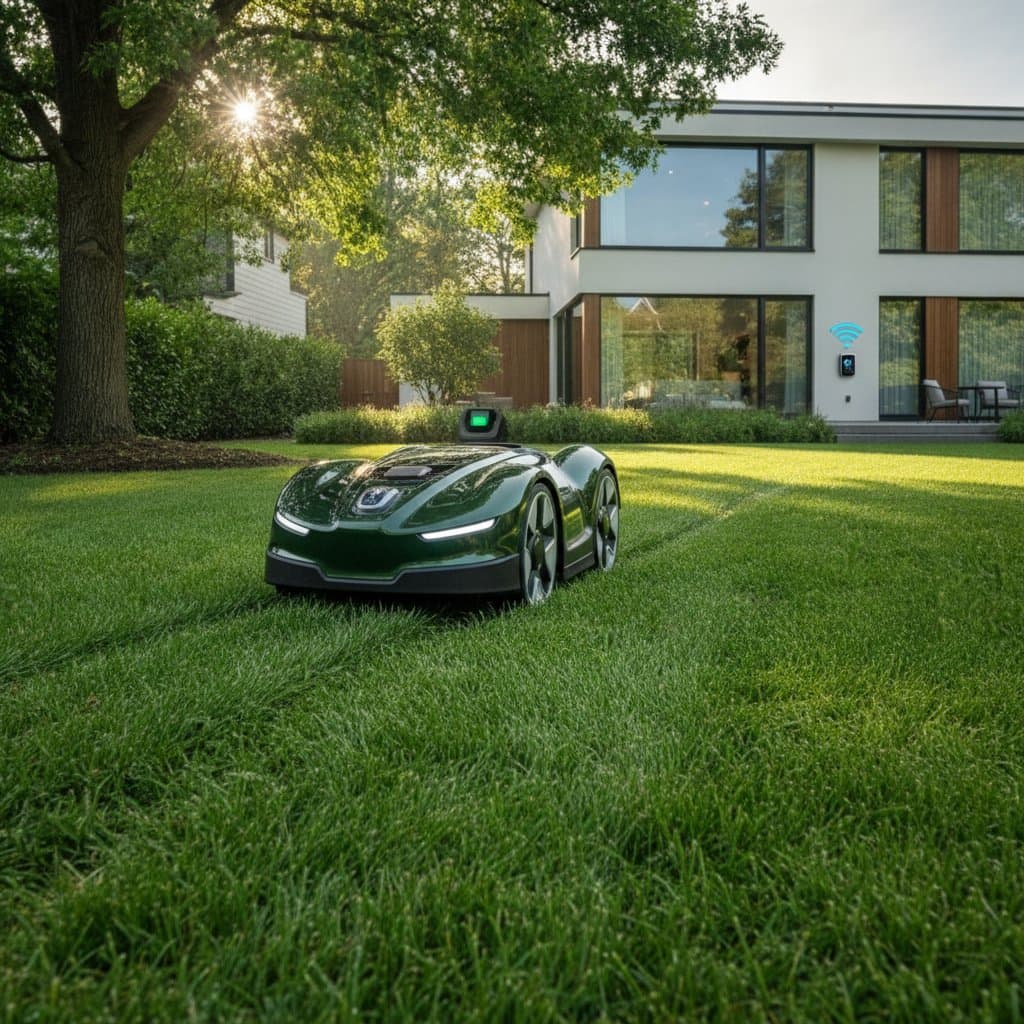
Why Robotic Mowers Cut Daily for Healthier Grass
Robotic mowers maintain lawns through frequent, incremental cuts rather than infrequent heavy trimming. This approach aligns with the natural growth patterns of grass and supports stronger root systems over time.
Benefits of Frequent Trimming
Grass responds well to regular removal of small portions of blade length. Daily cuts of one to three millimeters prevent the plant from experiencing shock that occurs during longer sessions spaced days or weeks apart. The result is denser turf that crowds out weeds and retains moisture more effectively.
Consistent trimming also encourages lateral growth. Each small cut stimulates the production of new shoots, which fills in thin areas and creates a uniform surface. Homeowners notice fewer bare patches and reduced need for overseeding within the first season of use.
How Daily Operation Supports Root Development
Short, repeated cuts keep the plant in a steady state of moderate growth. This avoids the stress response triggered by removing more than one third of the blade at once. Roots remain active and continue to draw nutrients from deeper soil layers.
The mower returns clippings directly to the lawn. These fine particles decompose quickly and return nitrogen to the soil, decreasing the requirement for supplemental fertilizer. Soil tests after one year often show improved organic matter content in yards maintained by robotic units.
Mapping and Scheduling Features
Modern robotic mowers use boundary wires or satellite mapping to cover every section of the yard on a programmed schedule. Users set the device to operate during early morning or late evening hours when temperatures remain moderate. This timing further reduces plant stress while avoiding disruption to household routines.
Adjustable height settings allow precise control based on grass type and season. Cool season varieties benefit from slightly higher settings in summer, while warm season grasses tolerate lower cuts during peak growth periods. The mower maintains the chosen height across every pass without variation.
Energy Use and Maintenance Requirements
Battery powered models operate at low decibel levels and consume modest amounts of electricity per charge cycle. A typical unit covers 500 to 1000 square meters on a single charge, depending on terrain and grass density. Recharging occurs automatically at a docking station, eliminating manual intervention.
Blade inspection every two weeks and seasonal replacement of the cutting disc keep performance consistent. Edge trimming around obstacles may still require occasional manual attention, yet the majority of the lawn remains evenly maintained without additional labor.
Selecting the Right Model for Yard Conditions
Consider total area, slope percentage, and presence of narrow passages when evaluating options. Units with all wheel drive handle inclines up to 35 percent effectively. Models equipped with rain sensors pause operation during wet periods and resume once conditions improve.
Integration with existing smart home platforms allows remote schedule adjustments through a mobile application. Notifications alert users to completed cycles or required maintenance, supporting reliable year round performance.
Long Term Lawn Resilience
Lawns maintained through daily robotic mowing demonstrate improved resistance to drought and disease. The steady removal of growth tips discourages fungal development that thrives on longer, damp blades. Over multiple seasons the turf develops a robust structure that requires fewer interventions to remain attractive and functional.