
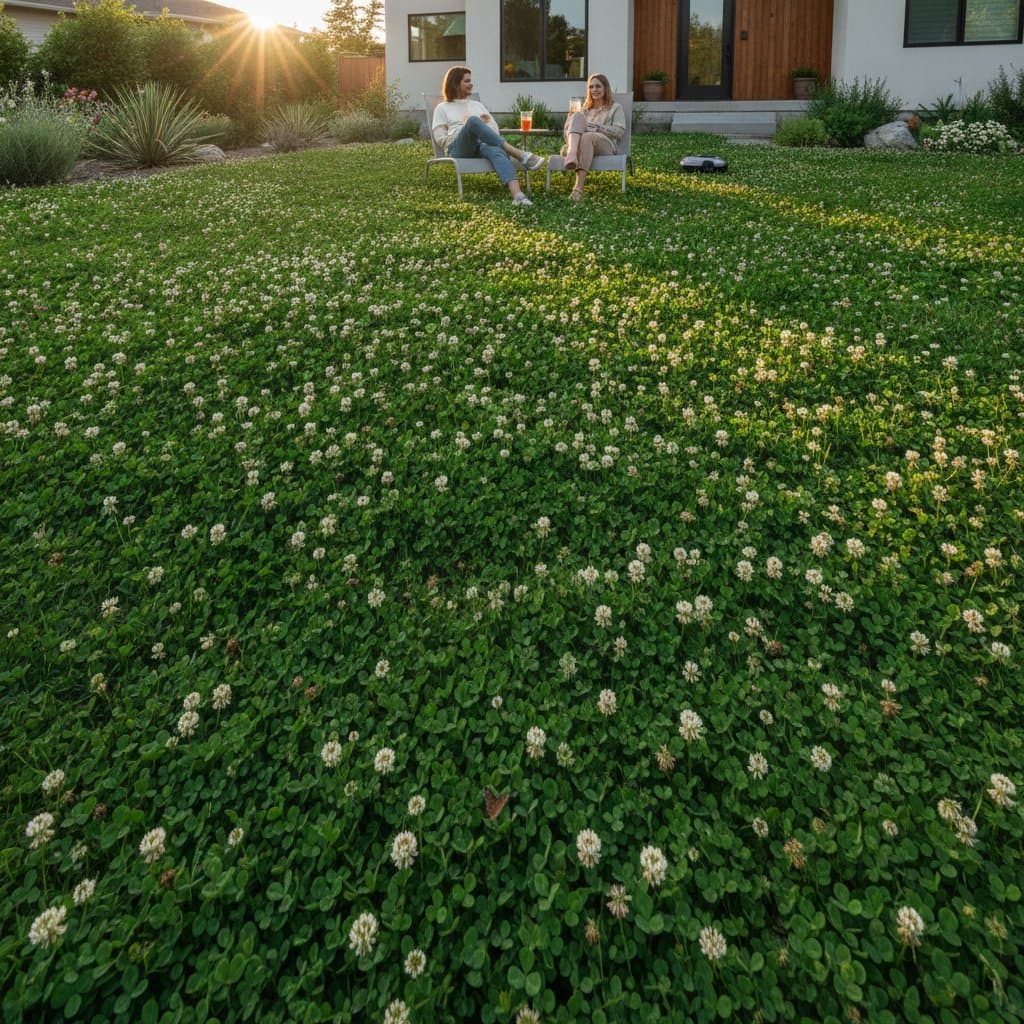
Clover Lawns Reduce Maintenance Costs by 30 Percent
A clover lawn alters outdoor routines by filling spaces rapidly, remaining green during dry periods, and lowering upkeep expenses. Homeowners and designers adopt clover for its durability and environmental benefits where standard turf often falters. Savings appear in reduced water use and fewer weekend tasks.
Project Overview
- Location: Most temperate regions
- Size: Small yards to large properties
- Climate: Moderate to warm conditions
- Goal: Lower watering, mowing, and chemical needs while preserving a soft green surface
Cost Savings from Clover Lawns
Clover lawns cost roughly 30 percent less to maintain than grass because they reduce three primary expenses. Watering drops once plants establish. Mowing occurs less often due to slower growth. Fertilizing becomes unnecessary as clover adds nitrogen to the soil. The outcome is a dense green cover that requires fewer purchases and less labor.
Contractors note that clover completes part of the work independently by feeding the soil and covering open areas.
Select Suitable Clover Types
Two varieties suit most yards. Microclover features small leaves that mix with existing grass for a uniform surface. It tolerates regular foot traffic and suits residential settings. White Dutch clover grows taller with occasional white flowers that draw pollinators.
Microclover suits uniform appearances. White Dutch clover fits relaxed spaces. Both limit mowing to one or two sessions per season in many cases. Combine microclover with fine fescue in small yards to halve cutting time while keeping density.
Prepare Soil Thoroughly
Clover prefers well-drained, slightly acidic conditions. Loosen compacted areas with a fork or aerator. Add compost to boost organic content and drainage. Rake after seeding to ensure seed contact with soil.
This preparation promotes deeper roots that cut future water needs. In clay soils, mix coarse sand with compost at a two-to-one ratio for better airflow.
Adjust Watering Practices
Established clover often needs no supplemental water in moderate climates. Its roots extend farther than grass roots and locate moisture during dry spells. Growth slows naturally without browning.
Water deeply but infrequently during the first season. After establishment, rainfall usually suffices. Mixed plantings may require water only once every two weeks in prolonged dry weather.
Eliminate Fertilizer Applications
Clover fixes nitrogen from the air through root nodules and supplies it to the soil. This process supports surrounding plants without synthetic products. Pair clover with low-nitrogen grasses such as fine fescue to maintain balanced growth.
In a 1,000-square-foot area, skipping fertilizer removes several pounds of product from annual purchases.
Reduce Mowing Frequency
Clover stays shorter than most turf varieties. Weekly cuts become unnecessary. Three trims per season often maintain a neat appearance.
Set mower blades high to protect blooms and encourage even coverage. This change reduces fuel use and emissions.
Support Pollinators
Flowers supply nectar across the growing season. Bees and butterflies visit regularly. Allow border sections to bloom while trimming paths for access. A front-yard strip along the edge functions as a pollinator corridor without added effort.
Limit Weeds Through Density
Mature clover shades the ground and blocks weed establishment. Overseed thin spots every two seasons to sustain coverage. Spring applications of fresh seed keep older plantings thick and competitive.
Combine Clover with Grass
Mix one part clover seed with four parts grass seed for a familiar look with added resilience. The combination retains structure from grass while gaining moisture retention from clover. Partial-shade areas stay green longer than grass alone.
Direct Foot Traffic
Clover withstands moderate use. Install flagstone pavers or gravel paths in high-traffic zones to prevent compaction. A path through a backyard seating area preserves plant health and visual continuity.
Simplify Annual Tasks
Clover requires no aeration or dethatching. Spread compost and seed each spring when soil temperatures are mild. This single step maintains color and thickness through the year.
Transition Steps
Introduce clover by overseeding existing turf rather than removing grass. The plants spread naturally over successive seasons. The result is a self-sustaining area that lowers resource use and connects the yard more closely to natural cycles.