
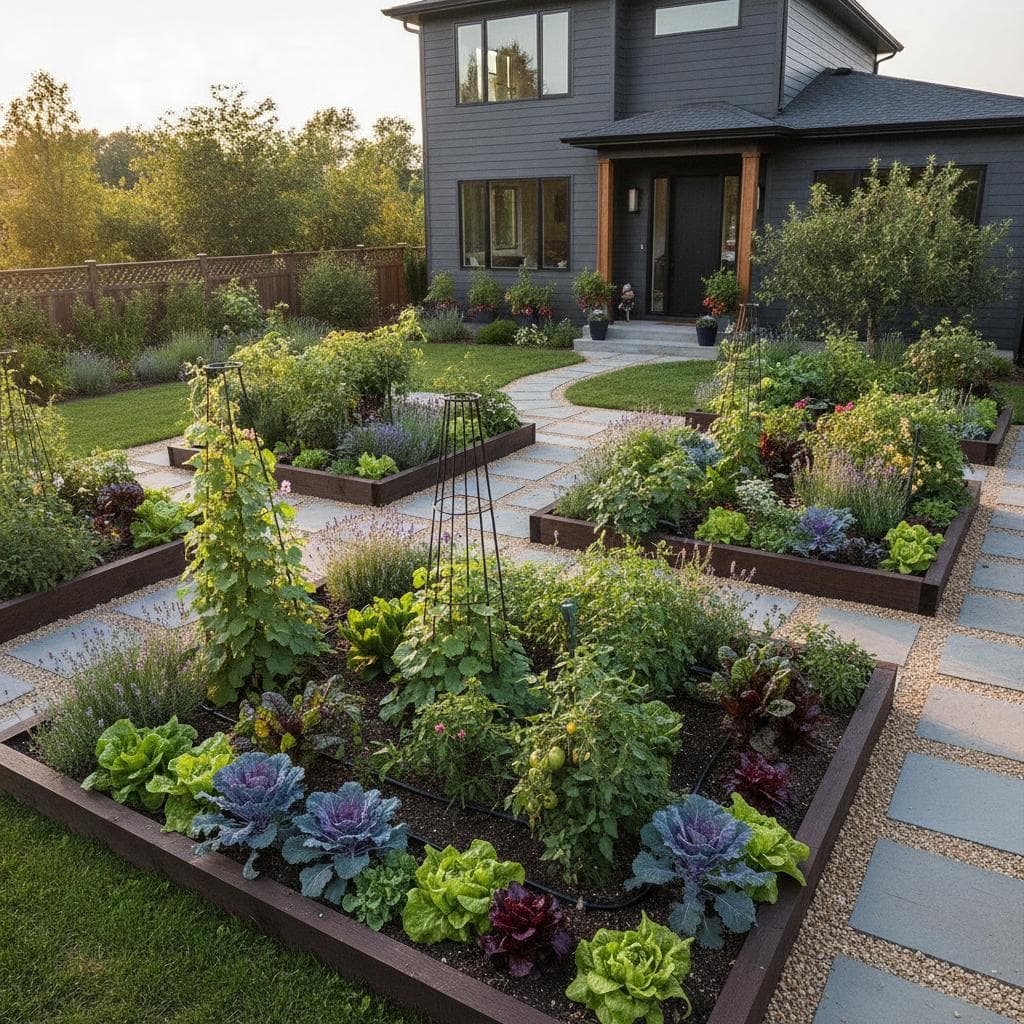
Edible Front Yards That Change Curb Appeal
An edible front yard brings vegetables, herbs, fruit, and flowers into the most visible part of the property. The result feels welcoming and useful, with planting beds that support daily meals while adding texture, color, and seasonal interest.
At a Glance
- Best for: Homeowners who want food production with a polished streetscape
- Design goal: Combine vegetables with ornamental plants
- Good locations: Sunny entries, side walks, and foundation beds
- Useful crops: Chard, kale, peppers, thyme, strawberries, and dwarf fruit trees
1. Create Defined Planting Zones
A clear layout keeps an edible front yard attractive and easy to manage. Use rectangular beds, curved borders, or low raised planters to separate crops from paths and lawn.
Defined zones also make the yard feel organized. Place taller plants toward the back of each bed, then layer shorter herbs, greens, and flowers near the edge. A strong bed outline makes productive planting look intentional.
Try cedar raised beds near the driveway, a narrow herb border along the walkway, or a small fruit tree beside the porch. Keep paths at least wide enough for a wheelbarrow and comfortable foot traffic.
2. Blend Vegetables With Ornamentals
A food producing yard does not need to look like a traditional vegetable plot. Mix edible plants with perennials, shrubs, and annual flowers for a softer curb appeal.
Rainbow chard offers colorful stems. Purple basil adds dark foliage and fragrance. Scarlet runner beans climb a simple trellis. Pair these crops with catmint, coneflower, salvia, or little bluestem.
The mixed planting supports pollinators and creates a longer season of visual interest. Edible plants look settled into the landscape when their leaf color and height repeat nearby.
3. Use Structure Near the Entry
Front yards need visual anchors. A compact trellis, arbor, or espaliered fruit tree can frame the entrance while making use of vertical space.
Train hardy kiwi, grapes, or scarlet runner beans over a cedar structure. Use a dwarf apple or pear tree as a focal point near the walk. Keep branches clear of doors, windows, and overhead wires.
Vertical elements also make small yards feel taller. Choose sturdy materials that suit the home, such as powder coated steel, cedar, or brick.
4. Choose Crops for Curb Appeal
Every plant in a front yard should earn its place through function or appearance. Select crops with attractive forms, strong foliage, or colorful fruit.
Good choices include curly kale, bronze fennel, peppers, globe artichokes, strawberries, and compact blueberries. Use rosemary and thyme along sunny paths where their fragrance releases underfoot. Lettuce works well in repeated drifts, while bush beans fill open spaces with fresh green growth.
Avoid sprawling crops beside narrow paths. Train cucumbers upward, stake tomatoes neatly, and reserve pumpkins for spacious beds away from the sidewalk.
5. Build a Clear Edge
A clean edge separates productive beds from pavement and lawn. It also reduces soil movement and keeps mulch from spilling onto walkways.
Use brick, natural stone, steel edging, or a simple cut border. Gravel paths suit informal foodscapes, while bluestone or concrete offers a sharper architectural look. Keep mulch two to three inches deep, leaving space around plant stems.
This detail makes routine care easier. A defined edge helps with mowing, watering, and harvesting, while giving the planting a finished appearance.
6. Plan for Water and Maintenance
Edible plants need regular care, so place beds where hoses and watering lines reach easily. Drip irrigation delivers water to the root zone and keeps foliage dry. A rain barrel can support hand watering when local rules permit.
Group plants with similar needs. Put tomatoes, peppers, and basil in full sun. Place parsley, lettuce, and cilantro where they receive morning sun and some afternoon protection in hot climates.
The best edible landscape is the one that makes harvesting and watering convenient.
7. Respect the Streetscape
Front yards connect private outdoor space with the public sidewalk. Keep sight lines open near driveways and corners. Avoid thorny crops beside paths, and choose sturdy plants that can handle occasional contact.
A low hedge of blueberries, a row of herbs, or a small vegetable bed can define the property without blocking the view. If neighborhood rules apply, use containers, formal edging, and consistent plant spacing to present a polished design.
Living With Your Foodscape
An edible front yard works best when harvesting becomes part of the daily route. Place herbs near the entry, salad greens close to the kitchen side of the house, and fruit where children can reach it safely.
Start with one or two beds, then add trellises, fruiting shrubs, or seasonal crops as the maintenance routine develops. Thoughtful spacing, attractive materials, and dependable plants let the landscape feed the household while giving the street a warmer, more personal character.