
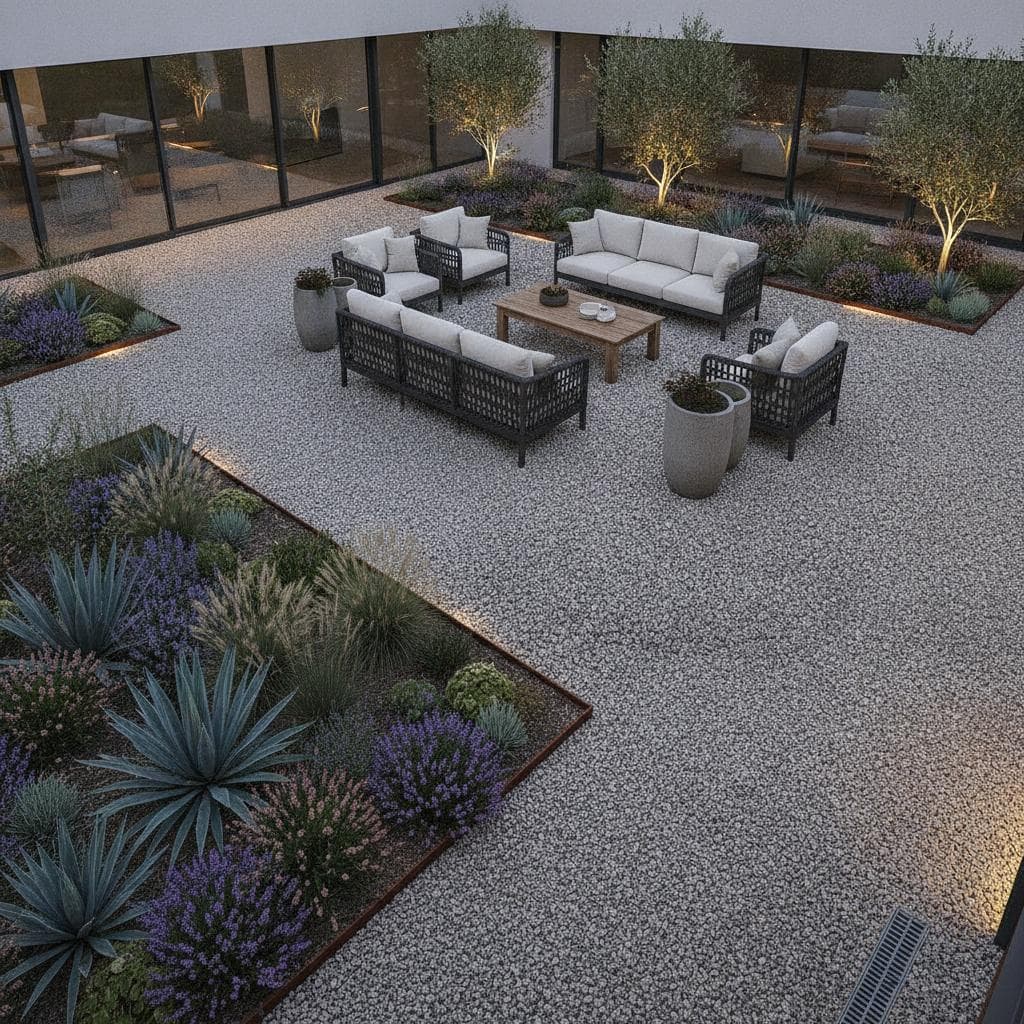
Gravel Courtyards Replace Patios: Modern Low Maintenance Outdoor Rooms
Gravel courtyards offer a practical alternative to paved patios. They create a crisp outdoor room with softer sound, better drainage, and fewer repair concerns. With the right base, edging, planting, and furniture, gravel supports relaxed meals, quiet reading, and gatherings without demanding constant care.
At a Glance
- Best for: Courtyards, side yards, small gardens, and sloped sites
- Materials: Compactable crushed stone, decorative gravel, steel or stone edging
- Design goal: A flexible, low maintenance gathering space
- Planting style: Drought tolerant perennials, ornamental grasses, and small trees
1. Build a stable foundation
A durable gravel courtyard starts below the visible surface. Remove loose soil and organic matter, then install a compacted base of crushed stone. A typical base can include several inches of road base or dense grade aggregate, topped with a thinner layer of finish gravel.
The compacted base limits ruts and keeps chairs steady. It also helps water move through the courtyard instead of collecting beside the house. Use landscape fabric only when needed, such as where persistent weeds present a problem. A thick, well compacted base usually matters more than fabric alone.
Design insight: Match the base depth to soil conditions and expected use. A seating area needs a firmer surface than a lightly used planting path.
A landscape contractor might say, "Good gravel work depends on preparation. The visible stone only performs well when the base stays firm."
2. Choose gravel for comfort and movement
The shape and size of gravel affect every step. Angular crushed stone locks together and creates a stable walking surface. Rounded pea gravel feels softer underfoot, yet it shifts more easily beneath furniture and can spread into planting beds.
For a modern courtyard, consider fine crushed granite, limestone screenings, or small basalt gravel. Tan decomposed granite creates a warmer garden character. Pale limestone reflects light and pairs well with dark metal furniture. Charcoal basalt gives a sharper contrast against pale stucco or concrete walls.
Avoid gravel that feels sharp where people walk barefoot. Test a sample before ordering the full amount. A local stone supplier can also explain how the material behaves in wet and dry conditions.
3. Define the courtyard with strong edges
Edging keeps gravel in place and gives the space a finished outline. Powder coated steel creates a thin, contemporary line. Brick, bluestone, corten steel, and poured concrete provide more visual weight.
Set the edge slightly above the gravel surface. This contains the stone while allowing rainwater to move across the courtyard. Use wider borders near lawns or loose planting beds, where gravel tends to migrate.
A narrow steel edge can separate charcoal gravel from little bluestem. A bluestone border can frame pale stone and connect the courtyard to nearby steps.
Functional benefit: Clear edges reduce maintenance and make sweeping displaced gravel back into place simple.
4. Create zones without adding pavement
Gravel can support several uses within one compact footprint. Place a dining table near the kitchen door. Set lounge chairs beneath a pergola. Leave an open strip for circulation between the seating areas.
Use furniture placement, planting, and changes in gravel color to define each zone. A small sunken fire pit can anchor the center, while a raised planter can screen a utility area. Outdoor rugs add comfort beneath a dining set, but choose woven polypropylene that dries quickly.
A designer might say, "Furniture defines the room when the floor stays visually quiet."
5. Layer plants for structure and softness
Planting prevents a gravel courtyard from feeling stark. Use a simple mix of upright, spreading, and seasonal forms. Little bluestem, prairie dropseed, and blue fescue bring movement without demanding frequent trimming. Lavender, catmint, yarrow, and sedum add flowers suited to dry conditions.
Small trees can provide shade and scale. Consider serviceberry, Japanese tree lilac, or a multi stem birch where the climate supports them. Place plants in generous drifts rather than scattering isolated specimens. This approach makes irrigation easier and creates a calmer composition.
Use mulch sparingly. A gravel top dressing around drought tolerant plants keeps the whole courtyard visually consistent and reduces exposed soil.
6. Plan drainage before selecting furniture
Gravel courtyards handle rain well when the surface slopes away from walls and doors. Keep finished gravel below thresholds and direct runoff toward planted areas, swales, or a suitable drain. In compact spaces, a linear drain can protect a foundation while remaining visually quiet.
Do not cover every surface with impermeable edging or concrete. A permeable courtyard can reduce puddling and help water enter the soil. Check local drainage requirements before construction, especially near neighboring properties.
Visual callout: Fine gravel slopes gently toward a planted rain garden, while a steel edge keeps the sitting area crisp.
7. Add lighting with low glare
Lighting extends the usefulness of a courtyard after sunset. Use compact path fixtures along the main route and shielded spotlights for trees or textured walls. Warm lamps around 2700 K create a comfortable glow without making foliage look harsh.
Avoid placing bright fixtures directly beside seating. Aim light toward paths, steps, and planting instead. A pendant beneath a pergola can mark the dining zone, while concealed strip lighting under a bench adds a quiet layer.
Seasonal Maintenance for Lasting Performance
Gravel needs simple seasonal attention. Rake displaced stone back into low areas, remove leaves before they decompose, and top up thin spots when needed.
These tasks take little time when the base, edges, and drainage work together. A well planned courtyard offers a flexible surface for modern garden living, with texture underfoot, room for planting, and a lighter maintenance routine than many paved patios.