
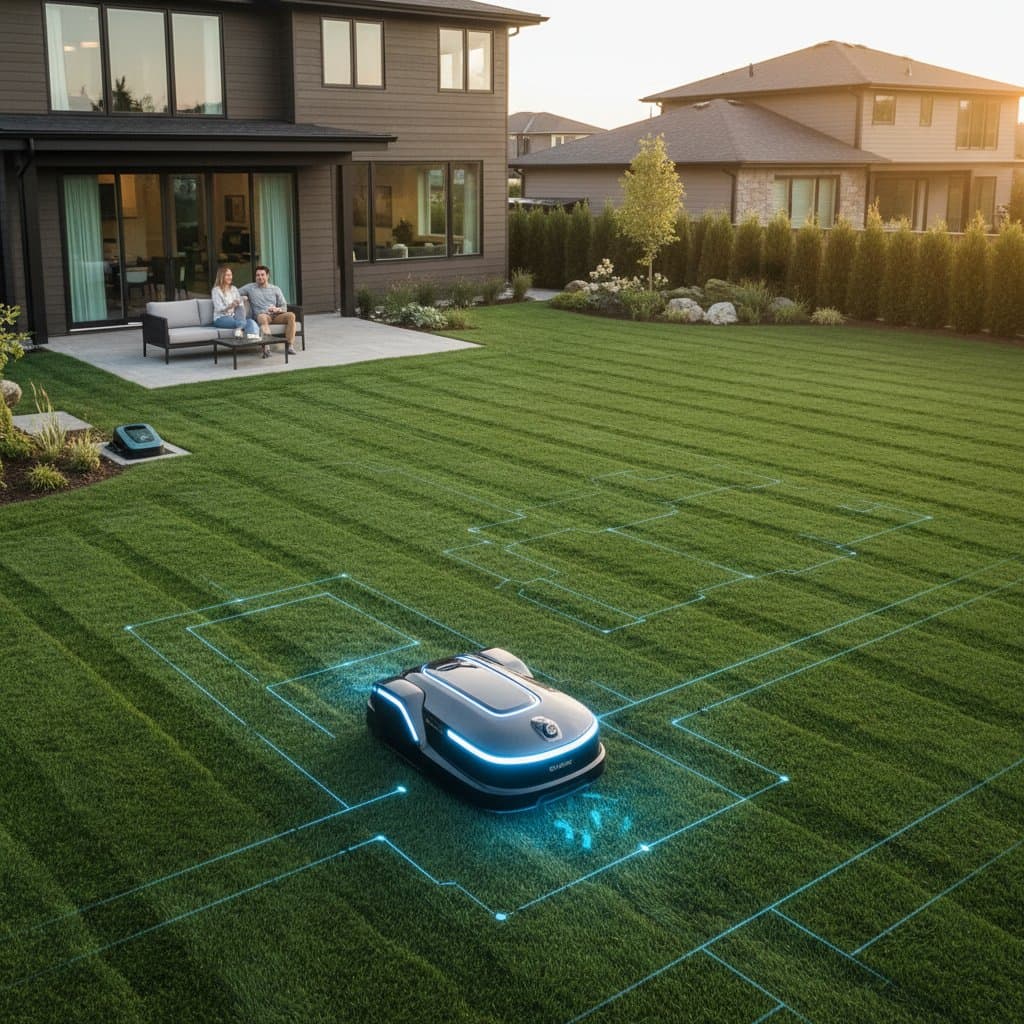
AI Mowers with Mapping Cut Lawn Care Time by 60%
When Mark and Elise purchased their suburban home, the expansive green lawn appealed to them immediately. The demands of regular mowing soon became a burden, however, especially with both working from home and family commitments filling their schedules. They sought a reliable option that would maintain the landscape without consuming weekends. An AI powered robotic mower equipped with mapping technology provided the solution.
How Mapping Technology Improves Performance
Mark had tried an earlier robotic mower model that frequently missed sections or strayed into planted areas. Newer AI models address these issues by scanning the yard once, storing boundary data, and calculating direct mowing paths. This approach can shorten active mowing time by up to 60 percent while lowering overall energy consumption.
Elise noted that the mower learns the layout rather than moving at random. It identifies tree locations, slope changes, and coverage needs to produce an even result across the entire property.
Design Elements That Support Consistent Results
These mowers replace random patterns with deliberate engineering choices. Smaller blades rotate at higher speeds to produce fine clippings that settle evenly and support grass health. Frequent short cycles maintain uniform height and reduce clumping.
The deck uses lightweight aluminum that resists rust in wet conditions. Soft tread wheels maintain grip on damp ground without leaving visible tracks. The low profile lets the unit pass beneath low branches and furniture, eliminating the need for separate edging in many spots.
Materials Selected for Long Term Use
Manufacturers choose components that balance durability with quiet operation. Common selections include aluminum housings, carbon steel blades, rubberized wheels, and polycarbonate sensor covers. Lithium ion batteries typically retain capacity for several seasons, and the system draws modest electricity during charging cycles.
Routine care involves inspecting blades every few weeks and replacing them at the start of each season. Cleaning the underside and keeping charging contacts free of debris completes the maintenance requirements.
Managing Irregular Yard Shapes
Mapping functions allow the mower to divide complex properties into separate zones and store obstacle locations. After several runs the unit refines its internal map to improve coverage accuracy. For Mark and Elise this meant reliable navigation around a stone fire pit, a play structure, and a narrow side strip that previously required hand trimming.
Combining Automation with Lawn Health Practices
The mower supports natural growth patterns by returning fine clippings to the soil as nutrients. GreenEdge set different cutting heights for sun and shade zones, and the unit switches automatically when moving between areas. This produces a dense turf that resists weeds without additional chemical applications.
Measuring Long Term Value
Although the initial purchase exceeds the cost of basic robotic models, reduced runtime lowers electricity use and extends blade and battery life. Mark and Elise report that the time previously spent mowing now goes toward garden work or family activities, adding up to dozens of hours each season.
Connecting with Home Systems
Many units integrate with weather sensors and irrigation controllers. When rain is expected the mower delays operation. The same connection prevents overlap between mowing and watering times, protecting turf condition while conserving resources.
Daily Experience After Installation
Months later the couple finds the mower operates unobtrusively in the background. Proper initial mapping and boundary setup allow the unit to function with minimal intervention. The result is a consistently maintained lawn achieved with far less direct effort.