
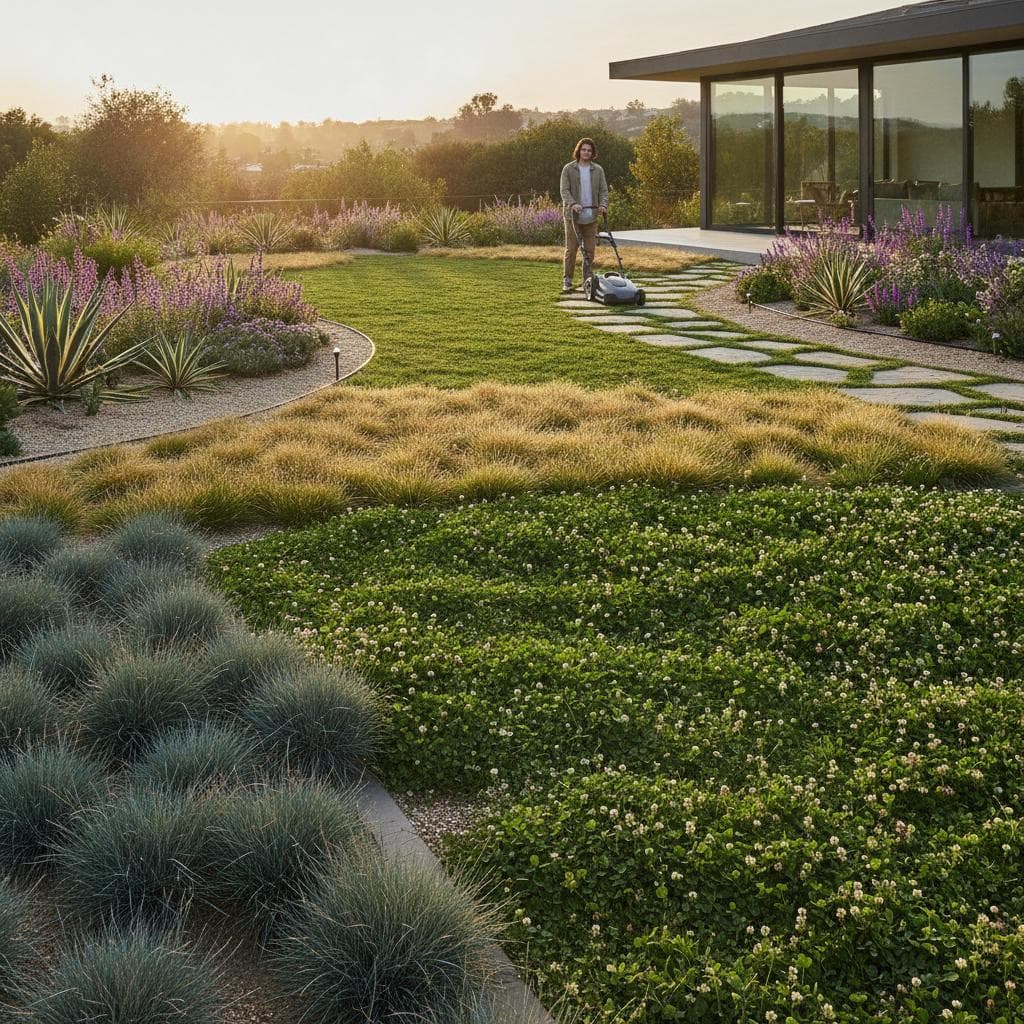
Switch to Drought-Tolerant Lawns and Cut Mowing 90%
Many California homeowners replace traditional turf with drought-tolerant lawns that remain lush with minimal water and infrequent mowing. This change produces an attractive landscape that reduces expenses and suits dry conditions. Proper plant selection and site preparation allow maintenance reductions of up to 90 percent while preserving an inviting outdoor area.
Why Traditional Lawns Struggle in Dry Climates
Standard lawns originated in wetter climates and require frequent irrigation, fertilization, and trimming to stay presentable. In California these demands conflict with water costs, usage limits, and temperature swings that cause browning and thinning. Cool-season grasses receive shallow watering multiple times weekly, which weakens roots and depletes local water supplies.
Drought-tolerant lawns use adapted plants that develop deeper roots, require less fertilizer, and grow at a slower rate. The result is reduced trimming frequency and a natural appearance that integrates with surrounding native vegetation.
Choosing the Right Drought-Tolerant Grass
Select grasses according to sun exposure, soil type, and intended use. The following options perform reliably in California conditions.
- Buffalo grass forms a dense mat of fine blades that stays green through the dry season with minimal irrigation. It grows slowly enough to require mowing only once a month or less in full sun.
- Bermuda hybrid varieties tolerate heavy foot traffic and recover rapidly after dry periods. They suit play areas and pet yards while using far less water than conventional turf.
- Zoysia grass develops a thick texture that resists heat and light shade. Its slow growth crowds out weeds and reduces the need for chemical controls.
- Clover lawns stay green with limited irrigation, fix nitrogen in the soil, and resist pests. They feel soft underfoot and need mowing only a few times each year.
Preparing the Soil for Long-Term Success
Remove existing grass and weeds before planting to eliminate competition. Loosen compacted soil with a core aerator, then incorporate compost to improve water retention. Grade the surface to slope gently away from structures and prevent standing water.
Water the prepared area thoroughly after planting, then reduce frequency gradually so roots extend deeper. This approach establishes resilient plants that draw moisture from lower soil layers.
Smart Watering and Maintenance Techniques
Apply deep, infrequent irrigation in the early morning to minimize evaporation. Smart controllers or drip systems deliver measured amounts that reach the root zone without excess surface moisture.
Established drought-tolerant grasses need little or no fertilizer. When supplementation is required, use organic slow-release products applied sparingly. Maintain mower blades at a sharp edge and set the cutting height near three inches to shade soil and discourage weeds.
Integrating Beauty and Function
Combine drought-tolerant grasses with flowering ground covers, succulents, and low shrubs for visual interest. Define lawn edges with gravel or decomposed granite to control runoff and create clear boundaries. Add stepping stones or a small seating area to extend usability while preserving water-wise design.
Low-voltage or solar lighting extends evening use without increasing energy demand.
Cost and Time Savings
Reduced mowing lowers fuel use and emissions while freeing weekend hours. Lower irrigation volumes decrease water bills and align with regional conservation targets. Although initial installation exceeds the cost of reseeding conventional turf, long-term reductions in water, fertilizer, and labor produce net savings.
Many water agencies provide turf-replacement rebates that offset part of the upfront expense. Native or adapted species also limit chemical applications, improving safety for children, pets, and pollinators.
Ongoing Care After Establishment
Monitor new plantings for weeds during the first several months and remove them before seed production. Adjust irrigation only when soil tests indicate need, and avoid routine overwatering. Deeper root systems and improved soil structure gradually reduce intervention requirements.
The shift to drought-tolerant lawns supports responsible resource use while delivering a durable, low-effort landscape suited to local conditions.