
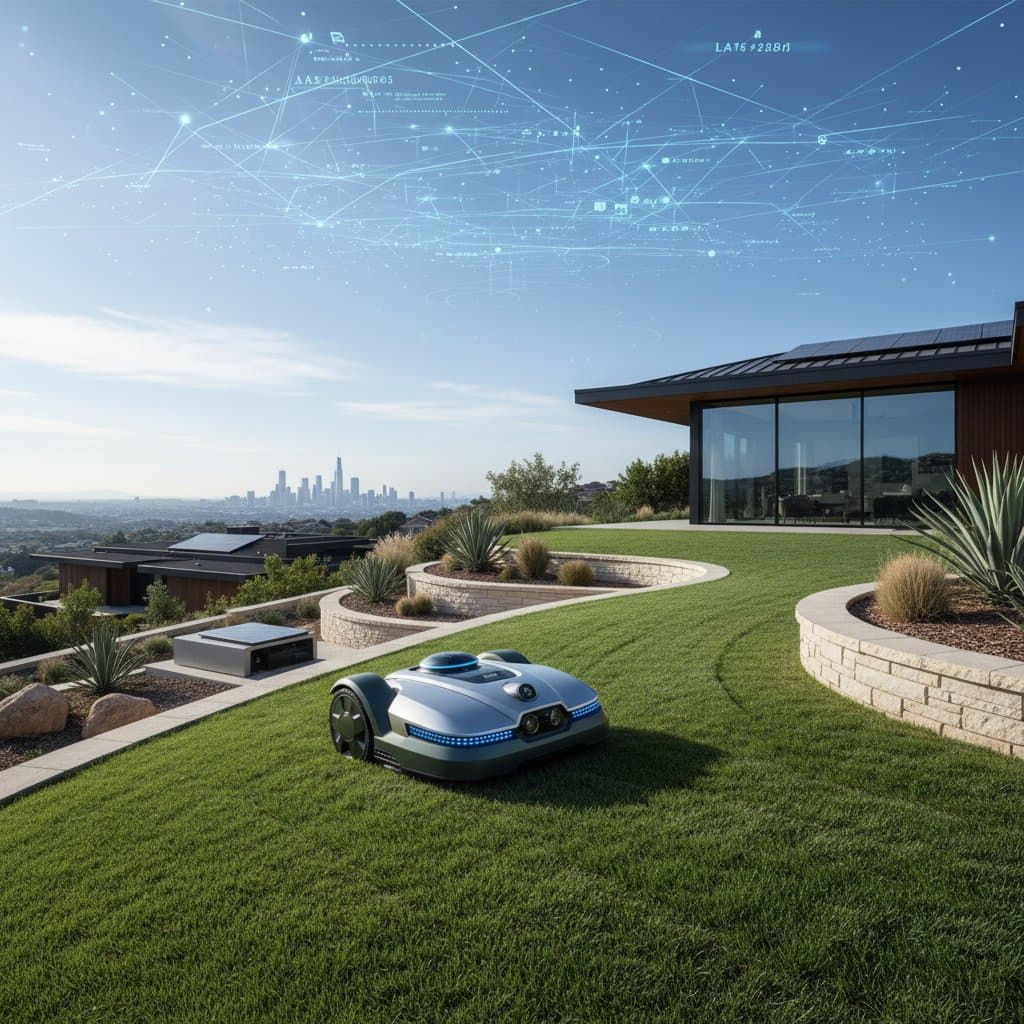
Robotic Mowers with AI Mapping Dominate Lawns
When the Martins moved into their hillside home, they wanted a low maintenance landscape that still looked carefully cared for. Between their jobs and two young children, keeping the lawn trimmed had become the most time consuming task of the week. Their solution was a robotic mower with AI mapping. This system promised precise cutting, quiet operation, and near zero oversight.
At a Glance
- Who lives here: The Martin family, two working parents with young children
- Location: Suburban hillside property with mixed grass varieties
- Size: 0.5 acre lawn area with sloped terrain
- Landscape Designer: Greenline Outdoor Studio
- Contractor: Hillside Landscape Management
- Key Feature: AI mapped robotic mower with adaptive route learning
- Goal: Simplify lawn care while maintaining a lush, even finish
The New Standard in Lawn Care
AI guided robotic mowers are changing how homeowners approach lawn maintenance. Once considered a novelty, these machines now manage complex yards with accuracy that rivals professional crews. Using onboard sensors and satellite based positioning, they create detailed maps of each yard. The mower learns where trees, flower beds, and slopes are. It then plans its routes for consistent, efficient coverage.
For the Martins, the appeal was practical. Their previous mower left uneven patches and required frequent supervision. Now the robotic mower starts automatically at dawn. It trims the entire property within a few hours and returns to its charging base. The lawn stays uniform. The homeowners rarely need to intervene.
After the first week, it felt like the lawn managed itself, said homeowner Laura Martin. We just check the app occasionally to see its progress.
How AI Mapping Changes Performance
Traditional robotic mowers followed random cutting patterns. These patterns often resulted in missed spots or over trimmed areas. AI mapping introduces structured navigation. The mower first scans the perimeter using visual sensors. It then records boundaries and obstacles. Once mapped, it divides the yard into zones and calculates the most efficient sequence for mowing.
This approach reduces energy use and blade wear. The mower avoids re cutting areas unnecessarily. It keeps its battery cycles consistent. In many systems, updates are automatic through a connected app. This allows the mower to adapt if the landscape changes.
For professionals, this precision means fewer service calls and less manual adjustment. Landscapers can monitor multiple properties remotely. They check performance data in real time.
Material and Build Considerations
Modern robotic mowers use lightweight polymer shells. These shells resist UV exposure and moisture. The cutting decks are typically stainless steel. This material offers a balance of durability and corrosion resistance. Rubberized wheels maintain traction on damp grass or mild slopes.
Charging stations now feature weatherproof housings. They include smart connectors that detect when the mower docks. Some models include solar assisted charging panels. These panels extend runtime without increasing electricity demand. The Martins unit sits discreetly behind a hedge. It remains out of view but within easy access for maintenance.
The mower sensors are protected by clear polycarbonate covers. They stay free of debris through a self cleaning mechanism that uses gentle airflow. These details contribute to long term reliability and low upkeep.
Smart Integration with the Landscape
The Martins designer planned the lawn zones around the mower capabilities. Narrow passages were widened slightly. The edge of the patio was fitted with a low curb to define boundaries. The mower AI system detects these edges and stops just short. This leaves a neat finish without damaging hardscape materials.
In shaded areas where grass grows slower, the mower automatically reduces frequency. The app displays color coded maps. These maps show which zones are active, paused, or completed. Homeowners can adjust mowing schedules manually. They can also let the system decide based on growth rate.
Designing with technology in mind changes how we shape the landscape, said designer Evan Chao of Greenline Outdoor Studio. We think in terms of clear perimeters, even grades, and smooth transitions. The result looks intentional and stays that way.
The User Experience
Operating the mower involves little more than setting preferences in the companion app. The interface allows custom height settings, boundary edits, and weather based scheduling. If rain is detected, the mower delays operation to prevent soil compaction.
The Martins appreciate the quiet operation. They can enjoy breakfast on the patio while the mower runs nearby. The sound level is lower than a normal conversation. This keeps the neighborhood peaceful. Safety sensors stop the blades instantly if the mower is lifted or tipped.
Routine maintenance includes cleaning the underside every few weeks. It also requires replacing blades seasonally. The app sends reminders when service is due. For those who prefer total automation, service providers offer subscription plans. These plans include blade replacement, software updates, and winter storage.
Environmental and Practical Benefits
Electric power is one of the strongest advantages of robotic mowers. They consume far less energy than traditional gas powered models. They produce no direct emissions. The AI mapping feature ensures no wasted motion. This further reduces energy use.
Because the mower cuts frequently, it leaves very fine clippings. These clippings decompose quickly and enrich the soil naturally. The Martins noticed they no longer needed to fertilize as often. Over time, this cycle improves soil health and moisture balance.
Noise reduction is another benefit. Evening mowing is possible without disturbing neighbors. For households with variable schedules, this flexibility makes consistent lawn care feasible.
Features to Watch When Choosing a Model
For those considering a switch to an AI mapped robotic mower, several features deserve attention.
- Mapping technology: Look for models that use both visual sensors and satellite positioning for accuracy.
- Slope handling: Check the maximum incline rating if the property includes hills or uneven terrain.
- Battery capacity: Larger lawns require longer runtimes or faster charging cycles.
- App connectivity: A user friendly interface improves control and monitoring.
- Weather resistance: Durable enclosures extend lifespan in humid or coastal climates.
- Blade type: Replaceable micro blades are easier to maintain and safer to handle.
Professional installation ensures that boundary wires, if required, are placed correctly. Some new models no longer need physical boundaries. They rely instead on virtual mapping through cameras and GPS.
Living with Your Automated Lawn
Months after installation, the Martins describe their lawn care as nearly effortless. The grass stays at a consistent height. The edges remain tidy without manual trimming. Seasonal adjustments happen automatically through the mower learning algorithm. This algorithm tracks growth rate and adapts frequency.
The family weekends are now free for other projects. Their outdoor space feels more inviting. It is like having a quiet gardener who never forgets, said Laura Martin.
For homeowners or landscape professionals, robotic mowers with AI mapping represent more than convenience. They signal a shift toward responsive, data driven maintenance. This approach supports both environmental responsibility and daily comfort. The technology continues to improve. Its integration into thoughtful landscape design ensures that lawns remain green, even, and well cared for with minimal effort.