
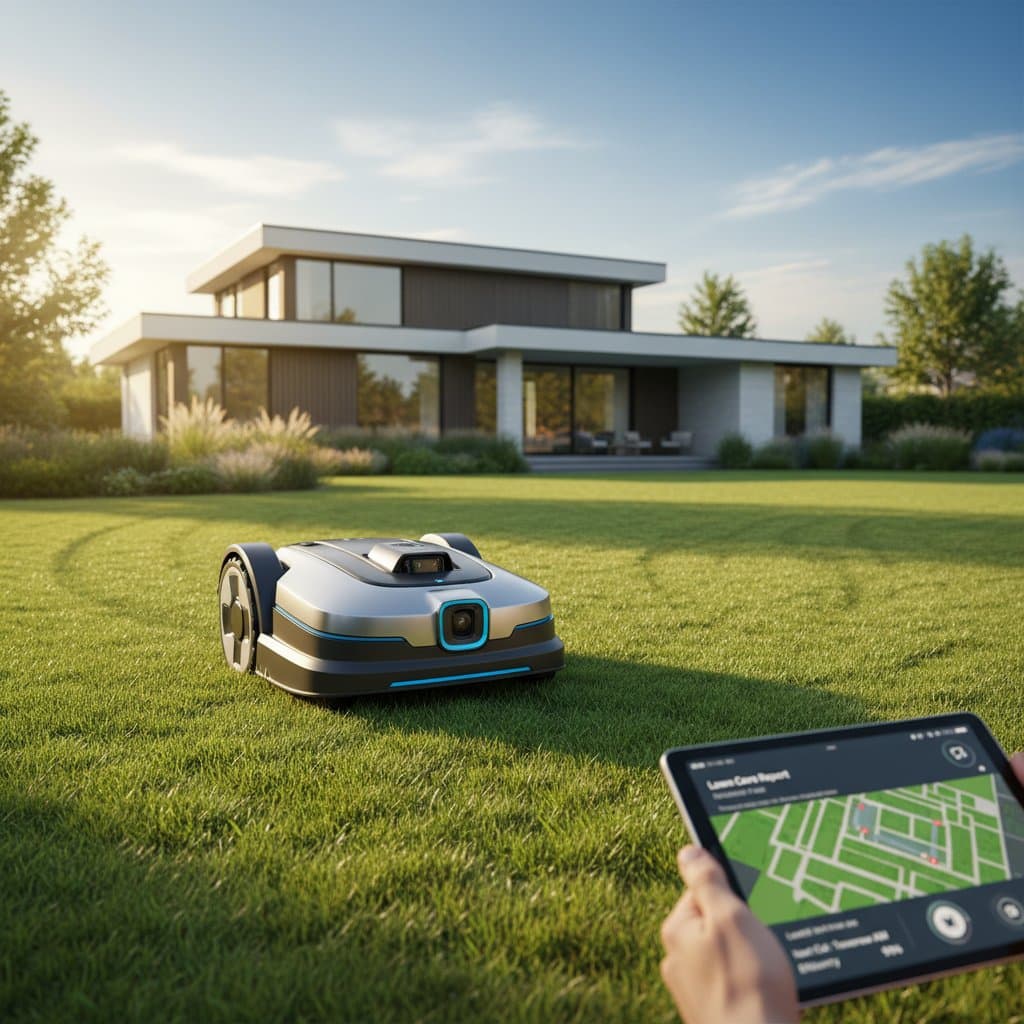
AI-Powered Smart Mowers Set to Transform Lawns by 2026
A fresh era in lawn care technology reshapes how homeowners and landscape professionals manage outdoor areas. AI-powered smart mowers emerge as reliable tools for achieving pristine, uniform lawns with minimal intervention. These devices analyze terrain, adjust operations dynamically, and function with low noise levels, fostering sustainable practices and simplifying routine upkeep.
Efficiency and accuracy drive their popularity. Current robotic mowers chart intricate yard layouts, evade barriers, and respond to vegetation changes without oversight. They produce reliable outcomes while eliminating reliance on gasoline or physical effort. Homeowners gain tidier landscapes free from disturbance and hassle.
1. Advanced Navigation for Intricate Landscapes
AI-powered smart mowers employ sophisticated sensors and mapping algorithms to direct their paths. Rather than aimless traversal, they leverage GPS-guided systems and image processing to form optimized routes. Such accuracy prevents overlooked patches and cuts down on overlapping coverage.
A landscape designer observes, “Modern robotic mowers now navigate uneven lawn contours without gaps in coverage or excessive trimming along borders.” These capabilities suit properties featuring meandering flower beds, mature trees, or inclines.
Functional benefit: Smart routing enables handling of narrow turns or winding trails, ensuring comprehensive and balanced trimming across the property.
Design insight: Incorporate neat borders with gravel accents or ground-level plantings to delineate spaces and facilitate smoother device travel.
Example: Consider a mower charting a route around an oval-shaped water feature, approaching the perimeter closely yet steering clear of submersion risks.
Visual Callout: A streamlined mower navigates a flagstone walkway, its sensors calibrating to adjacent flowering shrubs.
2. Silent Performance Enhances Outdoor Living
Traditional mowing often disrupts with excessive sound. AI-powered smart mowers address this issue through battery-driven engines and near-silent mechanisms. Several units generate sound levels below that of normal dialogue, permitting uninterrupted use of decks and gardens during operation.
A landscape engineer notes, “Silent mowing alters yard utilization patterns. Schedules no longer revolve around upkeep tasks, and concerns about neighbor disturbances fade.”
Functional benefit: Diminished auditory impact renders relaxation zones more appealing at any hour.
Design insight: Develop interconnected outdoor areas that overlook the grass. The subdued operation preserves serenity in these linkages even as the device runs.
Example: An al fresco dining area adjacent to the lawn remains tranquil as the mower passes at a distance.
Visual Callout: A sleek mower moves beyond a wooden platform, undisturbed by a gathering of family members.
3. Seamless Connectivity with Home Automation
Connectivity represents a core advantage of AI-powered smart mowers. Numerous units integrate with home automation platforms, enabling oversight via smartphone applications or voice commands. Users establish routines, define no-go zones, or get instant notifications about required care.
A product designer comments, “Such linkage renders lawn management straightforward and foreseeable. It parallels glancing at a weather update.”
Functional benefit: Distance monitoring provides assurance and adaptability, particularly for secondary residences or leased spaces.
Design insight: Position recharging units in concealed or foliage-shrouded spots to harmonize with the site’s visual scheme.
Example: A docking area masked by a wooden lattice integrates utility with scenic appeal.
Visual Callout: A subtle charging unit positioned amid decorative reeds preserves unobstructed sightlines.
4. Minimal Upkeep and Cost Efficiency Over Time
Conventional mowers demand frequent servicing like lubricant refreshes, fuel refills, and cutter swaps. AI-powered smart mowers operate on chargeable power sources with few components needing attention. Routine tasks involve basic blade wiping and annual firmware enhancements.
A maintenance specialist states, “Upkeep resembles tending to a mobile device more than servicing a combustion motor.”
Functional benefit: Decreased expenses and rarer malfunctions result from simplified design.
Design insight: Designate a compact service area for power replenishment and safekeeping, close to an outdoor power source or outbuilding.
Example: A slender alleyway accommodates the base unit, avoiding interference with primary green spaces.
Visual Callout: A neat docking platform nestled against a boundary wall offers convenient reach.
5. Analytics for Informed Lawn Management
AI-powered smart mowers gather details on cutting intervals, plant development, and site conditions. Certain models connect to climate predictions or ground probes to refine actions. Accumulated information evolves into a resource for enhanced turf oversight.
A landscape strategist remarks, “The device forms an interactive cycle. It informs requirements for the yard instead of relying on estimates.”
Functional benefit: Precise modifications curb excess irrigation and nutrient application.
Design insight: Apply gathered metrics to adjust watering timetables or schedule soil treatments.
Example: Detection of gradual growth might prompt alerts for scaled-back hydration in temperate periods.
Visual Callout: A mobile interface shows vegetation vitality indicators and operation records.
6. Balancing Automation with Human Expertise
Although AI manages the trimming, personal involvement shapes overall yard vitality and aesthetics. Experts employ these aids to amplify innovation without supplanting skill. The mower integrates into a broader plan encompassing earth preparation, water systems, and flora arrangement.
A landscape architect asserts, “Automation liberates creators to emphasize spatial ambiance over routine labor.”
Functional benefit: Equilibrium in care merges technical precision with artisanal quality.
Design insight: Merge machine-tended expanses with manual accents such as sculpted shrubs or rock outlines.
Example: Expansive fields benefit from robotic assistance, while intricate edges receive careful human refinement.
Visual Callout: An expert shapes foliage beside a recently tended meadow, uniting mechanical and manual finesse.
Embracing Effortless Lawn Excellence
AI-powered smart mowers pave the way for yards that thrive with reduced demands on time and resources. Homeowners discover liberation in consistent beauty and ecological harmony. Professionals unlock opportunities to elevate designs through focused creativity. By 2026, these innovations establish a standard for intelligent, responsive outdoor care that enhances daily life.