
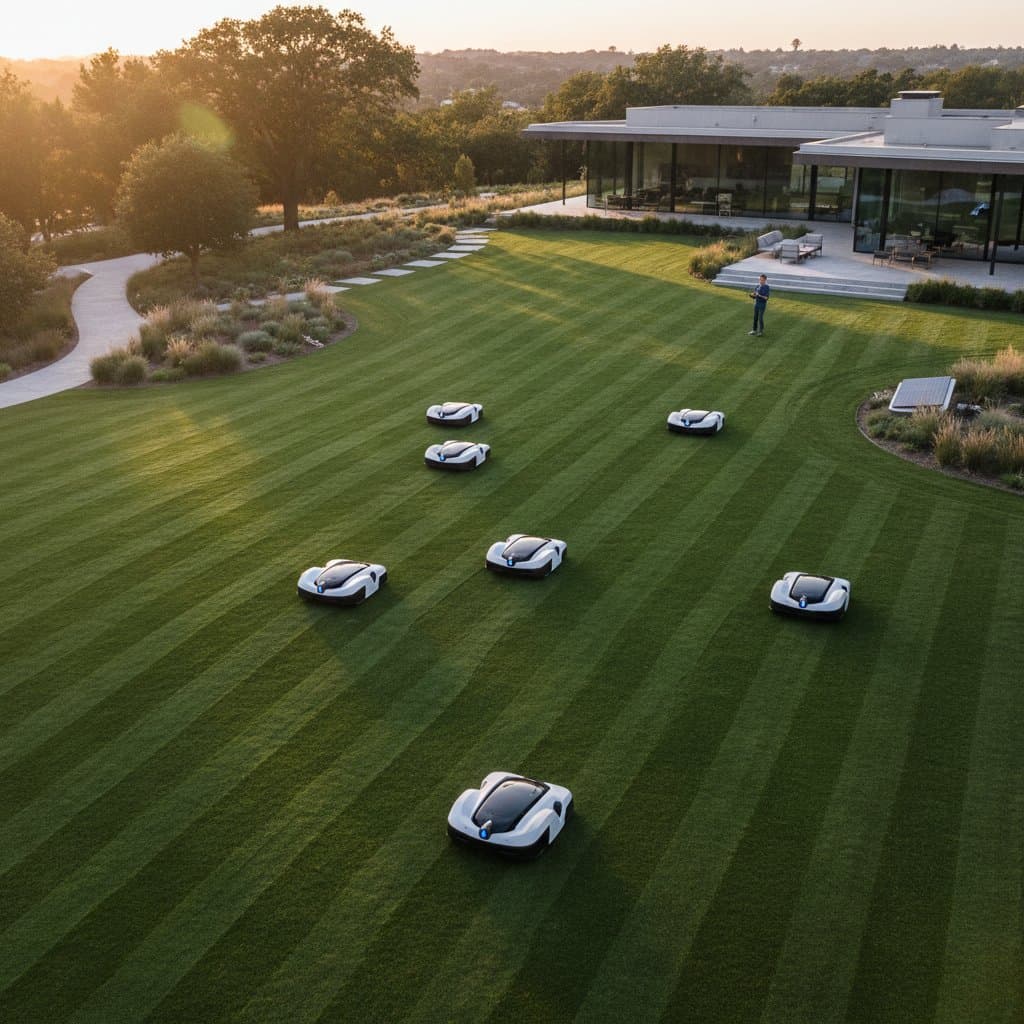
Revolutionize 2-Acre Lawns with Robotic Mowers
When David and Melissa purchased their two-acre property on the edge of town, they were drawn to the open views and mature oaks. What they were not prepared for was the weekly battle to keep the lawn under control. Between work, family, and travel, the couple found their weekends consumed by mowing. Their goal was clear: find a low-maintenance solution that would keep the property looking cared for without constant effort. That search led them to install a robotic mower system designed for large lawns.
Setting the Stage
The property had been landscaped years earlier, with wide grass areas between tree clusters and a gravel driveway running through the center. Traditional mowing took nearly three hours, not counting trimming or cleanup. The project began with a simple goal: create a self-sustaining system that could manage this space quietly, safely, and reliably.
The design team at IntePra Gardens approached the project as a combination of landscape planning and smart technology integration. They began by mapping the property, noting slopes, boundaries, and shade zones. The final plan included one main mowing zone and two subzones divided by low stone borders.
“Large lawns require more than just horsepower,” said project designer Karin Liu. “They need a consistent pattern that keeps grass healthy. Robotic mowing works best when it becomes part of the landscape layout itself.”
How the System Works
Once programmed, the mower operates autonomously. It follows a random mowing pattern guided by sensors and GPS data. The short clippings fall back into the lawn, providing natural fertilization. The result is a more even, dense turf because the grass is cut frequently and lightly rather than all at once.
David appreciated the transformation almost immediately. “The first week felt strange watching the mower glide across the yard while I sat on the porch,” he said. “By the second week, I realized how much time we were getting back.”
Each mowing cycle runs quietly, making it possible to schedule operation during early morning or evening hours without disturbing neighbors. The mower automatically pauses during rain, then resumes once conditions are dry.
Integrating with the Landscape
The mower’s effectiveness depends on the quality of the lawn surface. Uneven areas can cause wheel slippage or cutting inconsistencies. IntePra Gardens regraded small sections of the property to remove dips and filled bare patches with a fescue blend suited for partial sun. The irrigation system was updated with smart controllers that adjust watering based on rainfall data. This ensured that mowing and watering schedules never overlapped.
Mulched planting beds were outlined with low steel edging, creating clear separation zones. This detail not only improved aesthetics but also reduced the risk of the mower wandering into garden areas. Each boundary was tested during setup, and minor adjustments were made to fine-tune navigation paths.
Cost and Investment
The initial cost for a two-acre installation varies based on terrain and zone complexity. Equipment, boundary setup, and app integration form the core of the expense. In this case, the full project, including preparation and two docking stations, was comparable to purchasing a high-end ride-on mower and hiring seasonal help for trimming.
The long-term savings come from reduced fuel use, lower maintenance, and extended turf health. The robotic mower’s blades cut cleanly, preventing the tearing that often leads to brown tips or disease. Over time, this creates a stronger root system and a more resilient lawn.
Design Choices That Matter
Every aspect of the setup was intentional. The designers focused on:
- Grass type: A blend of tall fescue and perennial rye for durability and color consistency
- Edging: Powder-coated steel for long life and precise boundary detection
- Docking stations: Dual locations for even charging distribution
- Power supply: Weather-sealed outdoor outlets with surge protection
- Connectivity: Wi-Fi extender positioned near the main docking area for strong signal coverage
The combination of careful planning and reliable technology produced a system that fits naturally into the property’s rhythm. The mower is barely noticeable among the trees, yet its effect is visible everywhere.
Living with Automated Lawn Care
Months into the new setup, David and Melissa have reclaimed their weekends. The lawn remains lush, the mower operates quietly, and maintenance demands are minimal. Their experience reflects a growing trend among large-lot homeowners seeking modern solutions that balance sustainability and convenience.
Robotic mowers are not just for small urban gardens. With the right planning, they can handle expansive properties while improving turf health and reducing resource use. The key lies in thoughtful design, proper boundary setup, and a willingness to trust automation.
Liu summarized the project’s success clearly. “Good landscape design includes how it’s maintained. When technology supports that vision, the result is a space that stays beautiful with less effort.”