
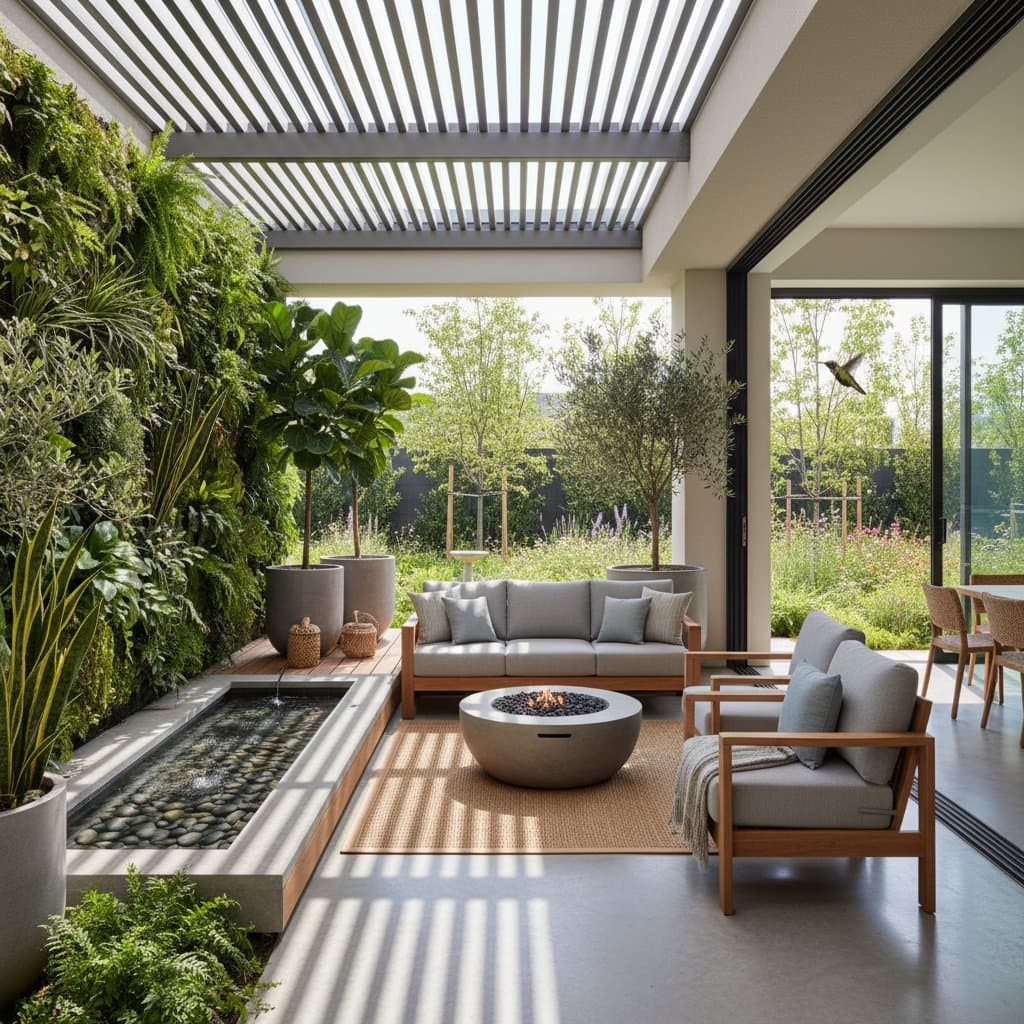
Biophilic Design Cuts Stress in Patios by 35 Percent
Patios that draw from nature do more than look inviting. They help people unwind, slow their breathing, and feel grounded. Biophilic design uses natural patterns, textures, and living elements to create outdoor spaces that restore calm and focus. A patio built this way feels less like an extension of the house and more like a living environment that supports well-being every day.
At a Glance
Location: Residential patios in varied climates
Size: Small to medium outdoor living areas
Climate Zone: Adaptable to both dry and humid regions
Project Goal: Reduce stress and strengthen the connection to nature through thoughtful design
Bring Living Greenery Within Reach
Nothing restores the mind faster than plants within arm's length. Container gardens, vertical planters, and climbing vines turn hard surfaces into living walls. This makes the patio feel more enclosed yet breathable. Dense, layered plantings also cool the air, which helps reduce physical stress from heat.
Clusters of greenery improve air quality and create microclimates that lower temperature. They also reduce noise reflection from paved surfaces. Mix textures and heights. Combine large-leaf plants like hostas with airy varieties such as maiden grass. In dry zones, use succulents with fleshy leaves that store water. A wall of Boston ivy behind a seating bench or a row of potted lavender along a low wall fills the air with subtle scent and movement.
Terracotta pots line a low wall, filled with herbs and trailing greenery that catch afternoon light.
Introduce Water's Calming Rhythm
Water has a measurable effect on stress. The sound of trickling or bubbling water masks background noise and sets a steady rhythm that the body naturally follows. Even a small water feature can change the mood of a patio. The sound of water turns a patio into a retreat, even in the middle of a busy neighborhood.
Water features create white noise, which helps people relax and concentrate. Evaporation from water surfaces slightly cools the surrounding air. Match the size of the feature to the space. A narrow patio benefits from a wall-mounted fountain, while a larger one can host a shallow reflecting pool. Use materials like river stone or slate that echo natural stream beds. A simple basin filled with smooth stones and recirculating water offers both sound and movement without taking much room.
A narrow copper spout pours into a stone trough beside ferns, catching dappled light from overhead trees.
Use Natural Materials Underfoot
The texture of stone, wood, or gravel underfoot connects people to place. Hard concrete or tile can feel sterile, but materials that age naturally develop character and comfort. People relax faster when they feel grounded. Natural materials do that literally.
Permeable surfaces like decomposed granite or flagstone joints allow water to drain, which prevents glare and heat buildup. Choose materials that fit the climate. In humid areas, teak or ipe holds up well. In dry zones, travertine or sandstone stays cool to the touch. A flagstone patio edged with river rock defines the seating area while giving rainwater a place to soak in.
Varied flagstone pieces form a loose pattern that feels organic, leading the eye toward a low fire pit.
Filter Light with Layered Shade
Direct sunlight can overwhelm outdoor comfort. Layered shade makes a patio usable all day and gives it a softer, more natural quality. Layered shade mimics what happens in a forest canopy, and people instinctively find it soothing.
Shade reduces glare and surface heat, extending the time a patio can be used. Combine overhead structures with planted shade. A pergola draped in wisteria or a simple trellis with climbing roses filters light and adds movement. Slatted wood panels above a dining table cast shifting patterns that change with the sun's angle.
A vine-covered pergola filters midday light, creating a dappled pattern across the table below.
Encourage Movement and Exploration
A patio should not feel static. Pathways, level changes, and framed views encourage people to move, which increases blood flow and lowers mental fatigue. Even a small space feels larger when the eye and body have a destination.
Defined circulation paths prevent crowding and guide guests naturally through the space. Use curved edges or stepping stones to slow movement. This encourages awareness of surroundings and promotes mindfulness. A gravel path that winds around a corner to a small bench creates curiosity and a sense of discovery.
Curved path bordered by ferns leads to a quiet reading nook with a single chair.
Invite Wildlife and Natural Sound
Biophilic design works best when nature interacts with the space. Birds, butterflies, and bees bring motion and sound that remind people they are part of a living system. When wildlife visits, people slow down to watch, and that pause alone reduces stress.
Pollinator-friendly plants support biodiversity and strengthen local ecosystems. Choose nectar-rich plants like coneflower, bee balm, or milkweed. Provide shallow water sources for birds. Avoid pesticides that disrupt natural balance. A birdbath tucked among native grasses attracts small birds while breaking up the visual line of a retaining wall.
Monarch butterfly lands on purple coneflower beside a curved stone seat.
Create Sensory Layers Beyond Sight
People connect with nature through all senses. Texture, scent, and sound deepen the experience and help release tension. When all senses are engaged, people stop thinking about stress and start noticing the moment.
Multisensory design keeps the space engaging across seasons, which encourages daily use. Mix plants with distinct textures and fragrances. Pair soft lamb's ear leaves with aromatic rosemary or mint. Add rustling grasses that react to wind. A cluster of ornamental grasses beside a cedar bench sways gently, producing a soft whispering sound.
Close-up of rosemary sprigs beside smooth river stones near the edge of a seating area.
Integrate Natural Light and Night Glow
Evening lighting should extend the day without breaking the natural feel. Properly placed fixtures create calm rather than glare. Layered lighting extends evenings outdoors without harsh glare.
Low-level illumination makes the patio safe and usable after dark while preserving night vision. Use warm color temperatures around 2700 K to mimic firelight. Hide fixtures behind plants or stones to keep the source invisible. Step lights along a gravel path and a few lanterns on side tables provide gentle glow without spoiling the view of the sky.
Soft uplighting highlights the trunk of a birch tree while candles flicker on a nearby coffee table.
Frame Views and Focal Points
Connection to distant scenery helps the mind rest. Even small patios can create a sense of outlook by framing views toward trees, open sky, or artful objects. Framed views give people a sense of depth and calm, even in tight spaces.
Focal points guide the eye and reduce clutter. They help define where to sit or stand. Use planters or low walls to create visual frames. Align seating with the view, not the house wall. A bench positioned to face a single Japanese maple draws focus outward and away from the house.
Framed view through trellis reveals a red maple beyond a soft gravel terrace.
Blend Indoor and Outdoor Boundaries
Stress drops when there is no sharp divide between inside and out. Sliding glass doors, continuous flooring, and repeating materials connect the two areas visually and physically. The smoother the transition, the easier it is for people to step outside and relax.
Consistent materials reduce visual clutter and make outdoor living feel like part of daily life. Extend the same flooring from interior to patio, or use similar colors and finishes. Keep furniture scales consistent so movement between zones feels natural. A kitchen with broad doors opens directly to a patio with matching stone pavers and a shared dining table.
Large glass panels slide open to reveal a continuous floor line from interior dining space to shaded terrace.
Living with Biophilic Design
Once a patio incorporates natural elements, it requires care that mirrors its living nature. Plants need pruning, water features need cleaning, and materials weather over time. These cycles become part of the space's rhythm. Maintaining this relationship keeps stress relief active. Homeowners who tend plants or adjust lighting patterns stay engaged and mindful. The patio becomes not just a place to sit but a living system that responds to attention.
Across climates and property sizes, biophilic design offers measurable benefits. Lower blood pressure, improved focus, and reduced tension all come from direct contact with living patterns. A patio that listens to nature's cues returns that calm to anyone who spends time there.
Start Small and Build
Begin with one natural element and build from it. A single planter of herbs can evolve into a layered garden. A small fountain can become a focal point that defines the space. The key is consistency and connection.