
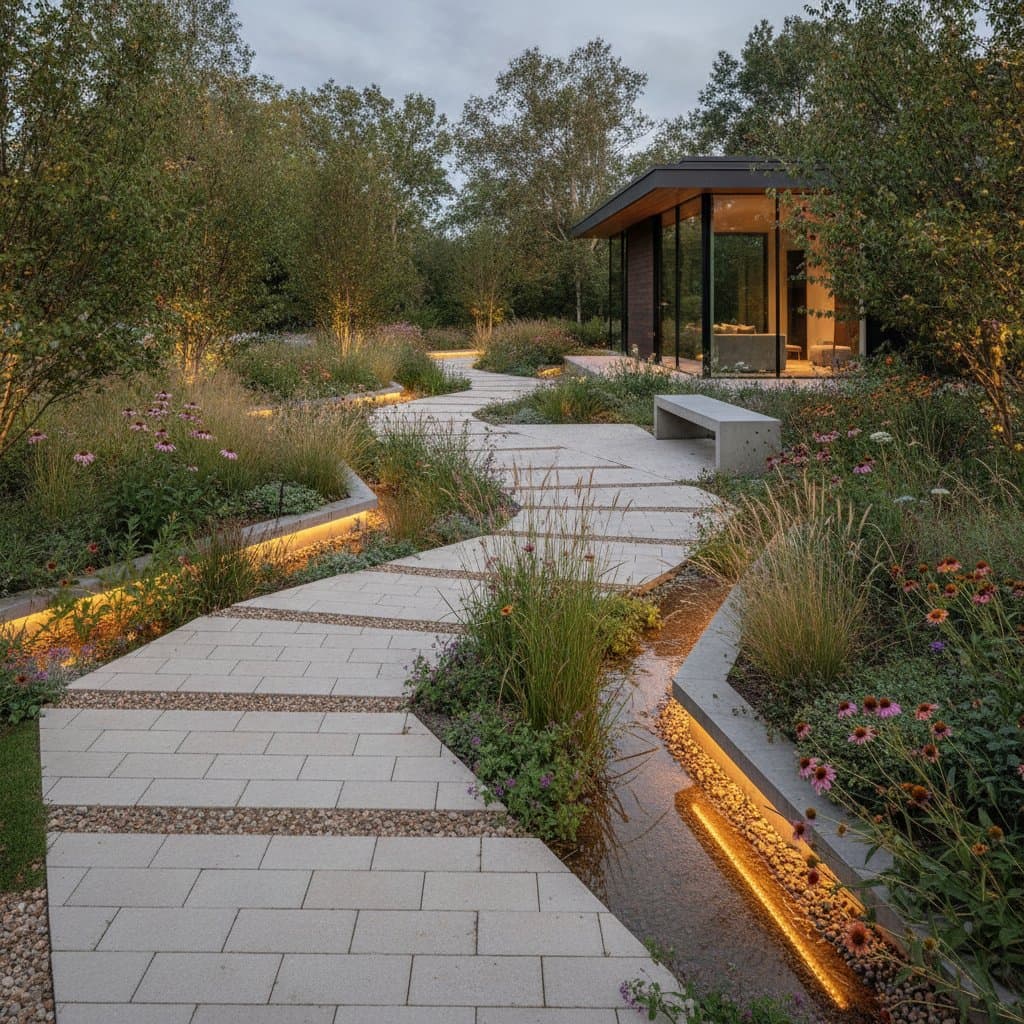
Bioswale Walkways Blend Drainage With Stunning Curb Appeal
A well-designed walkway does more than guide movement through the garden. It shapes how water travels across the property and defines the feel of the landscape underfoot. Bioswale walkways extend this function by merging stormwater management with natural beauty and turning a drainage requirement into a living design element.
Project Parameters
- Location: Residential and small commercial landscapes
- Size: Flexible layouts that suit narrow side yards or wide front entries
- Climate adaptation: Effective in wet and dry regions when paired with an appropriate plant palette
- Core objective: Control runoff while introducing texture and seasonal interest
1. Define the Flow
A bioswale walkway starts with a clear analysis of how water moves across the site. Gentle grading directs runoff into planted channels that slow and filter the flow. This method prevents pooling on paths and limits erosion near foundations.
Landscape designers note that aligning the walkway with natural drainage lines makes the garden appear rooted in the land. Permeable materials such as gravel, decomposed granite, or open-joint pavers allow rain to infiltrate rather than run off the surface. Edging stones further channel water into the adjacent swale while keeping the path usable throughout the year.
2. Layer the Planting
Effective bioswale plantings rely on deliberate layering. Low groundcovers such as creeping thyme or sedges stabilize the edges nearest the walkway. Mid-height perennials including blue flag iris and black-eyed Susan supply color and vertical structure. Taller grasses such as switchgrass or little bluestem anchor the outer banks and add motion.
These layers trap sediment, improve water quality, and support pollinators. They also ease the visual shift from hardscape to garden beds. Horticulturists emphasize that a bioswale must appear full and purposeful rather than incidental. Plants selected for tolerance of both wet and dry periods maintain performance after storms and through drought.
3. Integrate Hardscape Accents
Structural elements prevent the bioswale walkway from reading as purely utilitarian. Large stepping stones set slightly above the planted surface remain dry during heavy rain. A short bridge or boardwalk can span the lowest section and convert the drainage line into a focal point.
Stone seating walls or boulders positioned along the edge serve as both visual anchors and resting spots. Local limestone or recycled concrete supports sustainability goals while reinforcing a grounded appearance. Designers observe that treating the bioswale as a destination helps visitors understand its purpose and value.
4. Use Lighting to Highlight Texture
Evening lighting adds depth and improves safety along bioswale walkways. Low-voltage fixtures installed at ground level reveal foliage and stone textures. Warm white light near 2700 K produces a natural glow that complements the surrounding landscape.
Path lights require shielding to reduce glare on wet surfaces. Subtle uplighting on ornamental grasses or sculptural trees accentuates seasonal movement. This layered approach extends usable hours after dark without disrupting the natural character of the space.
5. Maintain with Purpose
A bioswale walkway requires modest upkeep centered on regular observation. Remove accumulated sediment at points where flow slows and replenish mulch displaced by water. Cut back perennials in early spring to promote clean new growth.
Weeding decreases once plantings mature, and established roots stabilize the soil. Periodic checks of stone joints and gravel surfaces preserve permeability. These routine steps sustain both function and visual quality over time.
Daily Experience
A bioswale walkway unites structure, ecology, and visual interest. It converts stormwater into a managed resource and encourages deliberate movement through the landscape. The combination of measured grading, layered vegetation, and varied textures produces a setting that remains responsive after each rainfall. When executed with attention to detail, the path integrates into the daily rhythm of the property and guides both water and visitors with consistent purpose.