
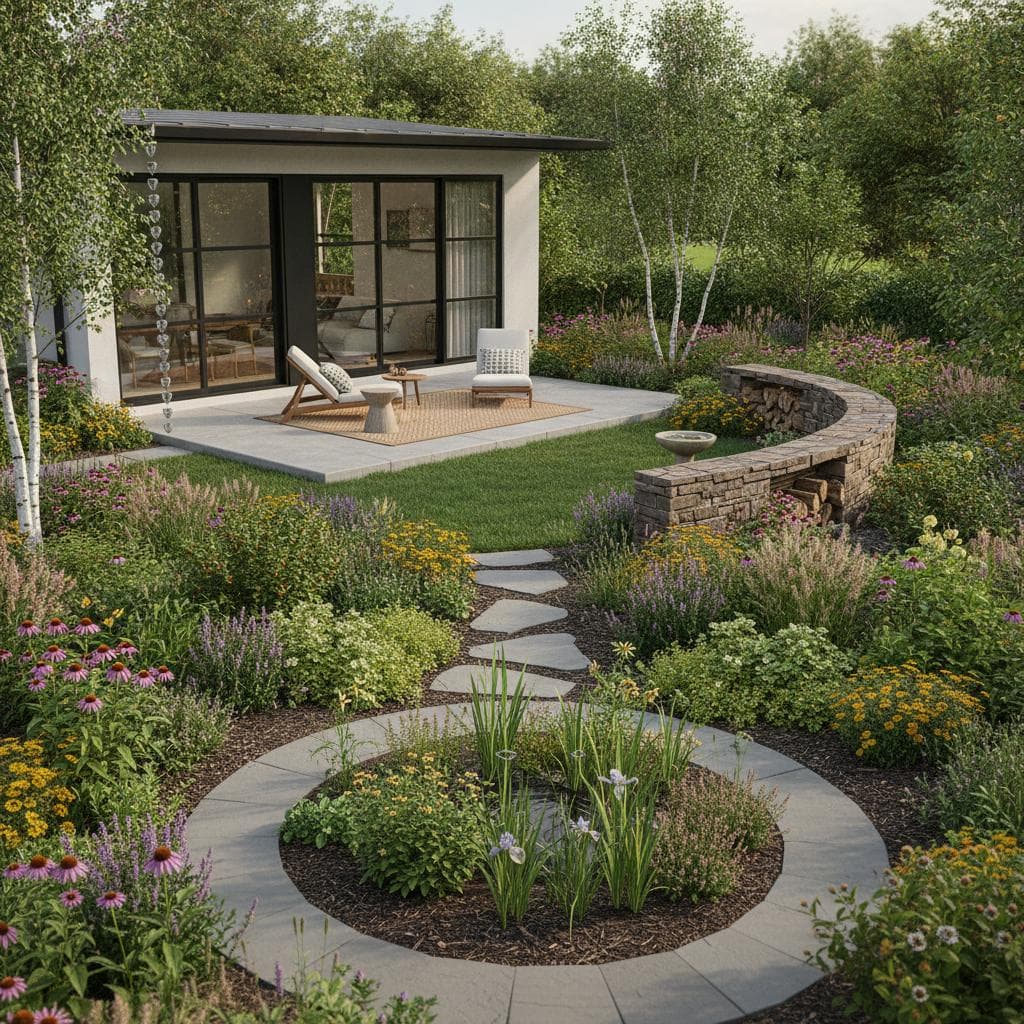
Transform Your Backyard into a Thriving Ecosystem
A backyard can become a living system that supports pollinators, absorbs rainwater, and invites birds, butterflies, and beneficial insects. A rewilded backyard feels alive. It changes with the seasons and rewards daily observation. The goal is balance, where natural processes guide design choices.
At a Glance
- Location: Typical suburban or urban lot
- Size: Small to mid-sized yard
- Climate Zone: Adaptable to local conditions
- Project Goal: Create a biodiverse, low-maintenance, habitat-rich outdoor space
1. Start with the Soil
Healthy soil stores water, nurtures roots, and supports microorganisms that recycle nutrients. Restoring soil health reduces irrigation needs and plant stress. Avoid tilling. Instead, layer compost, leaf mold, and organic mulch to build structure naturally.
Spread a two-inch layer of shredded bark mulch around new plantings. Add composted leaves in autumn to feed soil life through winter. Soil is the quiet engine of any landscape. Treat it right, and the rest of the system falls into place.
Mulched paths wind through native beds, keeping soil cool and moist.
2. Choose Native and Adaptive Plants
Native plants require less water once established, resist local pests, and provide essential food for native wildlife. They attract pollinators and stabilize the ecosystem. Mix bloom times and heights for continuous interest and layered texture.
Combine purple coneflower, black-eyed Susan, and little bluestem for a meadow-like bed that supports bees and butterflies. A healthy ecosystem starts with plants that belong there. They feed not just pollinators, but the soil itself.
Drifts of native grasses sway beside clusters of coneflowers alive with bees.
3. Add Water the Natural Way
Water brings movement and sound to the garden while supporting amphibians, birds, and insects. Even a small feature can transform your yard into a functioning habitat. A water source attracts wildlife and moderates temperature.
Choose natural materials like stone or clay to blend with the surroundings. Keep edges shallow to allow safe access for small creatures. Install a small recirculating stream lined with river rock, or a half-buried clay bowl under a shaded tree for birds to drink and bathe.
Running water instantly shifts the mood. It cools the air, softens noise, and becomes a magnet for life.
A shallow stone basin reflects light and draws visiting sparrows.
4. Create Layers of Habitat
Think vertically. A mix of canopy, understory, and ground layers increases diversity and gives wildlife shelter at multiple heights. Layering plants maximizes space and mimics natural woodland or meadow systems.
Combine trees, shrubs, perennials, and low groundcovers for a dynamic structure that evolves over time. Use serviceberry trees for height, red twig dogwood as midlayer interest, and wild strawberry or creeping thyme at the ground level.
When you build up layers, you build resilience. Each tier supports different species and stabilizes the system.
A layered mix of shrubs and perennials creates texture and depth across the yard.
5. Reduce Lawn Area
Large expanses of turf consume water and chemicals without offering much ecological return. Reducing turf opens space for more productive plantings. Less mowing means lower maintenance and fewer emissions.
Replace part of the lawn with native meadow grasses, low-mow fescue, or gravel seating areas framed by plantings. Convert a corner of turf into a small prairie patch using switchgrass, bergamot, and milkweed.
Every square foot reclaimed from turf adds life, texture, and color to the garden.
A curved path of fine gravel replaces half the lawn, bordered by tall grasses.
6. Support Pollinators Year-Round
Pollinators need shelter, nesting sites, and off-season food sources in addition to summer blooms. Continuous support keeps pollinator populations stable and improves fruit and seed production.
Plant early spring bloomers like serviceberry, and late-season nectar plants such as goldenrod or aster. Leave stems standing through winter for nesting bees. A small pile of twigs, hollow stems, and leaf litter near a sunny area can provide vital overwintering habitat.
A pollinator-friendly yard is a four-season commitment. Structure and timing matter just as much as color.
Late-blooming asters attract migrating monarchs before cooler weather sets in.
7. Incorporate Natural Materials and Texture
Natural materials make an outdoor space feel grounded and authentic. They also create microhabitats for insects and small animals. Stone, wood, and gravel moderate temperature swings and provide shelter.
Use weathered timber for edging, natural boulders for seating, and gravel mulch to aid drainage. Balance rough textures with soft foliage. A reclaimed wood bench beside a stone retaining wall doubles as a basking spot for lizards.
Imperfection is where life thrives. Rough textures invite touch and support living systems.
A granite boulder anchors the corner of a wild planting bed.
8. Manage Rainwater Thoughtfully
Rainwater is a valuable resource when managed properly. Instead of sending runoff to storm drains, direct it into the landscape. This reduces erosion and replenishes groundwater.
Create shallow swales or rain gardens in low areas to capture and filter water naturally. A depression planted with blue flag iris, sedges, and Joe Pye weed can handle heavy rain while adding beauty.
Every drop that stays on site supports the garden and relieves pressure on city systems.
A planted swale carries rainwater through meadow grasses toward a small pond.
9. Provide Shelter and Nesting Spaces
Wildlife needs safe places to rest, hide, and raise young. Integrate birdhouses, brush piles, or hollow logs into planting areas for a natural look. This increases biodiversity and wildlife retention.
A log pile tucked behind shrubs can house toads and beneficial beetles. Shelter completes the circle. Without it, animals visit but do not stay.
A hollow log beside a shady fern bed becomes a refuge for small creatures.
10. Keep Maintenance in Tune with Nature
A rewilded yard still needs care, but that care follows natural rhythms rather than strict schedules. The goal is stewardship, not control. Seasonal adjustments keep the system healthy without disrupting wildlife cycles.
Mow meadows once in late winter, prune only for safety or structure, and leave seed heads for birds. Allow fallen leaves to remain under trees as mulch instead of removing them.
A thriving ecosystem looks a little wild. That is the sign of life working as it should.
Seed heads left standing through winter feed finches and add sculptural interest.
Observe and Adjust Over Time
A backyard designed as an ecosystem hums with life, shifts with the weather, and rewards patience. Over time, plants knit together, soil deepens, and wildlife finds its rhythm. The garden becomes a place to observe and learn.
Start small with one corner or bed, and expand as the system stabilizes. Notice which plants attract the most visitors and which areas retain moisture. Each observation helps guide the next improvement. With care rooted in observation and respect for natural processes, any backyard can evolve into a thriving ecosystem that delivers cleaner air, richer soil, and daily connection to nature.