
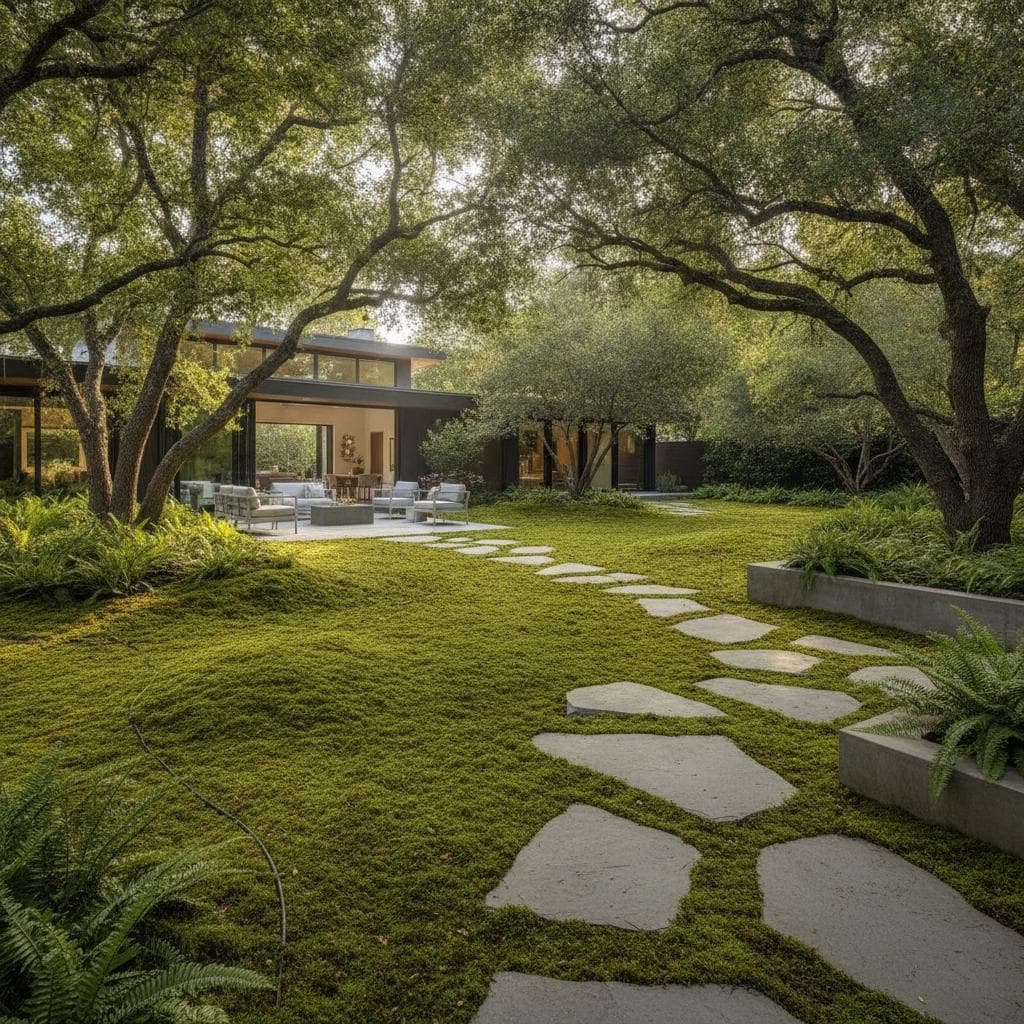
Moss Lawns Gain Popularity as No-Mow Grass Alternative
Across many California neighborhoods, front yards are quietly transforming. Where freshly cut grass once demanded weekly attention, carpets of soft, vibrant moss are taking hold. Homeowners who once spent weekends mowing, fertilizing, and watering are discovering a fresh, sustainable approach to landscaping that rewards patience over power tools.
Moss lawns offer a living green surface that stays lush through dry spells, thrives in shade, and requires almost no maintenance once established.
Why Moss Lawns Appeal to Modern Gardeners
A traditional lawn can be a demanding companion. It asks for water, fertilizer, and frequent trimming, especially in the dry seasons when irrigation restrictions can make upkeep challenging. Moss lawns, by contrast, provide a serene green that thrives without mowing or chemical inputs.
The appeal lies in their simplicity and resilience. Mosses are ancient plants that absorb water and nutrients through their leaves rather than roots. This means they can grow where grasses fail, such as under trees, along north-facing slopes, or on compacted soil. Moss stays green year-round in many regions, resists pests, and gently softens hard edges in the landscape.
Choosing the Right Moss for Your Site
Not all mosses behave the same way. Some prefer heavy shade and damp soil, while others tolerate partial sun and moderate dryness. Selecting the right species is essential for long-term success. In California and other mild climates, a few common types perform particularly well:
- Sheet moss (Hypnum species) forms low, velvety mats and works beautifully in shaded garden areas.
- Rock cap moss (Dicranum species) grows in small tufts that add texture and can handle light foot traffic.
- Cushion moss (Leucobryum glaucum) has a silvery-green hue and thrives on slightly acidic soil.
- Fern moss (Thuidium delicatulum) creates a feathery, fern-like surface that looks lush even in dry months.
To match moss with your conditions, study the lighting, moisture, and soil texture of your site. Moss enjoys acidic soil with a pH between 5 and 6.5. If your soil is more alkaline, a light dusting of sulfur can help lower the pH gradually. Moss does not need fertilizer, though an occasional misting with filtered water encourages it to spread.
Preparing and Planting a Moss Lawn
Installing a moss lawn is an exercise in careful preparation. The steps are simple but require patience and attention to detail.
- Clear the area of grass, weeds, and debris. Any remaining roots or organic matter can compete with the moss.
- Roughen the soil surface with a rake or steel brush. Moss needs direct contact with soil to establish.
- Moisten the soil before laying moss fragments or sheets. A damp surface helps moss attach more quickly.
- Press the moss firmly into place using your hands or a flat board. Consistent contact ensures better growth.
- Water lightly every day for the first few weeks, keeping the area evenly moist until the moss anchors itself.
Once established, moss requires minimal care. It benefits from occasional rinsing to remove dust or fallen leaves, and a light misting during extended dry periods. Overwatering is unnecessary and can encourage algae, so moderation is key.
Environmental and Aesthetic Benefits
Moss lawns offer more than visual charm. They contribute to soil stability, reduce erosion, and absorb rainfall efficiently. The dense, spongy growth captures carbon and filters airborne particles, improving air quality in small but measurable ways. Because mosses do not require fertilizers or pesticides, they eliminate runoff pollution that often accompanies conventional lawns.
From an aesthetic standpoint, moss brings a quiet elegance that few plantings can match. It softens stone pathways, complements native plantings, and creates a calm, natural atmosphere. In shaded or woodland gardens, moss offers a unifying groundcover that connects hardscape and plantings into a cohesive design.
Practical Considerations for California Landscapes
California diverse microclimates can present challenges for moss cultivation, but they also provide opportunities for creative adaptation. Coastal areas, with their morning fog and mild temperatures, are ideal for moss lawns. Inland regions require more planning, particularly in hot or arid zones. In these areas, selecting drought-tolerant moss varieties and providing partial shade with trees or pergolas can make a big difference.
Water management is another advantage. Moss lawns use a fraction of the water required by turf grass, aligning perfectly with conservation goals. A drip or mist system set on a timer can maintain the right moisture balance without waste. For homeowners replacing traditional lawns, local rebate programs may help offset installation costs.
Integrating Moss into Broader Landscape Design
Moss lawns do not need to cover an entire yard to be effective. Many homeowners blend them with native grasses, groundcovers, or gravel pathways for contrast. A small moss courtyard or shaded side yard can serve as a meditative retreat, while moss between stepping stones adds character and continuity. In modern landscapes, moss pairs well with concrete, steel, and wood, balancing the hard lines of architecture with organic softness.
Maintenance crews appreciate moss for its simplicity. There is no mowing schedule to manage, no fertilizer to apply, and no irrigation system to monitor once established. The main task is keeping debris off the surface so the moss can photosynthesize freely. A gentle leaf blower or soft broom is usually adequate.
Watching Your Moss Lawn Thrive
A moss lawn invites a different rhythm of care. Instead of the hum of mowers, you will hear the quiet satisfaction of a garden that sustains itself. Over time, moss thickens and deepens in color, creating a living carpet that responds to light and moisture with subtle shifts in tone. It rewards observation rather than intervention.
For those seeking a landscape that reflects environmental responsibility, aesthetic refinement, and long-term ease, moss offers a natural solution. With thoughtful preparation and a bit of patience, this ancient plant can transform a conventional yard into a peaceful, low-maintenance retreat that feels at home in the California climate.