
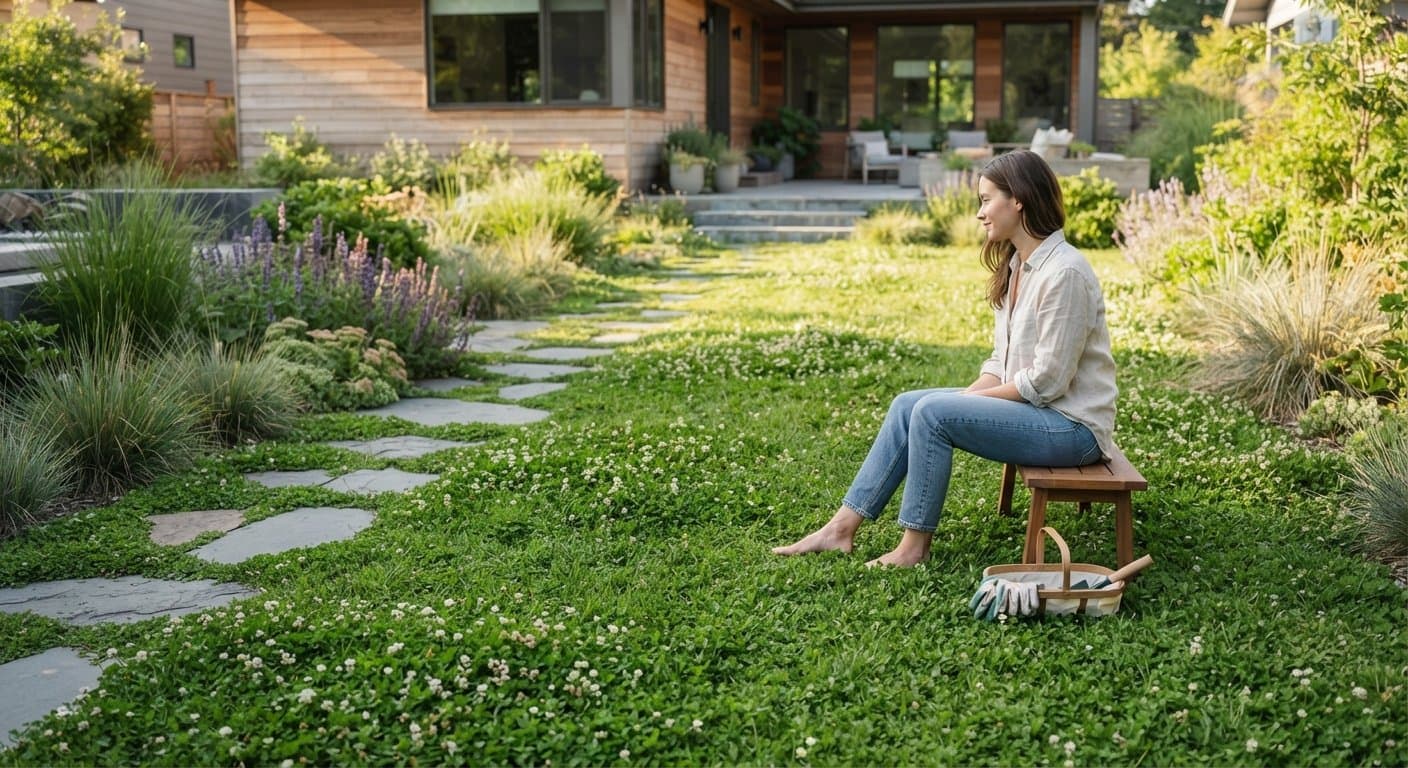
Clover Lawns Reduce Routine Maintenance by 70 Percent
Homeowners seeking a greener yard without weekend mowing commitments can consider clover as a practical alternative to conventional turf. A well-planned clover lawn can reduce routine maintenance by as much as 70 percent, though results depend on climate, soil conditions, planting choices, and household expectations for outdoor space.
Clover functions as a living ground cover with distinct seasonal habits, care requirements, and limitations. Understanding these characteristics helps homeowners determine whether a clover lawn, mixed planting, or different low-maintenance alternative suits their property.
Quick Reference
- Best suited to: Sunny or partly sunny yards with moderate foot traffic
- Common choices: White clover and microclover
- Primary maintenance savings: Reduced mowing, fertilizer applications, and routine watering
- Key tradeoffs: Flowers attract pollinators, and clover may thin under heavy traffic
- Installation options: Seed a prepared lawn, overseed existing turf, or combine clover with grass
- Before planting: Evaluate local growing conditions, drainage, and household needs
How Clover Transforms Lawn Care
Traditional turf requires regular mowing, feeding, and watering to maintain a uniform green surface. Clover grows lower than many lawn grasses and spreads through creeping stems that help fill open ground. Its roots work with soil bacteria to make nitrogen available, which can reduce the need for synthetic lawn fertilizer.
These characteristics explain the potential maintenance reduction. A clover lawn typically needs fewer mowing sessions and less supplemental feeding. In suitable conditions, established plants can also tolerate dry spells better than thirsty turf. This does not mean a clover lawn requires no care. It needs thoughtful establishment, occasional trimming, and attention to weeds and bare patches.
The 70 percent figure represents a possible reduction in routine lawn tasks, not a guaranteed saving for every property. A shaded, compacted yard may need more intervention than a sunny site with well-prepared soil. Local rainfall and the amount of play or pet traffic also influence results.
Selecting Between White Clover and Microclover
White clover offers a familiar choice for a relaxed, cottage garden appearance. Its rounded leaves and small flowers create a soft surface, while its spreading habit helps cover ground. It can grow taller and flower more freely than microclover, making it suitable for homeowners who value pollinator activity and a less formal finish.
Microclover is a smaller-leaf variety selected for a more even appearance. It tends to blend neatly with turf grasses and can create a lower, more uniform lawn. This makes it a useful option for front yards where homeowners want a tidy look without frequent mowing.
Neither variety suits every site. Clover generally performs best with good light and soil that drains well. Heavy shade, standing water, and intense foot traffic can weaken coverage. Before buying seed, check the supplier's guidance for regional suitability and whether the variety is intended for a pure planting or a grass blend.
Preparing the Yard for Successful Establishment
Successful planting begins with the ground, not the seed. Remove persistent weeds, loosen compacted soil, and rake away debris. Clover seed is small, so it needs contact with prepared soil rather than a thick layer of thatch or mulch. Follow the seed label for application rates, and avoid burying seed deeply.
Homeowners can establish clover in two main ways:
- Start a new lawn: Clear existing vegetation, prepare a fine seedbed, and sow at the recommended rate.
- Overseed existing turf: Mow the grass short, remove clippings, and rake exposed areas so seed can reach the soil.
Keep the seedbed consistently moist during germination. Once seedlings establish, reduce watering gradually and encourage deeper roots. A newly seeded lawn needs protection from heavy traffic, so plan the project around household use rather than expecting an instant, durable surface.
For mixed lawns, clover and grass can offer a practical balance. Grass provides a familiar playing surface, while clover fills gaps and contributes nitrogen. The blend may need occasional mowing to keep both plants at a comfortable height.
Mowing, Watering, and Seasonal Maintenance
A clover lawn usually needs less mowing than conventional turf, but the preferred schedule depends on the desired look. Leave plants to flower for a natural, pollinator-friendly yard, or mow when the surface becomes uneven. Use a sharp mower blade and avoid cutting plants too low, especially during hot or dry weather.
Flowering clover draws bees and other pollinators. This benefits garden ecology, but it can concern areas near play spaces, paths, or seating. Homeowners can mow narrow access strips or keep flowering areas away from high-use zones. A mixed lawn can also limit flowers in locations where bare feet and frequent activity are common.
Watering needs decrease after establishment in many settings, yet young plants still require steady moisture. Mature clover can handle moderate dryness, but prolonged heat may cause dormancy or thinning. Water deeply when the soil is dry rather than giving frequent, shallow sprays. Good drainage matters as much as watering habits, since soggy roots can struggle.
Where Clover Performs Well and Where It Falls Short
Clover serves as a strong candidate for sunny lawns that receive light to moderate use. It can suit side yards, open garden areas, and homeowners who prefer a softer, less manicured landscape. It also offers an alternative for people seeking to reduce fertilizer use and cut back on mowing.
A pure clover lawn may be less suitable for sports, frequent dog running, or areas that need a highly uniform surface. Repeated traffic can wear paths into the planting. In those zones, consider durable turf, stepping stones, or a defined walkway. A grass and clover mix may also recover better than clover alone.
Check local expectations before changing a front lawn. Some neighborhoods or property rules require a maintained appearance, and flowering ground cover may not fit every standard. A small trial area lets homeowners assess color, texture, mowing needs, and seasonal behavior before converting a whole yard.
Matching Clover to Your Household's Outdoor Needs
The most effective low-maintenance lawn alternative suits how a household actually uses its outdoor space. Clover can reduce time spent mowing and feeding while creating a softer, greener setting that supports pollinators. Its performance depends on proper seed selection, soil preparation, and a realistic plan for traffic and flowers.
Start with a modest area and observe how it responds through changing conditions. Keep a grass border near paths if a crisp edge matters, and reserve tougher surfaces for play or frequent movement. With these decisions in place, clover can simplify lawn care without requiring homeowners to sacrifice a useful, welcoming yard.