
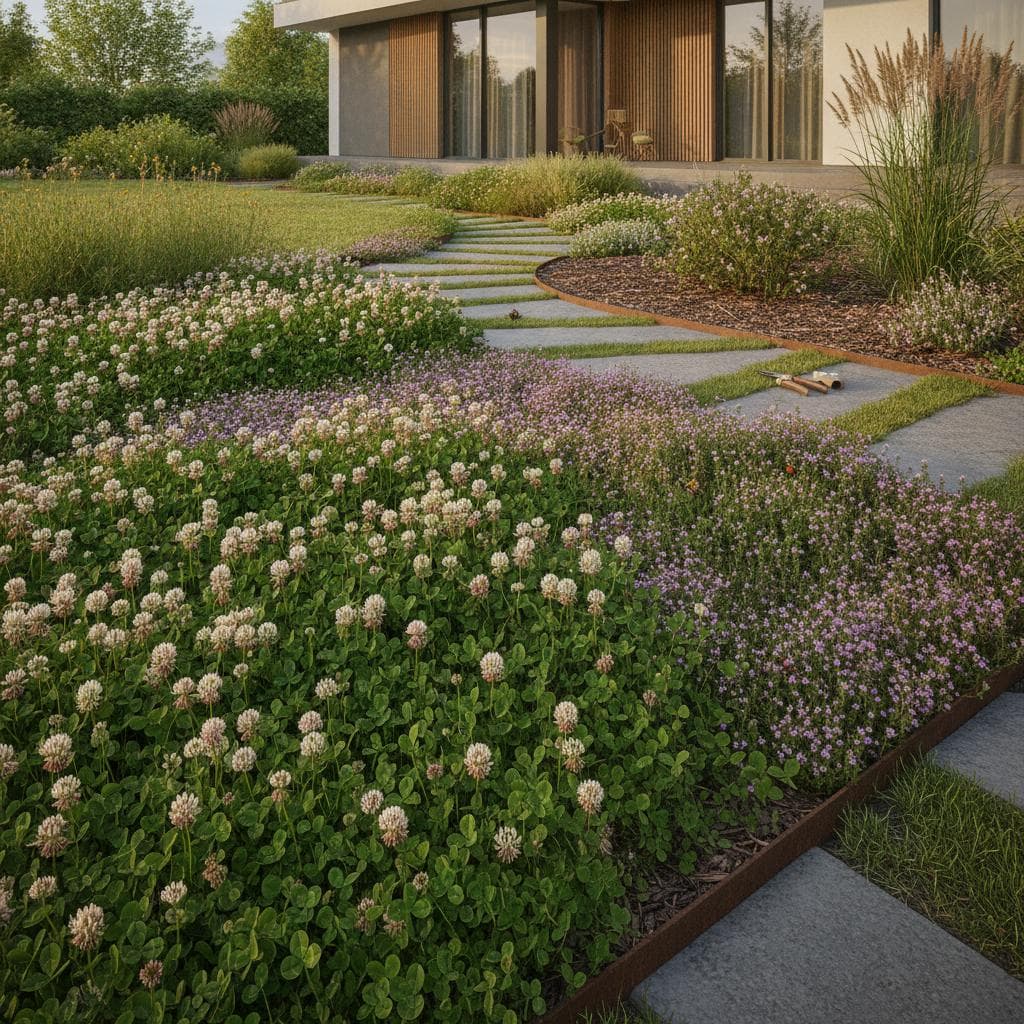
Clover and Thyme Lawns Replace Grass for Good
A lawn of clover and thyme brings texture, flowers, and useful ground cover to outdoor spaces. These low-growing plants need less mowing than turf grass, support pollinators, and create a softer setting for paths, patios, and garden beds.
The best designs treat edible lawn plants as living ground cover, not as a perfect green carpet. With the right site preparation, plant selection, and maintenance plan, clover and thyme can create a durable surface that feels relaxed and intentional.
At a Glance
- Best for: Sunny yards, informal paths, garden edges, and low traffic areas
- Plant palette: White clover, microclover, creeping thyme, woolly thyme, and culinary thyme
- Soil preference: Well-drained soil with moderate fertility
- Main benefit: Less mowing with added flowers, fragrance, and edible foliage
- Project goal: Replace thirsty turf with a resilient, habitat-friendly ground cover
1. Match the Plant to the Use
Clover and thyme serve different purposes. Clover handles light foot traffic and fills open soil quickly. Thyme forms a denser, lower mat and works well between stepping stones or along path edges.
White clover, also called Dutch clover, produces rounded leaves and small white flowers. Microclover has smaller leaves and a tidier appearance. Both types tolerate occasional walking, though neither performs well under constant play or repeated parking.
Creeping thyme creates a firm surface when planted in a sunny, well-drained site. Woolly thyme offers soft gray foliage and stays very low. Culinary thyme adds fragrance and can be harvested, but it may not spread as evenly as creeping varieties.
A designer might say: "Choose the plant by the pressure it will receive, not only by its appearance."
Use clover for open lawn areas. Use thyme for narrow strips, stone joints, and spaces where fragrance matters. Combine them only when soil and moisture conditions suit both plants.
2. Prepare the Soil Before Planting
Good preparation makes the transition from grass much easier. Remove existing turf, including as many roots as possible. For small areas, use a sod cutter or flat shovel. For larger areas, smother the grass with opaque covering, then clear the weakened sod before planting.
Test the soil before adding amendments. Clover prefers moderately fertile soil and can struggle in highly acidic conditions. Thyme prefers leaner, sharply drained soil. A single soil mix may not suit both plants across the entire yard.
Improve compacted ground with finished compost, but avoid creating a rich planting bed for thyme. Too much fertility can produce soft growth and reduce the plant's ability to handle dry conditions. Add mineral grit or coarse sand to heavy soil in thyme zones, then grade the surface so water drains away from paving and foundations.
A horticulturist might say: "Drainage matters more than richness for thyme, while steady establishment matters most for clover."
Remove perennial weeds before planting. Persistent roots from bindweed, quackgrass, or creeping buttercup can compete with young ground cover and return through thin areas.
3. Create Clear Lawn Boundaries
Clover and thyme look intentional when their edges are defined. Without a boundary, plants can creep into paths, beds, and gravel. A clean edge also makes mowing nearby areas easier.
Use steel edging, brick, stone, or a narrow strip of compacted gravel. Curved borders suit informal gardens. Straight edges give a more architectural appearance around patios and vegetable beds.
Keep thyme away from wet downspouts and shaded corners. Place clover where its flowers can mingle with perennial beds or soften the edge of a fence. A mixed planting can include clover in the center, thyme along a sunny path, and taller ornamental grasses at the border.
A landscape installer might say: "A simple edge keeps a relaxed planting from looking accidental."
Repeat the same materials elsewhere in the yard. A brick border at the lawn can echo a brick path or raised bed, which gives the design a connected appearance.
4. Plant for Fast, Even Coverage
Ground cover succeeds when plants start close enough to knit together. Seed offers a low-cost method for clover, while thyme usually establishes faster from plugs or small plants.
Broadcast clover seed across prepared soil, then press it lightly into the surface. Do not bury it deeply. Keep the soil evenly moist while seedlings develop. Once established, clover can spread through short runners and fill small gaps.
Plant thyme plugs in staggered rows. A spacing of about six to twelve inches works for many creeping varieties, though mature size differs by cultivar. Tighter spacing creates quicker coverage and fewer opportunities for weeds.
Avoid walking on newly planted areas. Temporary stepping boards can protect the soil while roots develop. Mulch lightly with fine compost or clean straw, but avoid thick mulch that covers tiny seedlings.
5. Plan for Sun and Drainage
Thyme needs strong sunlight and fast drainage. Aim for a location with several hours of direct light and no standing water. Poor drainage can cause crown rot, especially during wet conditions.
Clover tolerates a little more moisture and can handle light shade. It often performs well beneath open-canopy trees, though dense shade will leave it thin. If the yard receives limited sun, consider shade-tolerant sedges instead of forcing thyme into a weak planting.
Observe the site after rain. Mark puddles, runoff channels, and areas that dry first. Place thyme on raised or sloped ground. Reserve lower, moister areas for clover or other moisture-tolerant ground covers.
A garden designer might say: "The site should decide the plant palette before the plant catalog does."
This approach reduces replacement work and creates a more consistent surface.
6. Use Edible Plants with Care
Clover flowers and leaves can be used in small amounts, provided the planting receives no herbicide, pesticide, or contaminated runoff. Young leaves taste mild and can add a fresh note to salads. Flowers can garnish drinks or desserts.
Thyme offers more familiar culinary use. Snip sprigs from clean plants and rinse them before adding them to roasted vegetables, beans, soups, or marinades. Never harvest from areas treated with lawn products or exposed to pet waste.
Keep paths and pet zones separate from edible planting when possible. A small stone path through the ground cover can guide foot traffic and reduce contamination. Label edible areas if several people maintain the garden.
A kitchen gardener might say: "Treat edible ground cover like a food crop, even when it also serves as a lawn."
Harvest lightly. Frequent cutting can weaken young thyme and leave bare patches.
7. Manage Mowing Without Losing Flowers
Clover benefits from occasional mowing when it becomes tall or begins to flop. Raise the mower deck and use a sharp blade. A high cut leaves enough foliage for quick recovery and protects soil from heat.
Thyme rarely needs mowing. If the planting becomes uneven, trim it lightly after flowering. Avoid cutting into old, woody stems, which may not regrow. Hand shears work well for small spaces.
Allowing some flowers supports bees and other pollinators. If the lawn borders a seating area, mow a narrow frame around the patio while leaving the central clover open. This creates a cared-for appearance without removing every bloom.
Set a maintenance rhythm based on growth, rainfall, and use. The surface should look healthy and dense, not perfectly uniform.
8. Control Weeds Without Harsh Chemicals
Weeds appear while clover and thyme establish. Hand pull them when the soil is slightly moist. Remove weeds before they set seed, and refill bare areas quickly with plugs or fresh clover seed.
Avoid broadleaf lawn herbicides. They can damage clover and thyme, and residues can make an edible planting unsafe. Dense plant spacing provides the best long-term weed control by limiting open soil.
A thin layer of fine compost around established plugs can suppress small weeds, but do not bury the crowns. Gravel mulch works around thyme paths, while it can interfere with clover spread in open lawn areas.
A professional gardener might say: "Early hand weeding saves far more effort than trying to correct a neglected planting later."
9. Add Paths and Resting Places
A clover and thyme lawn becomes more useful when the design includes durable places for movement and rest. Set large flagstones through thyme for a simple garden path. Add a small bench beside a clover patch where flowers remain visible at eye level.
Use stepping stones at major routes, such as the path between a back door and a shed. Their placement should match natural walking patterns. If people cut across the lawn, add a path rather than asking the plants to absorb repeated traffic.
A compact gravel sitting area can border the planting without creating a hard visual break. Choose gravel colors that relate to nearby stone, wood, or masonry.
Living with the New Lawn
Replace grass in sections if a full conversion feels too large. Start with a sunny side yard, a narrow front strip, or the area around a patio.
Clover and thyme create a lawn that feels useful, fragrant, and connected to the rest of the garden. Defined edges, suitable plants, and light maintenance keep the planting attractive.