
-
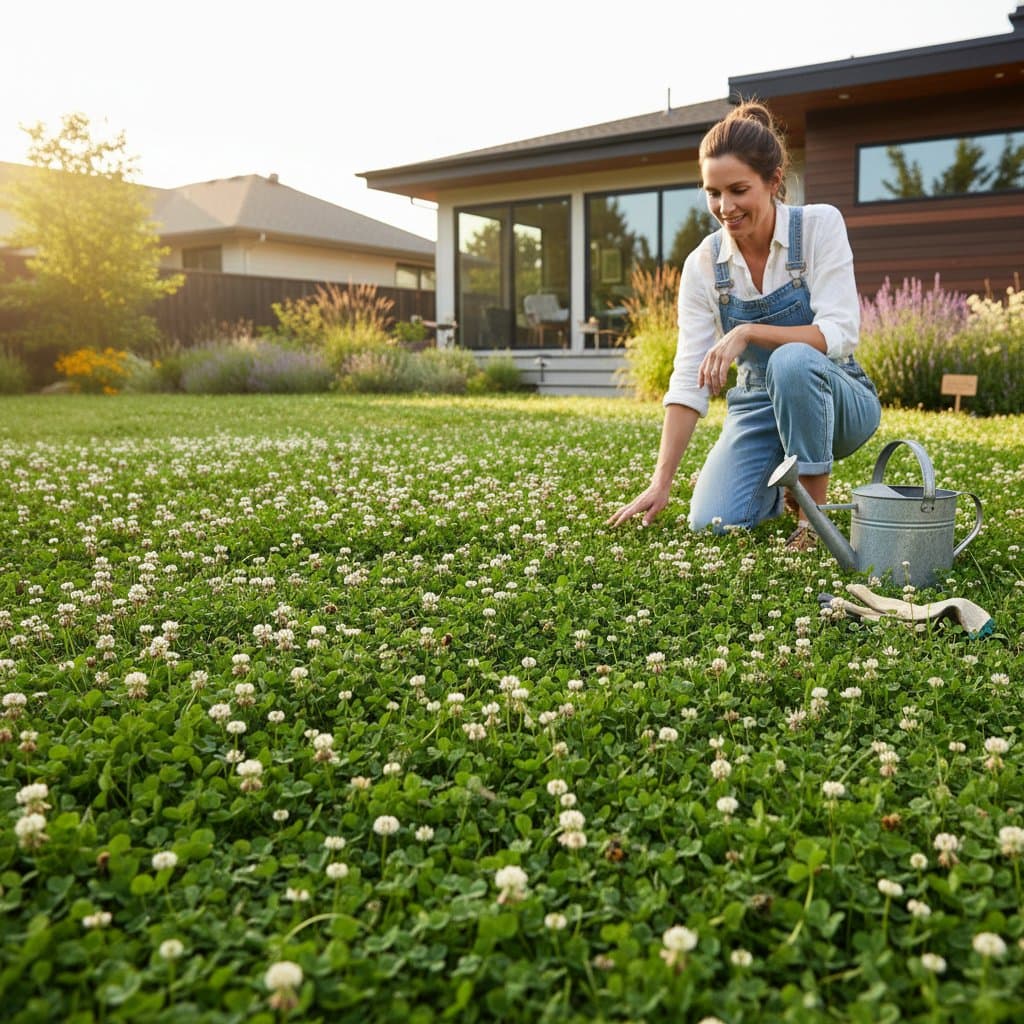
Eliminated Fertilizer Needs: As a legume, clover extracts nitrogen from the air and integrates it into the soil. This inherent process obviates synthetic additives, fostering robust soil biology and trimming yearly expenditures.
-
Infrequent Mowing: Clover reaches a height of six to eight inches and offers a plush, even surface. Homeowners often mow it just once or twice annually for neatness. This approach conserves time, equipment fuel, and reduces emissions from motorized tools.
-
Extended Durability: A well-managed clover lawn persists for years without reseeding. Unlike grass, which suffers from drought or infestations requiring repairs, clover maintains uniform coverage and yields sustained economies.
Key Environmental Advantages
Clover lawns extend benefits far beyond individual budgets, yielding notable ecological gains. The nitrogen fixation process nourishes surrounding flora and strengthens soil integrity. Its thick growth suppresses erosion and discourages invasive weeds, thereby decreasing herbicide applications and cultivating habitats for essential insects.
Clover attracts pollinators like bees and butterflies with its blooms. White clover, in particular, yields petite white flowers that draw these visitors without dominating the landscape. To address concerns about insects near recreational zones, schedule mowing prior to full flowering for optimal balance.
Additionally, clover moderates ambient heat. Its wide leaves deflect solar rays and hold humidity, lowering temperatures near outdoor amenities. This cooling influence enhances comfort in sun-baked summers.
Selecting Appropriate Clover Types
Various clover species suit lawn applications, each offering distinct characteristics in appearance and adaptability. Popular choices include:
-
White Clover (Trifolium repens): This longstanding option creeps low and expands rapidly, featuring diminutive white blooms and handling routine activity well.
-
Microclover: A refined white clover variant developed for turf integration. It pairs seamlessly with grass or functions independently, providing a refined texture, drought resistance, and tidy form.
-
Strawberry Clover (Trifolium fragiferum): Growing somewhat taller, this type withstands saline conditions and compacted soils, making it suitable for seaside properties or difficult terrains.
Evaluate your site's sunlight, soil composition, and intended activities when choosing. Combining clover with a modest amount of resilient grass produces a versatile hybrid that maximizes strengths from both.
Steps to Create a Clover Lawn
Establishing a clover lawn involves simple preparation to support strong root establishment. Focus on preparing an optimal base for growth.
-
Prepare the Ground: Eliminate current vegetation and aerate the upper soil layers. Clover favors permeable sites and a level seeding area.
-
Assess and Adjust Soil: Aim for pH levels between neutral and mildly acidic. Incorporate compost to enhance structure and percolation if needed. Refrain from applying nitrogen-rich amendments at planting, as clover generates its own.
-
Distribute Seeds Uniformly: Scatter seeds manually or via spreader for even coverage. Rake lightly to bury them shallowly, then irrigate softly to secure them.
-
Maintain Moisture During Germination: Sustain damp soil until sprouts emerge. Transition to infrequent watering post-establishment to promote deeper roots.
-
Steer Clear of Chemicals: Standard herbicides target clover, so opt for manual removal of intruders or organic barriers to control growth.
Clover forms a compact green layer within weeks, densifying progressively. The shift yields a lively, economical turf that endures seasonal challenges.
Effortless Upkeep Strategies
Clover lawns require minimal intervention to flourish. A single or double annual mowing ensures uniformity. Supplemental watering during intense heat preserves hue, although clover withstands brief droughts adeptly. Refresh with overseeding periodically to bolster thickness and address sparse areas.
Pest and disease resistance limits the need for treatments. For irregular spots, apply a thin compost layer to revitalize and nurture microbial activity. This self-sustaining approach delivers a perpetually vibrant and hospitable yard.
Enhancing Everyday Outdoor Experiences
An established clover lawn alters interactions with your property. Its yielding texture invites bare feet, casual lounging, or gatherings. The faint aroma and understated blooms infuse subtle elegance without intrusion. Owners report greater leisure time outdoors, freed from rigorous care routines.
Clover harmonizes with elements like paved walks, planted borders, or lounging zones. The organic feel offsets rigid surfaces, yielding cohesive and inviting designs. For pet-inclusive homes, it simplifies cleanup and endures play robustly, surpassing many grass options.