
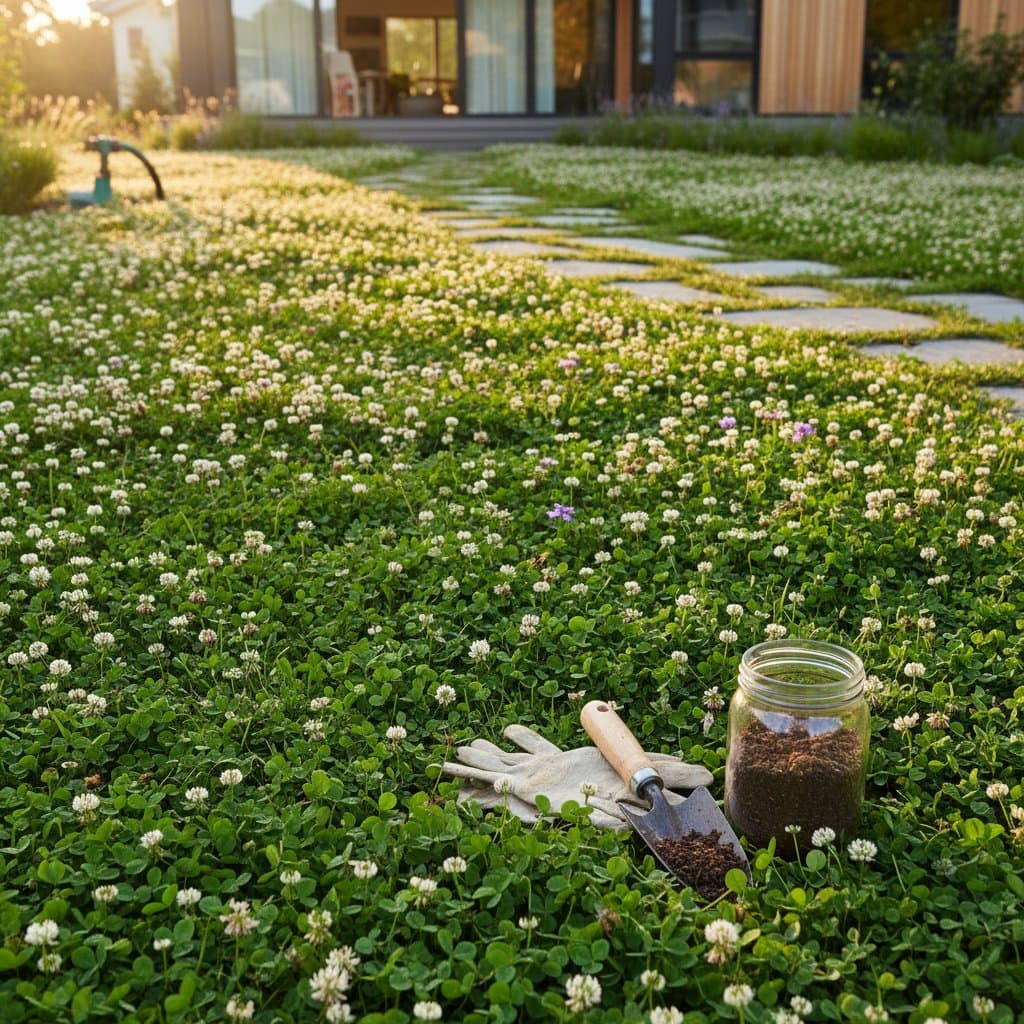
Clover Lawns Gain Popularity as Sustainable Grass Alternatives
Homeowners increasingly seek alternatives to traditional turfgrass that demand less time and resources. Clover lawns emerge as a compelling option, providing a dense, green cover that requires minimal watering and chemical inputs. This shift not only simplifies yard care but also enhances environmental benefits, such as improved soil fertility and support for local wildlife.
Clover varieties offer a soft texture underfoot and a natural appearance that integrates seamlessly with garden designs. They perform well in areas where grass often falters, such as shaded spots or poor soil conditions. By adopting clover, property owners create landscapes that align with sustainable practices while maintaining visual appeal.
Establishing a Successful Clover Lawn
1. Select the Appropriate Clover Variety
The choice of clover type determines the lawn's overall performance and aesthetic. White clover serves as a popular selection due to its low growth habit and ability to spread uniformly across the surface. Microclover, a smaller-leaved cultivar, provides an even finer texture and integrates effectively with existing grass or as a standalone cover.
One key advantage lies in clover's capacity to fix atmospheric nitrogen into the soil, thereby reducing reliance on commercial fertilizers. This process enriches the ground naturally, benefiting surrounding vegetation and promoting long-term soil vitality. A landscape designer observes, "Clover establishes its own fertility mechanism, resulting in reduced external inputs and sustained yard health over time."
For optimal visual harmony, consider blending clover with compatible grasses like fine fescue or perennial ryegrass. Such mixtures create smooth transitions to garden borders and pathways, while adding depth to the lawn's appearance.
Visual callout: Close-up of microclover foliage creating a compact, vibrant green carpet.
2. Prepare and Plant Clover Seeds Effectively
Proper site preparation ensures clover establishes strong roots and dense coverage. Begin by clearing the area of weeds and loosening the topsoil to a depth of two to three inches. Rake the surface smooth and remove debris to create an even seedbed.
Clover seeds possess a small size, necessitating careful distribution to prevent uneven growth. Combine the seeds with sand or fine sawdust at a ratio of one part seed to four parts carrier material, then broadcast evenly using a spreader. Lightly rake the seeds into the soil and roll or tamp the area gently to improve seed-to-soil contact.
3. Water and Nurture Emerging Seedlings
After planting, initiate watering with light, frequent applications to maintain consistent moisture in the top inch of soil. This regimen typically lasts one to two weeks until germination occurs, after which seedlings develop deeper roots. Once established, clover demands significantly less irrigation than conventional turf.
In arid climates, provide deep watering sessions every two to three weeks during dry periods. The plant's extensive taproot system accesses subsurface moisture, enabling it to endure heat and drought with minimal browning. Additionally, clover's canopy shades the ground, conserving soil moisture and suppressing weed germination.
A landscape contractor notes, "After clover roots firmly, water needs drop to a small percentage of those for turfgrass. Homeowners often realize substantial savings in both time and utility bills from this efficiency."
Visual callout: Fine mist from a sprinkler nourishing young clover sprouts in freshly seeded soil.
Maintaining Your Clover Lawn for Long-Term Success
4. Minimize Routine Care and Expenses
Conventional lawns necessitate regular mowing, fertilization, and pest control, which accumulate considerable costs. Clover disrupts this pattern by exhibiting slow vertical growth, inherent nitrogen production, and strong weed suppression. As a result, mowing frequency decreases to every three to four weeks, allowing storage of equipment for extended periods.
The plant demonstrates notable resistance to common lawn pests, diminishing the need for chemical interventions. This durability preserves the lawn's condition with basic oversight, leading to reduced seasonal expenditures on supplies and labor. Over time, these efficiencies contribute to a more economical and environmentally sound yard.
An environmental specialist comments, "Clover lawns illustrate how minimal intervention yields an elegant outcome. They embody sustainability in a tangible, everyday form."
Visual callout: Idle gardening tools placed near a thriving, neatly trimmed clover patch.
5. Manage Seasonal Changes and Resilience
Clover maintains its green hue through moderate winters and rebounds swiftly following cold snaps. In summer heat, growth may moderate, yet the plant seldom suffers complete dormancy. This adaptability suits a range of climates, from temperate zones to transitional areas.
Annual overseeding in early spring or fall replenishes coverage and addresses wear from foot traffic. Apply a light scattering of seeds over the existing lawn and water thoroughly to encourage integration. Steer clear of herbicides, which disrupt clover's beneficial nitrogen fixation and overall ecosystem balance.
A lawn care consultant advises, "Clover thrives under gentle management. Minimal disturbance fosters greater equilibrium and vitality."
Visual callout: Fresh green clover shoots pushing through soil in early spring after dormancy.
6. Integrate Clover into Broader Landscape Designs
Clover lawns extend beyond mere ground cover; they enhance entire outdoor spaces. Pair them with native perennials or drought-tolerant shrubs to form cohesive, water-wise gardens. In high-traffic zones, reinforce edges with stone borders to define play areas or seating spaces.
This approach not only conserves resources but also elevates biodiversity. Pollinators flock to clover's flowers, while improved soil supports robust plant growth nearby. Designers appreciate how clover adds subtle movement and color variation throughout the seasons.
Benefits of Embracing a Clover Lawn
A well-established clover lawn alters the sensory experience of a property, from its cushioned feel to the quiet absence of frequent mowing. Rain releases a faint, earthy scent, inviting closer connection with nature.
Ecologically, clover fosters harmony among bees, butterflies, and beneficial soil organisms, yielding a yard that sustains itself. For residents and professionals, this choice signifies progress toward effortless, enduring landscapes. It demonstrates that vibrant greenery stems from informed decisions rather than exhaustive labor.