
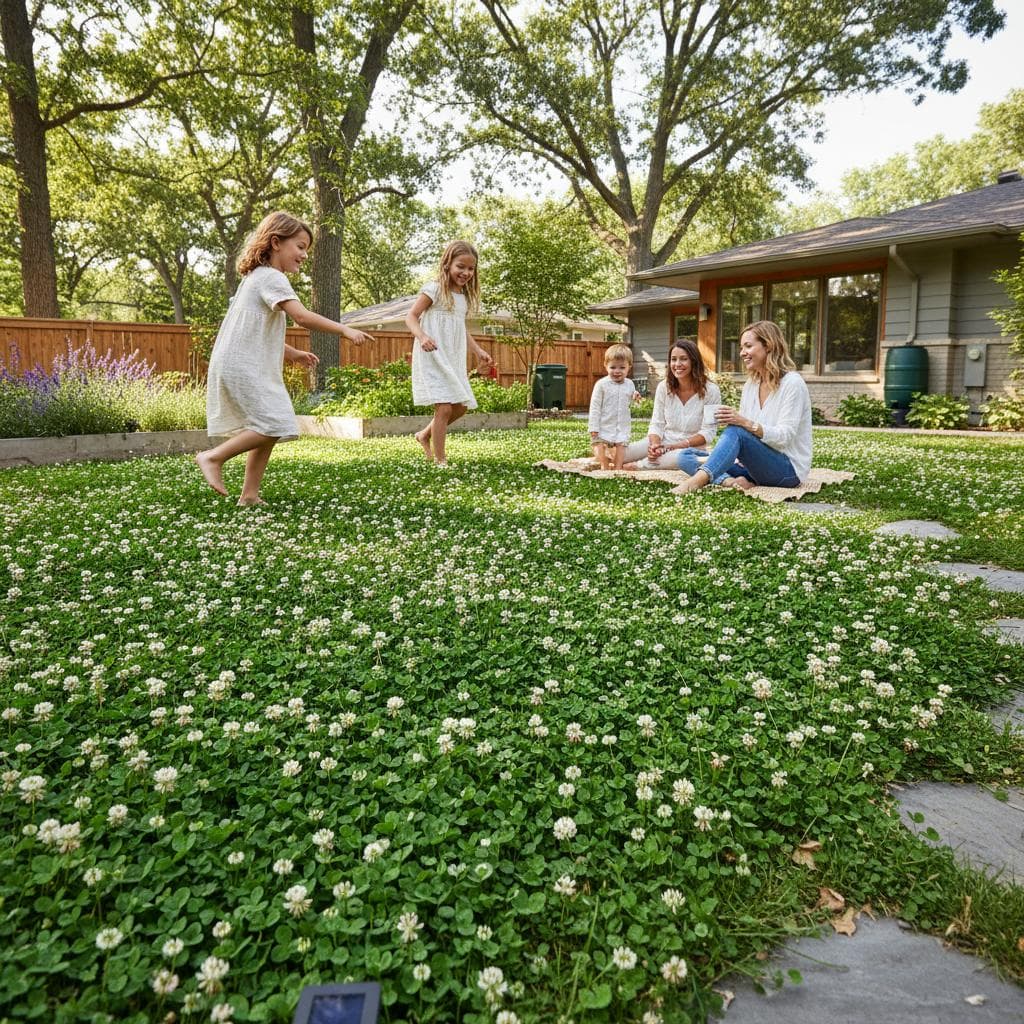
Why Families Choose Clover Over Traditional Grass
When Julie and Mark bought their suburban home, the spacious backyard promised endless possibilities for family gatherings. However, the traditional grass lawn required constant attention, from frequent mowing to battling dry spots during summer heat. Their landscape designer introduced clover as a practical alternative, delivering a lush, durable surface that supports active lifestyles with far less effort.
Clover lawns address common pain points for homeowners with limited time. They thrive in varied conditions, reducing the weekend warrior routine that grass demands. This shift allows families to focus on enjoyment rather than upkeep.
Key Advantages of Clover for Everyday Use
Clover stands out for its self-sustaining qualities. It captures nitrogen from the air to fertilize the soil naturally, eliminating the need for synthetic products that can harm local water sources. During dry spells, clover maintains its vibrant green hue with up to 50 percent less irrigation than grass, based on typical suburban conditions.
Pest resistance adds another layer of appeal. Clover repels common lawn invaders like grubs and chinch bugs through its dense growth pattern, minimizing the use of pesticides. Pollinators flock to its small white flowers in spring and summer, boosting garden productivity for nearby fruit trees or vegetable patches.
Mark noted the immediate difference: "We cut our watering schedule in half, and the yard still looks perfect." The designer emphasized selecting white clover varieties for their low stature and quick establishment, ideal for high-traffic family yards.
Enhancing Comfort and Visual Appeal
Established clover offers a plush feel underfoot, with trifoliate leaves creating a soft, springy mat that cushions playtime or picnics. Unlike grass, which can thin out under heavy use, clover rebounds quickly, maintaining even coverage even after games of tag or pet romps.
The color palette provides subtle depth, blending deep emeralds with lighter tones that shift with sunlight. This dynamic look prevents the monotonous flatness of some turf varieties. On Julie and Mark's property, the clover's slope-holding roots stabilized the terrain, reducing mud after rains and preventing washouts.
For families, this translates to safer, more inviting spaces. Barefoot walks reveal a gentle texture that invites relaxation, while the lawn's resilience supports outdoor toys and furniture without wear marks.
Environmental and Practical Benefits
Clover promotes healthier ecosystems by improving soil aeration and organic matter. Its deep roots break up compacted earth, enhancing drainage and reducing erosion risks on inclined lots. Homeowners report fewer weed issues, as clover outcompetes intruders through rapid spreading.
Water conservation stands as a major draw. In regions with restrictions, clover uses shallow roots to access moisture efficiently, staying green through droughts that brown out grass. The designer highlighted how this choice lowers utility bills and aligns with sustainable living goals.
Chemical reduction follows suit. Without fertilizers or herbicides, clover minimizes pollution risks. Blossoms draw beneficial insects, creating a balanced yard that supports broader biodiversity. The family observed more butterflies and bees, which in turn aided pollination for their herb garden.
Mowing frequency drops significantly, often to every two weeks versus weekly for grass. This saves time, fuel, and equipment wear, allowing busy parents to reclaim hours for family activities.
Integrating Clover into Family Landscapes
Clover adapts seamlessly to mixed designs, enhancing rather than dominating the space. In Julie and Mark's yard, a flagstone patio anchors one corner, edged by clover that flows naturally around the stones. Low-growing native perennials frame the edges, adding color bursts without competing for resources.
Raised vegetable beds benefit from clover's proximity. It acts as living mulch, retaining soil moisture and blocking weeds around herb plots. A simple gravel walkway divides the areas, with clover spilling over to create soft borders that require no trimming.
Evening ambiance comes from strategically placed lighting. Brushed aluminum path lights cast a warm glow on the clover's surface, highlighting its texture after dusk. Solar options keep installation straightforward and energy-efficient.
To incorporate clover, start with soil testing for pH balance, ideally between 6.0 and 7.0. Overseed existing lawns in fall for best germination, or sod for quicker results. Mix with fescue grass for hybrid durability if full clover seems too bold.
Enjoying a Low-Effort, High-Impact Yard
Several months post-installation, Julie and Mark host barbecues and playdates with ease. The clover lawn serves as a versatile hub, from impromptu soccer fields to shaded reading nooks. Maintenance now involves occasional edging and a light mow, freeing weekends for shared adventures.
Julie shared, "The yard feels like an extension of our home, always ready for us." This practical evolution proves clover's value: it delivers the green oasis families crave, backed by science and simplicity.
For those considering the switch, consult local experts to match clover types to your climate. The result is a resilient, beautiful space that nurtures both family bonds and the environment.