
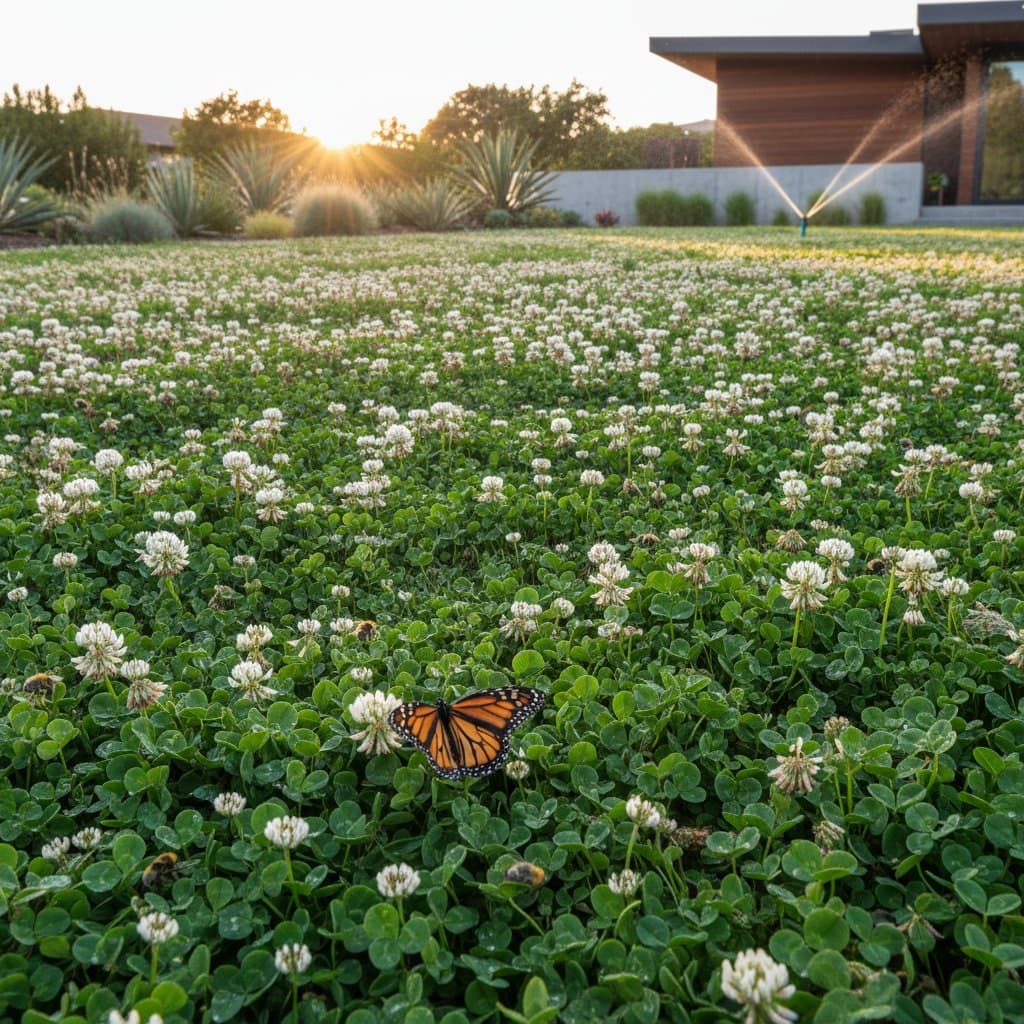
Clover Lawns: 70 Percent Less Maintenance Than Grass
Homeowners seeking a vibrant green yard often contend with the demands of frequent mowing, watering, and fertilizing that traditional grass requires. Clover offers a strong alternative that cuts maintenance by about 70 percent compared to turfgrass. This plant stays green through dry spells and supports pollinators, which makes it suitable for California residents who want to save water, time, and money while keeping visual appeal.
Why Clover Works Well as a Lawn Alternative
Clover has shifted from a common weed to a dependable ground cover in modern landscapes. This evolution comes from its reliable performance and environmental advantages. Unlike turfgrass, which struggles in heat, drought, and poor soil, clover grows well with minimal care.
As a legume, clover fixes nitrogen from the air into the soil, feeding itself and surrounding plants without the need for synthetic fertilizers. Its deep roots improve soil aeration and hold moisture, which proves especially useful in dry areas. For anyone tired of striving for a perfect lawn, clover provides a soft, walkable surface that fits into various garden styles.
Quantifying the Maintenance Benefits
Standard turfgrass lawns call for weekly mowing during growing seasons, watering two or three times a week in summer, and multiple fertilizer applications each year. Clover changes this pattern in meaningful ways.
Here are key comparisons:
- Mowing Frequency: Cut clover every three to six weeks to manage height or reduce flowers for a neat look.
- Water Needs: Clover requires roughly one-third the water of typical grass, leading to real savings in California's dry regions.
- Fertilizer Use: Skip applications entirely, since clover builds soil nutrients on its own and avoids chemical pollution in local water sources.
- Weed Control: The thick growth of clover crowds out most weeds, so skip herbicides or manual removal.
- Pest Resistance: Clover resists common lawn pests effectively, which cuts down on pesticide applications and related hazards.
Together, these elements explain the 70 percent reduction in upkeep. Homeowners gain more free time for enjoyment instead of yard tasks.
Choosing the Right Clover Variety
Different clover types exist, and the best choice depends on yard size, local weather, and how the space will get used.
- White Dutch Clover: This popular pick grows low, handles some foot traffic, and keeps a consistent green color. It works well in play areas or general lawn spots.
- Microclover: With smaller leaves and uniform spread, it blends easily with grass to create a refined hybrid that feels comfortable underfoot.
- Strawberry Clover: Growing taller, it adapts to salty or worn-out soils and thrives in coastal or challenging spots.
In California, white Dutch or microclover stand out for their toughness, looks, and low care needs. They handle summer heat with occasional watering and recover quickly from activity.
How to Convert an Existing Lawn to Clover
Switching to clover involves careful steps, best done in early spring or fall, with some patience during the establishment phase.
- Clear Existing Plants: Mow the current grass short and remove debris. In areas with heavy weeds, add a light compost layer or use solarization to suppress growth before seeding.
- Prepare the Soil: Clover prefers well-drained soil with a neutral pH. Aerate or rake the surface gently to help seeds make good contact and germinate.
- Sow Seeds Evenly: Spread clover seeds by hand or with a broadcaster at 4 to 6 ounces per 1,000 square feet. Mix seeds with sand or damp sawdust for better distribution.
- Water Gently: Keep the top inch of soil moist until seeds sprout, usually in 7 to 14 days. Ease back on watering as roots take hold.
- Wait Before First Mow: Let plants reach 4 to 6 inches high before trimming, which helps build strong roots.
For a smoother shift in appearance, mix clover seeds with tough grasses like fine fescue. This combination creates a sturdy, easy-care area that resembles a traditional lawn.
Visual and Environmental Benefits
Clover lawns go beyond convenience to improve looks and ecology. The fine leaves and soft green tones create a calm, natural setting. In spring and summer, tiny white flowers attract bees and butterflies, which boosts nearby wildlife.
On the environmental side, these lawns use less water, avoid chemicals, and reduce pollution from gas-powered mowers. Clover also cools the air through transpiration, making outdoor spaces more pleasant in hot weather.
For families with kids or pets, the soft ground and lack of treatments add safety. Flowers might cause light stains on clothes, but the gains in eco-friendliness and style make it worthwhile.
Managing Expectations and Common Questions
Clover stands apart from grass, and knowing its traits helps with smooth integration.
- Color Consistency: Clover might lighten in extreme heat or cold but bounces back without help.
- Flower Management: Mow regularly to limit blooms for a trimmed appearance, or let them grow for a meadow-like vibe.
- Foot Traffic Handling: It copes with daily use, but busy paths do better with stepping stones or added grass.
- Year-Round Growth: In California's mild weather, clover stays green most of the time, though it may rest briefly in cooler inland spots.
Keeping expectations realistic underscores clover's strengths without forcing grass-like results.
Fitting Clover into Your Overall Landscape
Clover blends easily into California's drought-smart gardens that value variety and low input. Pair it with local plants like California buckwheat, manzanita, or lupine to build cohesive scenes.
Use stone borders or gravel paths to outline clover areas and direct foot traffic. Near patios or benches, clover softens concrete edges and scatters gentle light for inviting spots.
Maintaining and Appreciating Your Clover Lawn
Once set, clover needs little ongoing work: mow now and then, water deeply during long dry periods, and trim edges occasionally. Over time, the soil becomes richer and more stable, which helps the whole yard.
This setup frees up hours from routine chores, so spend them watching pollinators or lounging in the cool shade. Clover supports California's focus on living in balance with the environment.
Choosing clover promotes resource conservation and eases yard care. The outcome is a tough, good-looking space that improves everyday experiences with 70 percent less effort.