
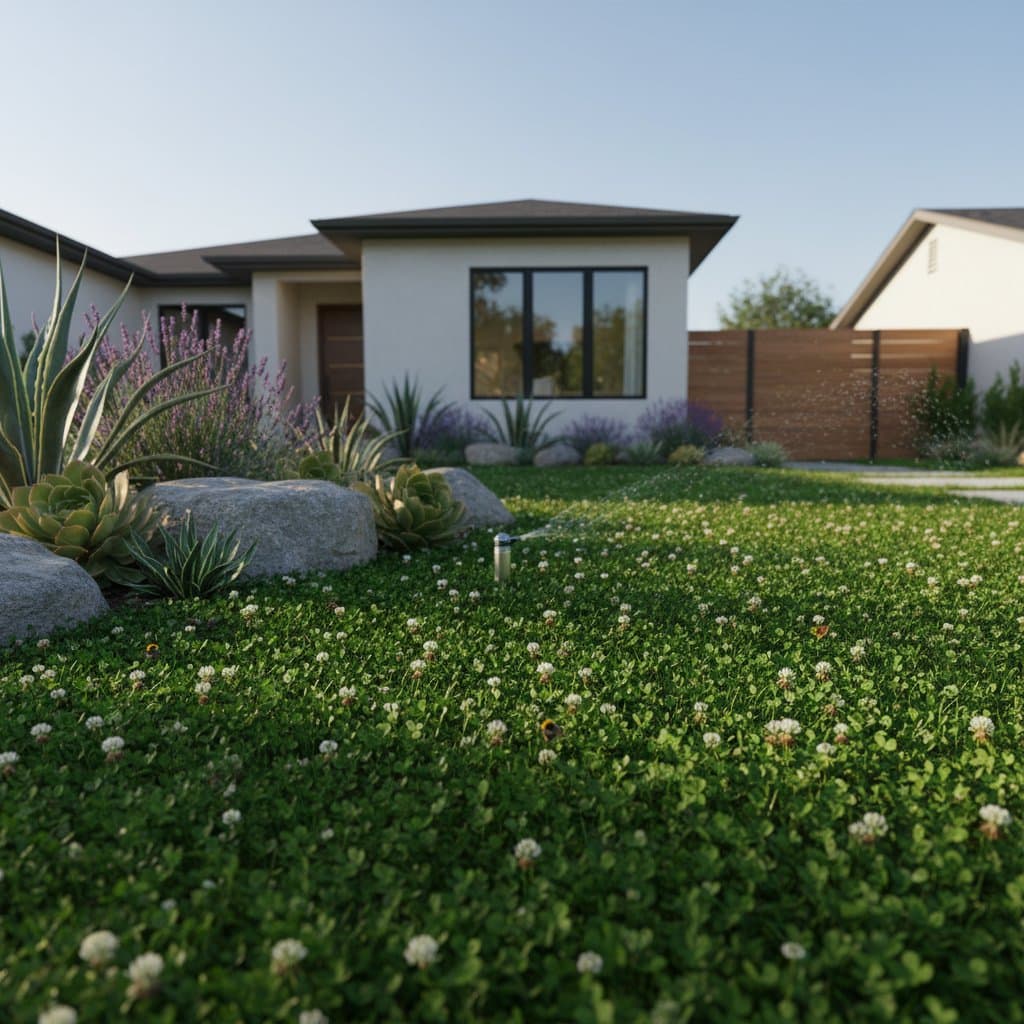
Clover Emerges as a Sustainable Alternative to Traditional Lawns in 2026
California homeowners have long pursued the ideal green lawn, yet many now question this approach amid escalating water challenges. Clover stands out as a resilient ground cover that challenges conventional turf. This option delivers a verdant, undemanding, and ecologically sound substitute, aligning seamlessly with the state's arid conditions and emphasis on conservation.
Reasons Clover Lawns Appeal to Property Owners
Clover lawns combine aesthetic allure with functional advantages. The plants feature a plush texture, rich emerald hue, and capacity to remain vivid with sparse irrigation, attracting those frustrated by frequent mowing, nutrient applications, and discolored areas. Clover's inherent nitrogen fixation enriches the soil organically, sustaining itself and adjacent vegetation without reliance on artificial amendments. This autonomy yields reduced costs, minimized pollutant leaching, and enhanced ground quality progressively.
Residents in California and similar parched locales tire of restrictions curtailing their outdoor visions. Clover endures where turf falters, preserving its vibrancy through extended dry spells and recovering swiftly post-precipitation. Homeowners gain a resilient expanse that maintains freshness absent rigorous intervention.
Optimal Clover Varieties for Lawn Applications
Clover species vary in suitability for landscaping. Microclover and white Dutch clover rank as premier selections, each offering distinct attributes to suit specific site objectives.
-
Microclover boasts petite leaflets that integrate smoothly with companion plants. It develops a compact layer that inhibits weed intrusion, provides a gentle surface for foot traffic, and presents a polished demeanor suitable for visible entryways.
-
White Dutch clover attains modest height and suits informal zones or expansive plots. It fosters a pastoral ambiance that residents often appreciate for its casual elegance.
Individuals seeking diversity may interplant clover alongside resilient grasses to form a composite turf. Grasses contribute framework, whereas clover occupies voids, bolsters fertility, and sustains attractiveness across seasons.
Ecological and Operational Advantages
Beyond visual appeal, clover lawns yield tangible environmental gains that support regenerative horticulture. Principal benefits encompass:
-
Water conservation: Clover demands far less hydration than standard grass. After rooting, it sustains coloration via occasional watering.
-
Fertilizer minimization: Nitrogen fixation obviates chemical inputs, safeguarding adjacent water bodies from excess nutrients.
-
Weed control: Thick clover coverage outcompetes invaders through shading, curtailing herbicide requirements.
-
Pollinator enhancement: Blossoms draw bees and allied species, bolstering ecological variety in developed areas.
-
Soil enhancement: Extensive root systems loosen dense earth, fostering better percolation and durability.
Such attributes position clover as a prudent choice for landscapes that harmonize form with planetary stewardship.
Steps to Implement a Clover Lawn
Transitioning from existing turf to clover involves targeted groundwork, though it proves less intensive than grass installation. Eliminate current vegetation or invasives to clear room for establishment. Till the uppermost soil layer and level it evenly. Disperse seeds manually or via a spreader for uniform coverage. Apply gentle irrigation post-sowing, maintaining steady moisture until germination occurs.
Established clover requires scant upkeep. Periodic trimming promotes uniformity and stimulates regrowth, typically limited to several sessions annually. Refresh sparse areas with additional seeding biennially to preserve density. In arid or coarse soils, incorporate organic matter prior to sowing to bolster retention and seedling vigor.
Integrating Aesthetics and Utility
Clover lawns present certain limitations. They withstand light use but may not suit intense activity; households with energetic youth or animals could blend clover with robust grasses or install stone walks to shield trafficked paths. Flowering yields diminutive white or pink blooms that summon pollinators. Enthusiasts embrace this vitality, whereas others trim preemptively to limit insect presence in recreational spaces. Clover's adaptability accommodates varied preferences.
Visually, clover imparts a gentler, organic vibe compared to groomed turf. It complements California's informal alfresco ethos, harmonizing with pebble terraces, indigenous perennials, and xeriscape designs. Incorporation into contemporary schemes underscores commitments to endurance and restraint.
Enduring Advantages of Clover-Based Landscapes
Clover lawns reshape perceptions of exterior realms. They curtail hydration needs, simplify care, and foster native biomes. Cumulative economies from diminished watering, amendments, and professional services accumulate notably. Fundamentally, these installations embody alignment with natural processes over opposition.
Design specialists increasingly incorporate clover and analogous drought-adapted covers. For remodels or constructions, initiate clover consultations during planning to optimize groundwork and water systems upfront.
Cultivating Lasting Landscape Resilience
A clover lawn demands initial attentiveness yet yields enduring rewards. It commences sparsely but soon yields a robust, lively sward that invites tactile engagement. This evolution advances both scenic and systemic health. Opting for clover aids insect allies, preserves resources, and fortifies earth vitality, all while delivering a verdant haven with effortless oversight.
This progression toward non-turf yards signals evolving Californian attitudes toward habitable environs. Form, endurance, and utility converge effectively.