
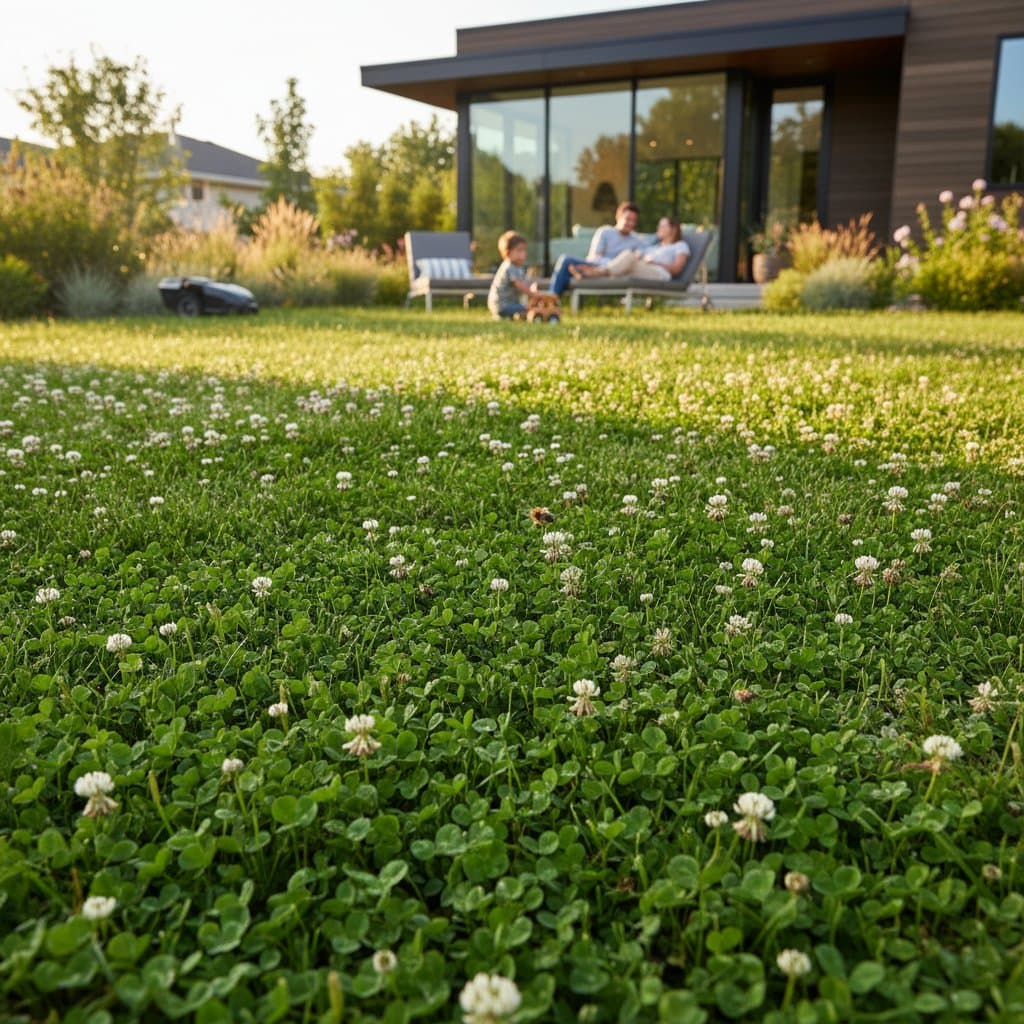
Clover Lawns: A Sustainable Path to Year-Round Greenery
Homeowners frequently struggle to keep lawns vibrant despite increasing water costs and limited time. Clover lawns present an effective alternative, offering thick green coverage with significantly less effort than standard grass. These versatile plants foster welcoming outdoor areas that support both human enjoyment and environmental well-being.
Clover creates a soft, durable turf capable of handling foot traffic and weather variations. The plant requires occasional mowing and fixes nitrogen from the atmosphere to feed itself and surrounding vegetation. With rising demand for eco-friendly landscaping, clover stands out as a progressive option for maintaining appealing yards into 2026 and later.
Key Benefits of Switching to Clover
Clover lawns conserve water effectively, demanding up to four times less irrigation than grass in dry spells. This trait holds particular value in areas with water limits. The deep roots of clover reach moisture sources efficiently, preserving steady coloration without additional watering.
Support for pollinators adds further value. The flowers of clover draw bees and butterflies, increasing biodiversity in the vicinity. By selecting clover over uniform grass, homeowners aid in building stronger local ecosystems.
Savings build steadily over time. Lower requirements for fertilizers, pesticides, and mowing lead to reduced spending. An average household could save several hundred dollars each year, redirecting funds toward other landscaping improvements.
Selecting the Best Clover Variety for Your Yard
The selected clover variety affects both visual appeal and functionality. Microclover, featuring small leaves, blends well into current lawns and produces a fine texture below two inches in height. This variety fits areas with heavy use, such as play zones, where toughness is essential.
White Dutch clover has larger leaves and grows to four through six inches, suiting expansive lawns or wild borders. It expands rapidly to cover empty patches, yielding a meadow-style look. In shaded settings, alsike clover performs better under reduced light than most alternatives.
Professionals suggest checking soil pH prior to planting, targeting 6.0 to 7.0. In full sun, pair clover with fescue grass to boost drought tolerance. Such combinations ensure even appearance while amplifying advantages.
Visual Callout: Microclover's dense growth provides a smooth, carpet-like texture ideal for relaxation.
Establishing a Thriving Clover Lawn
Prepare the soil thoroughly to establish a strong base. Remove weeds and till the upper six inches of ground, then mix in organic material such as compost to improve drainage. Assess nutrient levels and make adjustments, although clover flourishes in average fertility.
Sow seeds by broadcasting two to four pounds across every 1,000 square feet during early spring or autumn. Rake gently to promote seed contact with soil, and water lightly to maintain moisture on the surface until sprouts appear in seven to fourteen days. Restrict heavy traffic for the initial month to support root development.
To transition from an existing grass lawn, cut the grass short and overseed straight into it. Clover will progressively take over as grass diminishes. Full establishment typically occurs within one season, rewarding steady effort.
Visual Callout: Newly germinated clover seedlings spread uniformly, foreshadowing a thick green cover.
Eliminating the Need for Synthetic Fertilizers
Bacteria in clover roots transform atmospheric nitrogen into plant nutrients, removing the need for chemical fertilizers. This mechanism naturally boosts soil quality, aiding nearby grasses and minimizing runoff into water bodies. Lawns remain nutrient-balanced without hazards from excess applications.
A landscape consultant states, "Clover's inherent nutrient provision reduces fertilizer application by up to 75 percent, sustaining yard vitality." Adjacent plants utilize surplus nitrogen, avoiding discoloration. This mutual dynamic promotes enduring soil vitality.
Maintain mowing height at three inches or above to maximize leaf photosynthesis. Avoid added fertilizers, which might encourage grass dominance over clover. Conduct yearly soil tests to verify stable nutrient profiles.
Visual Callout: A lush clover-fescue blend showcases inherent fertility free from chemical aids.
Optimizing Water Use for Drought-Resistant Lawns
The root structure of clover reduces irrigation demands, often relying solely on natural rainfall in moderate climates. Apply deep, occasional watering to foster robust development, whereas frequent light watering weakens roots. Provide one inch of water weekly during the early phase, then taper off as the lawn strengthens.
In dry regions, apply mulch along borders to hold moisture and control weeds. Drip irrigation delivers water precisely, avoiding excess. Clover can enter dormancy in intense heat and revive with renewed moisture.
Reports from homeowners indicate 50 percent less water usage for greener results than with grass. This approach supports conservation efforts and cuts bills. Tailor watering to regional climate patterns for best hydration levels.
Visual Callout: Morning dew on clover leaves illustrates the plant's innate moisture-holding capacity.
Streamlining Mowing and Routine Care
Clover advances slowly, necessitating mowing every two to four weeks instead of weekly. Adjust the mower to three inches to retain leaf area for energy capture. This method encourages density and limits weed intrusion.
A groundskeeper comments, "Clover cuts mowing frequency in half, allowing more time for leisure over labor." Automated mowers manage the tender blades with ease, delivering uniform cuts. Employ sharp blades to avoid torn edges that could foster illness.
Trim edges periodically to outline boundaries and curb overgrowth. These basic tasks maintain tidiness with little exertion. The care routine simplifies over time, becoming both straightforward and satisfying.
Visual Callout: A mower glides over clover, achieving a precise, level finish.
Sustaining Clover Through Seasons and Years
Clover regenerates through rhizomes and seeds, preserving thickness with sparse input. Overseed in spring at one pound per 1,000 square feet to repair winter damage. Rake the surface lightly first to aid seed access to soil.
Certain varieties may fade in color during cold periods but revive swiftly in warmer weather. Leave mulched leaves in place to shield roots and enrich the ground. During peak summer heat above 90 degrees Fahrenheit, use shade coverings if necessary.
A maintenance specialist recommends, "Yearly gentle overseeding guarantees ongoing strength, with soil improving progressively." This minimal strategy enhances resistance to insects and dry spells. Clover lawns frequently endure longer than conventional grass in tough environments.
Visual Callout: Established clover revives strongly post-season, infusing the yard with fresh vibrancy.
Integrating Clover into Daily Outdoor Life
A clover lawn encourages active use, supplying a padded area for gatherings or games. It endures regular activity and mends swiftly from stress. Freed from intensive upkeep, owners can prioritize pleasure.
Environmental advantages include smaller carbon emissions from reduced mowing. Pollinators flourish, improving yields in adjacent gardens. The result is a seamless integration of visual charm and utility.
As time passes, these lawns develop into independent assets that raise property appeal. They exemplify achievable sustainability, yielding lasting allure through simple management.