
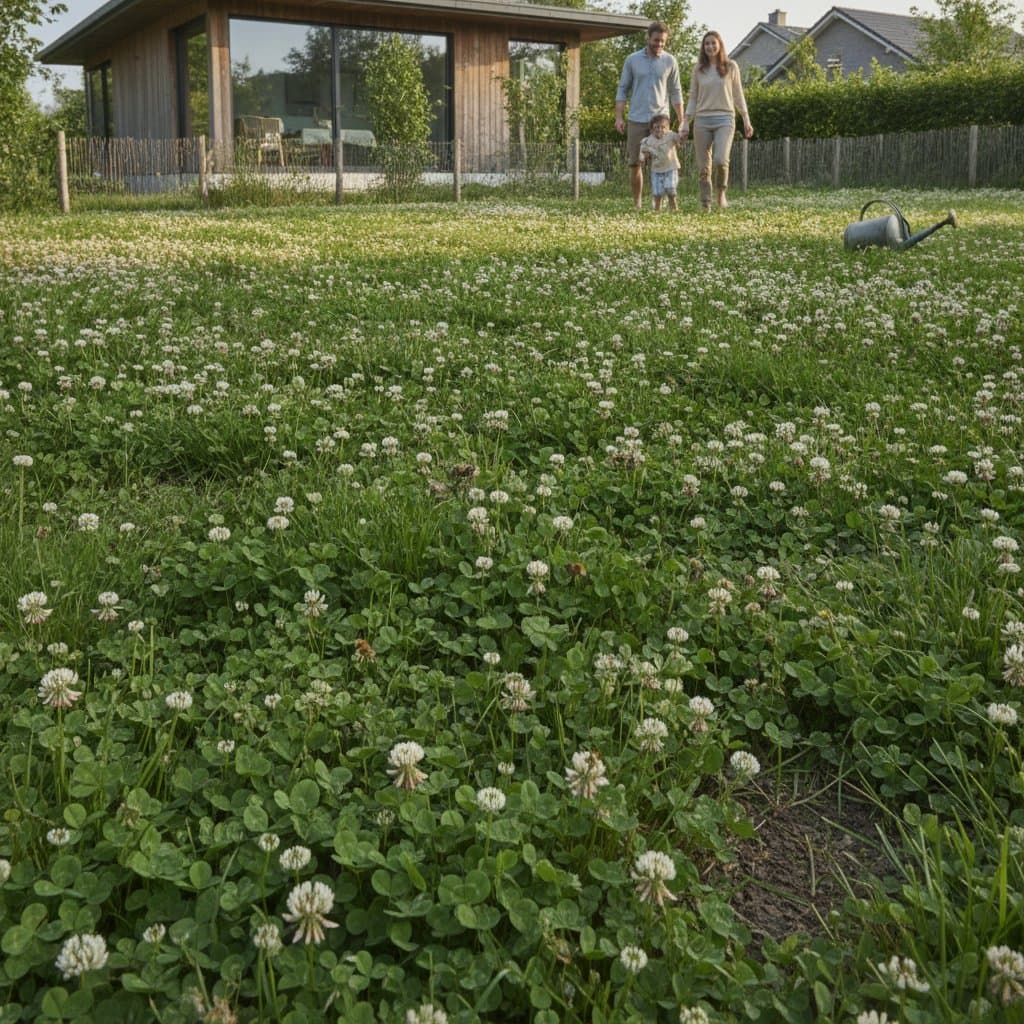
Clover Lawns Offer a Low-Maintenance Eco-Friendly Turf
A lush, green lawn has long been the standard for outdoor living. Traditional turf often demands heavy watering, frequent mowing, and chemical treatments. Clover lawns offer a refreshing alternative that feels soft underfoot, stays green through dry spells, and supports local pollinators. Homeowners and designers alike are turning to clover for its beauty, resilience, and environmental benefits.
At its core, a clover lawn is simple. A carpet of low-growing clover replaces or mixes with grass to create a living groundcover requiring far less maintenance. The result is a landscape that looks natural, feels inviting, and functions as a resilient ecosystem.
At a Glance
- Location: Works in most temperate zones
- Size: Scales easily from small yards to large properties
- Climate Zone: Moderate to warm, though adaptable
- Project Goal: Reduce water use, limit chemicals, and create a pollinator-friendly lawn
Prepare the Soil Thoughtfully
Clover thrives in well-drained soil with moderate fertility. It does not need the rich, heavily amended soil that grass often requires. Basic preparation ensures a strong start and long-term success.
Light soil preparation encourages even growth and reduces patchiness. Rake the soil surface to remove debris, then lightly loosen the top layer. Clover seeds are small, so they need firm soil contact without being buried too deep. In existing lawns, overseed clover directly into thin grass areas. Water lightly until established, then reduce watering to minimal levels.
A horticulturist might say: "Clover seeds germinate best when they are pressed into the soil rather than covered by it."
Rethink Mowing and Maintenance
Clover grows only a few inches tall, which means mowing becomes optional. Many homeowners trim it once or twice a season to encourage even growth. Others let it bloom for bees and beneficial insects.
Less mowing saves time and reduces fuel use. If you prefer a manicured look, mow occasionally at a high setting to keep flowers low while maintaining an even texture. Pair clover areas with decorative gravel or stone paths to highlight the soft green surface against contrasting materials.
A landscape contractor might say: "A clover lawn keeps its color even after a light trim, so you get a polished look without the weekly routine."
Skip the Chemicals
Traditional lawns often rely on synthetic fertilizers and herbicides. Clover, being a natural nitrogen fixer, feeds itself and nearby plants. It also competes strongly with weeds, reducing the need for chemical control.
Lower chemical use means safer play areas for pets and children. Clover dense growth shades out many common lawn weeds, creating a clean, green surface with minimal effort. Combine clover with low-growing yarrow or creeping thyme for a chemical-free, drought-tolerant landscape.
A designer might say: "Once clover fills in, you can store the lawn chemicals for good. The soil becomes healthier on its own."
Integrating Clover into Daily Outdoor Life
Clover lawns ask for less and give more. They stay green without constant care, welcome pollinators without sacrificing comfort, and fit into nearly any landscape style. Whether used across an entire yard or in select zones, they create a living surface that feels alive and resilient.
Over time, clover teaches an easier rhythm of lawn care. Water when needed, mow occasionally, and enjoy the soft texture underfoot. Its natural adaptability means it will adjust to your space, filling in gaps and balancing itself. For busy homeowners and eco-conscious designers, the clover lawn is not only practical but restorative.