
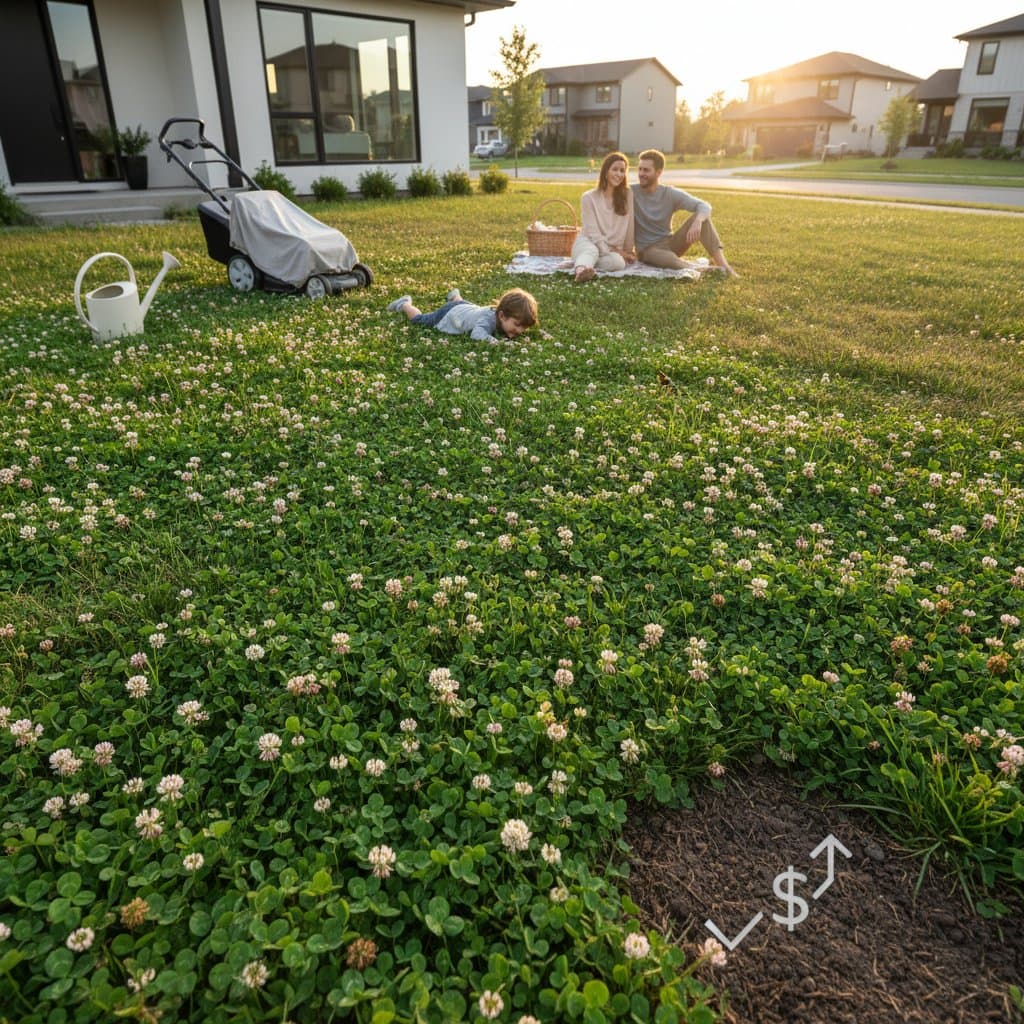
Clover Lawns: A Low-Maintenance Alternative That Saves $800 Yearly
A vibrant green lawn requires far less effort when clover takes center stage. This resilient plant creates a dense, soft carpet that maintains its color with minimal intervention. Homeowners increasingly select clover lawns for their blend of aesthetic appeal, environmental benefits, and significant cost reductions compared to conventional turf.
Clover excels in challenging conditions where grass often fails, quickly filling sparse areas and minimizing upkeep expenses. The outcome includes a yard that remains attractive for extended periods, offers a pleasant texture for walking, and cuts annual spending on fuel, fertilizers, and water by hundreds of dollars.
1. Selecting the Ideal Clover Variety
Success begins with choosing appropriate clover types suited to local climate and soil conditions. White clover (Trifolium repens) stands as a popular choice for its moderate height and ability to withstand regular foot traffic. Microclover, a compact hybrid, delivers finer foliage and integrates smoothly with existing grass for a seamless appearance.
Landscape professionals note that microclover avoids the uneven look of weeds, providing consistent coverage that endures dry periods. Clover naturally fixes nitrogen in the soil through symbiotic bacteria in its roots, which decreases reliance on commercial fertilizers. Designers recommend a blend of 70 percent clover and 30 percent grass to ensure year-round vibrancy without additional inputs.
For instance, such a mix sustains deep green hues through summer heat, eliminating the need for supplemental feeding. This approach not only enhances lawn uniformity but also promotes a resilient, low-growing surface ideal for family use.
Visual suggestion: Close-up image of microclover leaves forming a tight, even mat.
2. Preparing and Planting Your Clover Lawn
Effective establishment demands proper site preparation to support clover's growth. Begin by testing soil pH, aiming for a range of 6.0 to 7.0, as clover prefers slightly neutral conditions. Clear existing weeds and loosen the top six inches of soil to encourage root development.
Broadcast seeds at a rate of 4 to 6 pounds per 1,000 square feet in early spring or fall, then lightly rake them into the soil. Water gently to keep the surface moist until germination occurs, typically within 7 to 10 days. Overseeding thin grass areas with clover introduces the benefits gradually without full renovation.
Horticulturists emphasize that well-prepared beds lead to thicker coverage and fewer future interventions. An example involves aerating compacted lawns before seeding, which improves water infiltration and root penetration for faster establishment.
Visual suggestion: Hands scattering clover seeds over prepared soil.
3. Reducing Mowing Frequency for Time and Cost Savings
Clover's slow growth habit keeps it under six inches tall, allowing homeowners to mow infrequently. Many maintain their lawns with just one or two sessions per season, focusing on edging for neatness. These reductions translate to substantial savings, often totaling $800 per year when factoring in fuel, equipment wear, and labor.
Professionals observe that clover lawns free up weekends for leisure rather than chores. Opt for electric trimmers or manual shears for precise border work, minimizing environmental impact from gas-powered tools. In practice, a simple pass around pathways preserves the natural shape while conserving resources.
This method lowers carbon emissions and extends the life of mowing equipment. Homeowners report reclaiming hours weekly, redirecting effort toward garden enjoyment.
Visual suggestion: Cordless trimmer shaping a clover edge along a stone path.
4. Minimizing Water Needs for Sustainable Greenery
Clover demonstrates remarkable drought tolerance once rooted, requiring up to 75 percent less water than traditional grass. Its deep root system accesses moisture efficiently, and the plant's ability to go dormant during extremes ensures recovery without permanent damage. This trait proves especially valuable in regions with water restrictions.
Garden experts highlight clover's role in conserving resources while upholding lawn aesthetics. Apply one inch of water weekly during establishment, then reduce to occasional deep soakings as needed. Pairing clover with mulch around borders further retains soil moisture and suppresses weeds.
For example, a mature clover lawn might thrive on natural rainfall alone in temperate climates, slashing irrigation bills by hundreds annually. This efficiency supports broader sustainability goals in residential landscapes.
Visual suggestion: Dew-covered clover lawn glistening after light rain.
5. Enhancing Soil Quality Through Natural Processes
Clover contributes to soil fertility via nitrogen fixation, where root-associated bacteria transform atmospheric nitrogen into usable nutrients. This natural mechanism enriches the ground over time, fostering looser texture and increased organic content. Adjacent grass plants absorb these benefits, leading to a more robust overall ecosystem.
Soil specialists explain that clover converts nutrient-poor sites into productive areas within a few seasons. Steer clear of synthetic fertilizers, which can interfere with these biological processes. Testing reveals that clover-integrated lawns often show 30 percent more organic matter after one year compared to grass-only plots.
Such improvements bolster resistance to pests and diseases, reducing long-term care needs. The result includes healthier plants and diminished erosion risks.
Visual suggestion: Cross-section of soil revealing clover roots intertwined with nutrient-rich layers.
6. Maintaining Color and Vitality Across Seasons
Clover retains its lush appearance through varying weather, resisting yellowing from heat or frost better than many grasses. It handles light freezes and bounces back from use, delivering reliable greenery year-round. This consistency eliminates the patchy look common in stressed traditional lawns.
Designers appreciate clover's evergreen quality without excessive watering demands. Integrate it with taller elements like fescue for added dimension and interest. A border of blue fescue around a clover expanse, for instance, offers textural contrast and softens transitions to hardscapes.
This combination extends seasonal appeal, keeping yards inviting from spring through fall. Homeowners enjoy a polished outdoor space with minimal seasonal adjustments.
Visual suggestion: Clover lawn framed by low-growing blue fescue and a winding gravel path.
7. Ongoing Care and Long-Term Benefits
Established clover lawns demand sparse attention, such as occasional edging and reseeding every three to five years to fill gaps. The surface remains plush, accommodates recreation, and avoids the barren patches of overworked turf. Annual savings in supplies and utilities readily surpass $800, positioning clover as a wise investment.
This option suits diverse environments, from urban lots to rural retreats. Define edges with stone or shrubs for a structured feel, and place seating to highlight the uniform green. The inviting texture encourages direct contact, enhancing sensory garden experiences.
Landscape architects point out that clover redirects emphasis from labor to appreciation. It demonstrates how thoughtful choices yield beauty with efficiency.
Embracing the Advantages of Clover
Clover lawns empower homeowners to cultivate sustainable, enjoyable spaces. They foster biodiversity by attracting pollinators, cut operational costs, and simplify daily life. Transform your yard into a thriving haven that demands little while delivering much.