
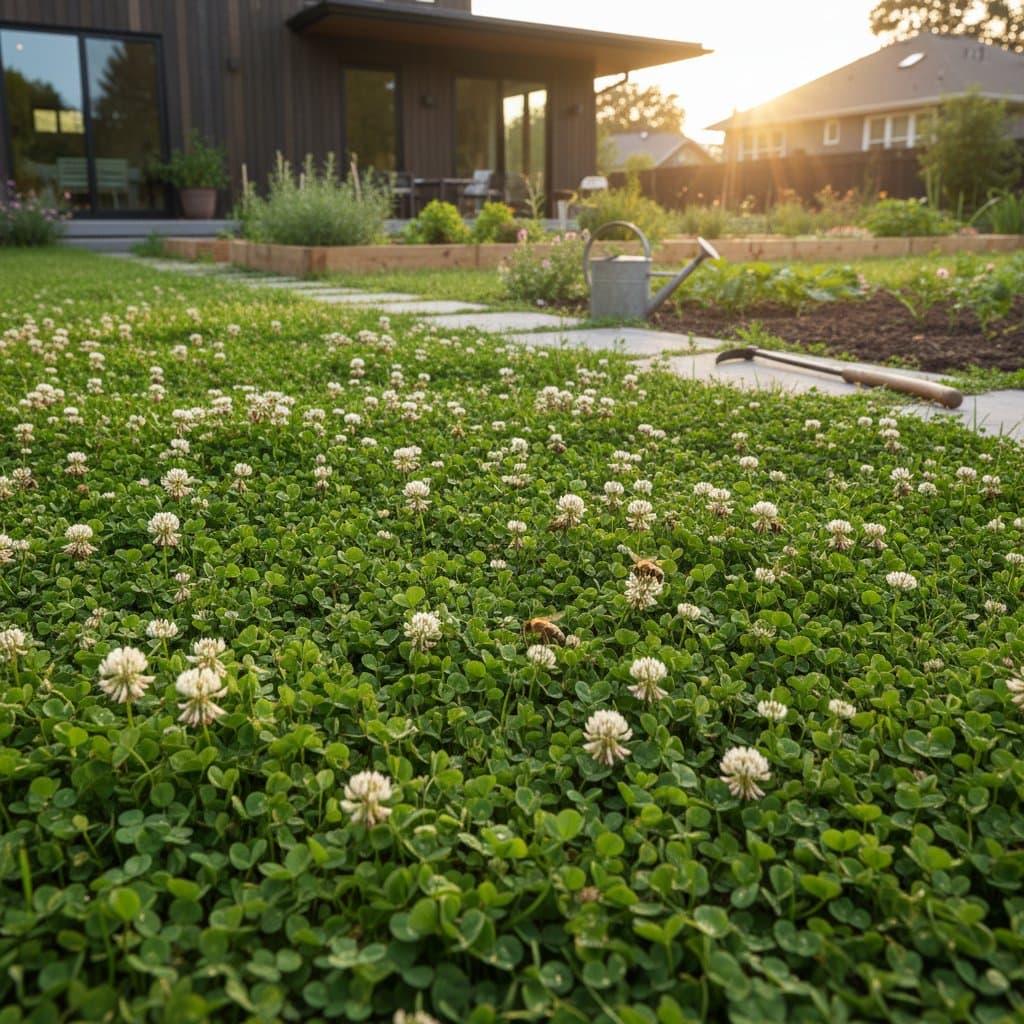
The Rise of Clover Lawns: A Sustainable Alternative to Traditional Turf
Clover lawns challenge conventional ideas about yard maintenance. Homeowners increasingly select this low-growing plant for its ability to create soft, green expanses without the demands of standard grass. Clover maintains its vibrant color, requires infrequent mowing, and provides a pleasant texture for bare feet. Beyond aesthetics, it revitalizes depleted soil and fosters biodiversity in outdoor environments.
This shift toward clover reflects a broader commitment to practical, nature-aligned landscaping. Traditional lawns often rely on synthetic fertilizers, excessive irrigation, and regular cutting, which strain resources and harm ecosystems. Clover, by contrast, operates independently, drawing nitrogen from the air to nourish the ground while supporting essential pollinators. As awareness grows, clover installations have surged by 300 percent, signaling a move toward resilient, low-effort landscapes.
Key Considerations at a Glance
- Suitable Locations: Thrives in temperate and arid regions, adapting to various soil types.
- Scalability: Ideal for compact urban plots or expansive rural properties.
- Climate Compatibility: Excels in cool to moderate warm zones, with tolerance for occasional extremes.
- Primary Objectives: Develop durable, eco-conscious green areas that demand minimal upkeep.
Selecting the Appropriate Clover Type
Clover varieties differ in growth habits and visual appeal, making selection crucial for successful integration. White clover (Trifolium repens) represents a classic choice, reaching heights of about six inches and spreading efficiently to fill spaces. For a more refined appearance, microclover varieties such as 'Pipolina' offer compact growth, forming a tight, grass-like mat that stands at three inches or less.
Experts in turf management emphasize the advantages of microclover for achieving a polished, even surface while retaining clover's inherent softness. This variety withstands moderate foot traffic and integrates smoothly with residual grass patches, minimizing the need for complete yard overhauls. In practical terms, microclover prevents soil erosion by covering bare spots and demonstrates strong drought resistance once established.
From a design perspective, opt for microclover in confined areas where uniformity enhances curb appeal, such as a modest front lawn. White clover suits broader, wilder settings, like meadow-style backyards, where its vigorous spread adds organic flow. Consider a suburban example: a front yard overseeded with microclover merges effortlessly with borders of drought-tolerant lavender and sedum, creating a cohesive, low-water tableau.
Preparing and Seeding for Optimal Establishment
Effective seeding ensures clover takes hold rapidly and uniformly. Begin by clearing the area of debris and loosening the topsoil to a depth of two inches, promoting root penetration. Clover seeds, being small and lightweight, benefit from mixing with sand or vermiculite for even dispersal; apply by hand for small areas or employ a broadcast spreader for larger ones. After sowing at a rate of two to four ounces per thousand square feet, rake lightly to incorporate the seeds, then firm the surface with a roller or by walking across it.
Maintain consistent moisture in the soil during the initial two weeks to encourage germination, which typically occurs within seven to ten days under ideal conditions. Once seedlings emerge, reduce watering to natural rainfall levels, as clover develops deep roots that access subsurface moisture. Full coverage often materializes within one growing season, transforming sparse ground into a dense carpet.
Landscaping professionals note the efficiency of this process: clover's rapid colonization naturally suppresses weed growth through shading and competition. This trait proves especially valuable on slopes, where it stabilizes soil against runoff. For best results, time seeding for late spring or early autumn, when soil temperatures range between 50 and 75 degrees Fahrenheit. An illustrative case involves a backyard incline sown with white clover, which retains lushness and prevents erosion even during intense downpours.
Minimizing Inputs: Fertilizer and Pest Management
One of clover's standout features lies in its nitrogen-fixing capability, where root bacteria convert atmospheric nitrogen into a form usable by plants, eliminating the need for commercial fertilizers. This self-sustaining process not only cuts costs but also prevents nutrient runoff that pollutes waterways. Similarly, clover's thick growth habit outcompetes many weeds, reducing reliance on herbicides, while its natural resilience deters common pests without chemical interventions.
Organic gardening advocates highlight how this paradigm shifts maintenance from adversarial to harmonious: yards become allies in sustainability rather than burdens. By forgoing synthetic inputs, clover lawns create safer environments for children, pets, and wildlife. To maximize ecological benefits, permit the small white flowers to bloom periodically, providing nectar for bees and butterflies, before a light trim to refresh the foliage.
In a family-oriented front garden, blending clover with native violets draws local pollinators while offering a cushioned play surface. Barefoot romps become feasible without worry over chemical residues, underscoring clover's role in fostering healthful, inviting spaces.
Integrating Clover into Landscape Design
Clover's delicate foliage and subtle sheen contribute a velvety texture that elevates outdoor compositions. It complements rigid elements like stone pavers, gravel paths, and wooden structures, softening their edges with organic contrast. The plant's vivid green hue accentuates deeper-toned shrubs or patinaed timber, adding depth to the palette.
Landscape architects appreciate clover's capacity to form a dynamic underlayer, encouraging interaction through its inviting touch. Pathways embedded with clover, for instance, guide movement while blending seamlessly into surrounding plantings. Position it between stepping stones to create fluid transitions or encircle benches for relaxed gathering spots.
Visualize an entryway where irregular flagstone slabs nestle within microclover: this arrangement extends the patio's warmth into garden beds, promoting a sense of continuity. Such designs not only enhance functionality but also amplify sensory pleasure, turning everyday landscapes into restorative retreats.
Adapting to Seasonal Changes
Clover exhibits a natural cycle that aligns with environmental cues, remaining verdant through much of the year in favorable climates. In periods of intense summer heat or winter chill, it may enter dormancy, with foliage yellowing temporarily before rebounding with renewed vigor upon milder weather or precipitation. This adaptability mirrors the resilience of native ecosystems, requiring no artificial support to recover.
Experienced gardeners view these fluctuations as integral to clover's charm, reminding stewards of the fluidity in natural settings. To maintain interest during off-periods, interplant with persistent groundcovers like creeping thyme, ensuring continuous coverage and textural variety.
A courtyard example pairs microclover with golden creeping Jenny, yielding a mosaic of greens and yellows that evolves gracefully across seasons. This combination sustains visual appeal and ecological balance, demonstrating clover's versatility in year-round planning.
Implementing Clover for Lasting Benefits
Transitioning to a clover lawn involves straightforward steps that yield enduring rewards in time savings, resource conservation, and environmental stewardship. Start with soil testing to confirm pH levels between 6.0 and 7.0, adjusting with lime if necessary for optimal growth. Overseeding existing turf provides a gentle entry point, allowing gradual conversion without full renovation.
Monitor progress in the first year, addressing any thin spots with additional seed as needed. Over time, clover's benefits compound: enhanced soil fertility supports companion plants, while reduced mowing lowers carbon emissions from equipment. Homeowners report up to 75 percent less water usage and near-elimination of chemical needs, freeing budgets for creative enhancements.
Ultimately, clover lawns embody a forward-thinking approach to outdoor living, blending beauty with functionality. They invite appreciation for subtle, sustainable changes that enrich both land and lifestyle.