
Practical Advantage: Accurate evaluation prevents costly mistakes and promotes healthy growth.
Design Consideration: Map out areas with tree canopies or north-facing exposures, as these spots mimic moss's natural habitat in forests.
Real-World Application: In a wooded backyard, measuring shade duration reveals optimal zones near oaks, where dappled light supports moss proliferation.
2. Choose the Right Moss for Your Yard
Selecting appropriate moss species aligns with local conditions and aesthetic goals. Horizontal-spreading types like sheet moss create broad mats, while clumping varieties add texture. Consider native options to support regional ecosystems and reduce adaptation challenges.
A horticulturist might say: "Think of moss species like fabrics. Some are plush and thick, others fine and silky. The right texture depends on how you use the space."
Functional Benefit: The correct variety minimizes maintenance and resists bare spots.
Design Insight: Blend species for varied textures; for instance, pair Hypnum moss in deep shade with Bryum moss in brighter edges to build visual interest.
Specific Example: Along a pathway with intermittent light, combining fern moss and cushion moss yields a layered, inviting surface that withstands light foot traffic.
3. Prepare the Ground for Moss Establishment
Clear the area of existing grass and weeds to create a clean base. Rake the soil to remove debris, then amend with peat moss or sulfur to adjust pH if needed. Compact the surface lightly to ensure even settling without compaction that hinders rooting.
A soil specialist might advise: "Preparation is key. A well-prepped bed allows moss to anchor and spread effectively."
Practical Advantage: Proper groundwork accelerates establishment and prevents competition from invasives.
Design Consideration: Incorporate organic matter sparingly to maintain moisture retention while avoiding nutrient overload that favors weeds.
Real-World Application: For a front yard conversion, homeowners strip sod, test pH, and apply lime adjustments, resulting in a receptive surface ready for moss transplantation.
4. Manage Light and Moisture
Moss flourishes under indirect light and consistent humidity, avoiding extremes that cause drying or stagnation. Introduce shade cloth or plant taller perennials to filter harsh rays in sunnier sections. Monitor rainfall and supplement with targeted watering during establishment.
A designer might say: "Moss rewards moderation. Too much shade and it thins, too much sun and it dries."
Functional Benefit: Balanced conditions sustain vibrancy and resilience against seasonal fluctuations.
Design Insight: Install subtle irrigation like soaker hoses to deliver moisture evenly, preserving the moss's natural appearance.
Specific Example: In an enclosed garden with southern exposure, strategically placed trellises diffuse sunlight, paired with morning mists to keep the moss hydrated and lush.
5. Transplant and Install the Moss
Harvest or purchase moss in small clumps, then scatter or transplant them across the prepared area. Press gently into the soil with feet or a board to ensure contact, spacing pieces 1 to 2 inches apart for natural spreading. Water thoroughly after placement to settle the moss and initiate growth.
A gardener might explain: "Transplanting requires care. Secure the moss firmly, and it will knit together over time."
Practical Advantage: Thoughtful installation fosters quick coverage and long-term stability.
Design Consideration: Vary placement density to create patterns, such as denser clusters near seating areas for softer footing.
Real-World Application: During a spring project, a family divides nursery moss into the backyard, walking it in place before a gentle soak, watching it expand into a uniform green within months.
6. Keep Maintenance Simple
Ongoing care focuses on gentle interventions to preserve the moss's integrity. Sweep away leaves and debris regularly, and hand-pull any emerging weeds before they root. Limit traffic to designated paths to avoid compaction.
A groundskeeper might say: "Think of moss care as housekeeping, not yard work. Gentle cleaning keeps it fresh."
Functional Benefit: Minimal efforts yield a pristine surface without chemical inputs.
Design Insight: Employ tools like soft brushes for cleanup, steering clear of mechanical disturbance that uproots delicate growth.
Specific Example: Under autumn foliage, weekly passes with a leaf blower on low speed maintain clarity in a moss-covered meditation spot.
7. Integrate Moss into Broader Landscape Designs
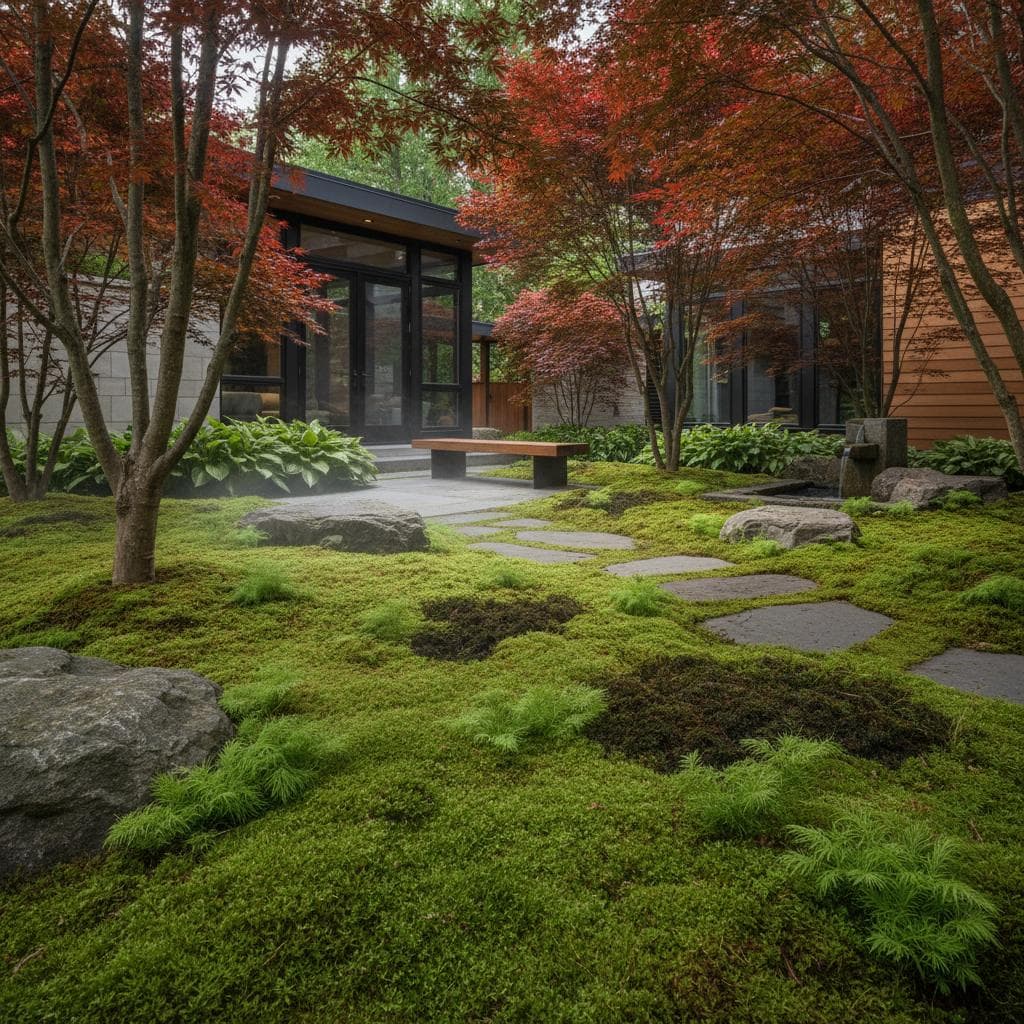
Moss complements other elements by softening hardscapes and filling gaps in plantings. Pair it with stone paths, boulders, or low-growing natives to enhance cohesion. This approach creates flowing transitions that elevate the yard's overall harmony.
A landscape planner might observe: "Integration amplifies moss's charm. It weaves into designs seamlessly."
Practical Advantage: Thoughtful pairing extends the moss's role beyond groundcover, boosting ecological value.
Design Insight: Use moss to edge flower beds or line water features, where its moisture-loving nature thrives.
Real-World Application: Around a koi pond, moss borders flagstone walkways, providing a velvety contrast that invites barefoot strolls.
8. Enjoy Seasonal Changes
Moss adapts gracefully to weather shifts, maintaining appeal year-round. Rain enhances its saturation to vivid greens, while drier times introduce subtle silver hues that rebound swiftly. These variations add depth without demanding intervention.
A horticultural consultant might say: "Moss teaches patience. Its changes are quiet but rewarding."
Functional Benefit: Inherent adaptability ensures consistent beauty across seasons.
Design Insight: Plan for these shifts by selecting companion plants that echo moss tones, fostering a unified palette.
Specific Example: In a hillside garden, post-rain brilliance contrasts with summer's softer shades, always delivering a cohesive, inviting vista.
Cultivate Enduring Outdoor Harmony
Embracing moss lawns invites a shift toward simpler, more sustainable yard care. These living tapestries not only reduce labor but also foster connections with nature through their tactile allure and ecological benefits. With deliberate planning and light touch, moss transforms ordinary spaces into enduring retreats of calm and vitality.