
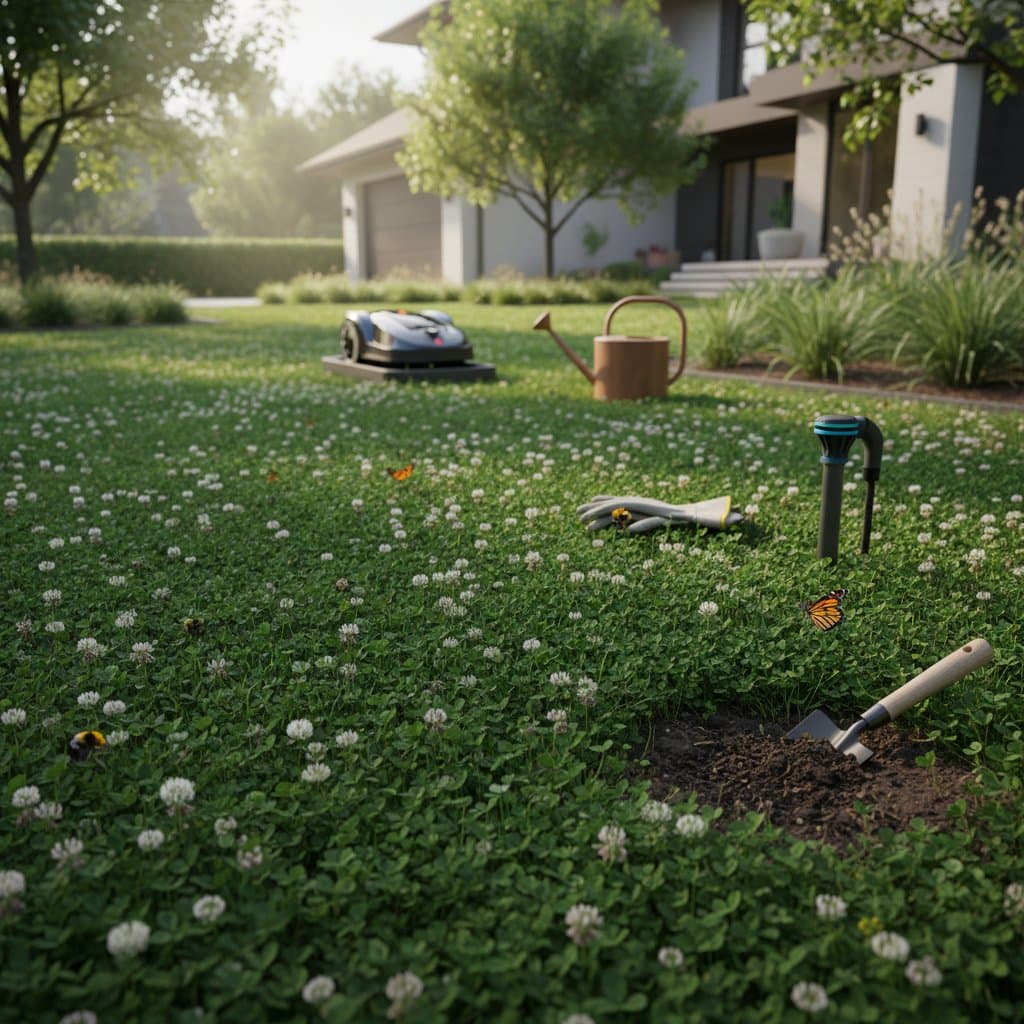
Introduction to Clover Lawns
Clover lawns offer a practical shift in yard management. They maintain a compact height, retain their green hue during droughts, and provide habitat for pollinators. Homeowners seeking relief from frequent mowing and excessive watering find in clover a viable option that aligns with sustainable outdoor living.
Key Characteristics
Suitable Locations: Performs well in temperate regions across the United States.
Recommended Sizes: Best for small to medium yards, though scalable to larger properties with proper seeding.
Climate Adaptability: Flourishes in areas with moderate precipitation or supplemental watering.
Primary Objective: Substitute conventional grass with a durable, environmentally beneficial ground cover.
Benefits of Reduced Mowing
Clover lawns demand little from the mower. The plants typically reach heights of four to eight inches and maintain a neat appearance without regular cuts. Occasional trimming, perhaps two or three times per year, promotes denser growth and prevents legginess.
This approach conserves time, fuel, and effort. Lawns remain serene without the disruption of machinery or scheduled labor. The soft texture underfoot and subtle visual appeal enhance the sensory experience of the space.
A turf specialist notes, "A single annual trim suffices to maintain an orderly clover lawn, avoiding the wild appearance of unchecked growth."
Core Advantage: Lowers ongoing maintenance and resource consumption.
Practical Tip: Incorporate edging materials to outline boundaries cleanly.
Real-World Application: Install steel borders along pathways to preserve sharp divisions between clover areas and adjacent surfaces.
Enhancing Pollinators and Soil Health
Clover lawns foster biodiversity both above and below ground. The delicate flowers draw bees, butterflies, and other helpful insects, creating a supportive environment for local ecosystems. Deep roots aerate the soil, incorporate nitrogen, and build organic content that sustains long-term vitality.
This dynamic covering nurtures soil organisms such as earthworms and bacteria, which in turn improve water infiltration and nutrient availability. Over seasons, the yard evolves into a more resilient and fertile foundation.
A horticulturist observes, "Clover restores ecological balance to lawns, converting barren turf into a thriving habitat that benefits surrounding plant life."
Core Advantage: Increases pollinator activity and soil quality.
Practical Tip: Permit sections to bloom undisturbed before any mowing to maximize insect support.
Real-World Application: Position clover near vegetable or fruit gardens to aid pollination and boost yields.
Water Conservation and Drought Tolerance
One standout feature of clover lawns lies in their efficient water use. Unlike thirsty grasses, clover secures moisture through extensive root systems and nitrogen-fixing abilities, often requiring half the irrigation of traditional turf. It preserves color and texture even in prolonged dry spells, reducing reliance on hoses or sprinklers.
This efficiency translates to lower utility bills and less environmental strain from water extraction. The result is a yard that demands attention only during establishment, freeing owners to focus on enjoyment rather than upkeep.
Core Advantage: Cuts water needs and withstands arid conditions.
Practical Tip: Select drought-resistant clover varieties like white or microclover for optimal performance.
Real-World Application: In regions with water restrictions, clover patches integrated into mixed borders maintain greenery without supplemental watering.
Site Preparation for Success
Effective preparation lays the groundwork for a thriving clover lawn. Begin by clearing existing grass and weeds, then till the soil to a depth of four to six inches to alleviate compaction. Test and amend the pH if necessary, as clover favors slightly alkaline conditions around 6.5 to 7.0.
Broadcast seeds at a rate of two to four pounds per thousand square feet, then lightly rake to ensure soil contact. Water consistently for the first two to three weeks to support germination, which occurs in seven to fourteen days under ideal temperatures of 50 to 85 degrees Fahrenheit.
A landscape contractor emphasizes, "Uniform seeding and consistent early watering determine the lawn's density and weed resistance from the outset."
Core Advantage: Ensures uniform establishment and enduring coverage.
Practical Tip: Blend in two inches of compost to enhance soil structure and drainage.
Real-World Application: For uneven terrain, combine sand with compost during tilling to level the bed and facilitate seed adhesion.
Ongoing Care and Integration
After rooting, clover lawns settle into a low-effort routine. Monitor for bare spots and overseed annually in fall to maintain fullness. Avoid heavy foot traffic during wet periods to prevent compaction, and apply organic mulch around edges for added definition.
Integrate clover with perennials or paths for a cohesive design. This combination yields a layered landscape that evolves with minimal intervention, supporting both aesthetic and ecological goals.
Core Advantage: Simplifies long-term management while enhancing yard versatility.
Practical Tip: Mow at three inches when needed, using sharp blades to avoid tearing.
Real-World Application: Pair clover with native wildflowers in a front yard to create a pollinator-friendly meadow that requires seasonal touch-ups only.
Embracing the Clover Lifestyle
A mature clover lawn delivers enduring rewards. It provides a plush surface for relaxation, a steady canvas of green amid seasonal shifts, and essential forage for pollinators that sustain broader garden health. As soil quality advances, water demands diminish, and the space adopts a harmonious, effortless pace.
For those pursuing alternatives to labor-intensive grass, clover presents a balanced path forward. Its gentle presence redefines outdoor areas, substituting mechanical routines with natural vitality and fostering deeper ties to the environment.